
“I mean, but are our choices really between chronic dissatisfaction and suburban drudgery?”
Por qué es buena
It frames marriage as a false choice between two miseries.
Registro
Formal
Úsala tú
Are our choices really between burnout and boredom?
Capítulo 13 de 15 · 3'26"
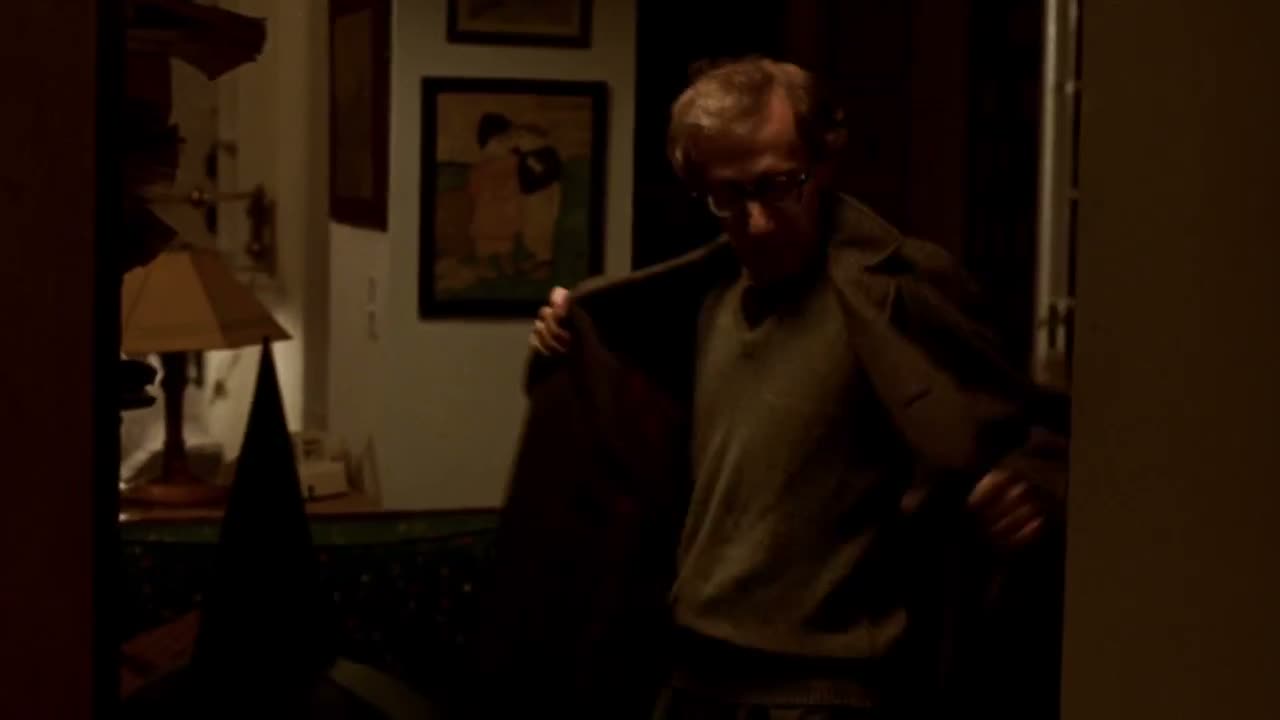
A young reader tells the novelist she misplaced his manuscript in a cab, then admits the book made her feel threatened. What starts as a small confession becomes a fight about what fiction is allowed to say, and it ends with him calling her a twenty-year-old twit.
It's So Retrograde, It's So Shallow
I Don't Need a Lecture From You
A young woman who has read the novelist's new book tells him she left it in a taxi. She then explains that parts of it made her feel threatened, and criticizes the way his characters treat women and the attitudes they express. He defends the book, loses his patience, and finally tells her he does not need a lecture on writing from a twenty-year-old.
The scene is a small collision between a writer's ego and a reader's honesty. The reader opens with a mild confession about losing the manuscript, and the writer immediately reassures her, saying he is "in your corner" and her biggest fan. That generosity disappears the moment she names what bothered her: the casual affairs and the way women are viewed. He tries to answer criticism with a comparison to Triumph of the Will, arguing that a work can be powerful and still be disliked, and she turns it around by asking if he despises her ideas. The argument ends where arguments like this usually do, with the older man calling the younger one a twit. She got under his skin, and he proves her point.
A1–C2 es la escala MCER. Las tarjetas por encima del nivel elegido se atenúan y la reproducción no se pausa en ellas.
“I mean, but are our choices really between chronic dissatisfaction and suburban drudgery?”
It frames marriage as a false choice between two miseries.
Formal
“It was a great movie, but you despise the ideas behind it.”
A work can be great and its message detestable at the same time.
Neutral
“Look, let's stop this right now because I don't need a lecture on maturity or writing from a 20-year-old twit.”
He disarms the critique by attacking the critic's standing.
Informal
“Okay. I must have hit a nerve with you.”
She names the sore spot instead of defending herself, and takes back the room.
Informal
 Siguiente · 14go sourLa escena: Judy Tells Gabe It's Over
She feels the attitudes in it, especially toward women, are one-sided and outdated. Rather than a single line, it is the book's whole view of relationships that makes her uneasy.
He wants to argue that a work can be artistically powerful and still have ideas you reject. It is meant to defend the novel, but it sounds like he is comparing himself to a notorious film.
He has run out of arguments and resorts to dismissing her age and experience. It is the moment the conversation stops being about the book and becomes about his pride.
It means being on someone's side and supporting them. Gabe uses it to reassure her that he is not attacking her, right before he starts defending himself.
Neither of them really does. She makes her criticisms clear and refuses to take them back, while he ends the conversation by insulting her, which suggests he was the one who was rattled.