00:00 / 03:47
00:00 / 03:47

Gabe Meets Rain's Parents, Explained

Husbands and Wives · 1992

Capítulo 10 de 15 · 3'47"

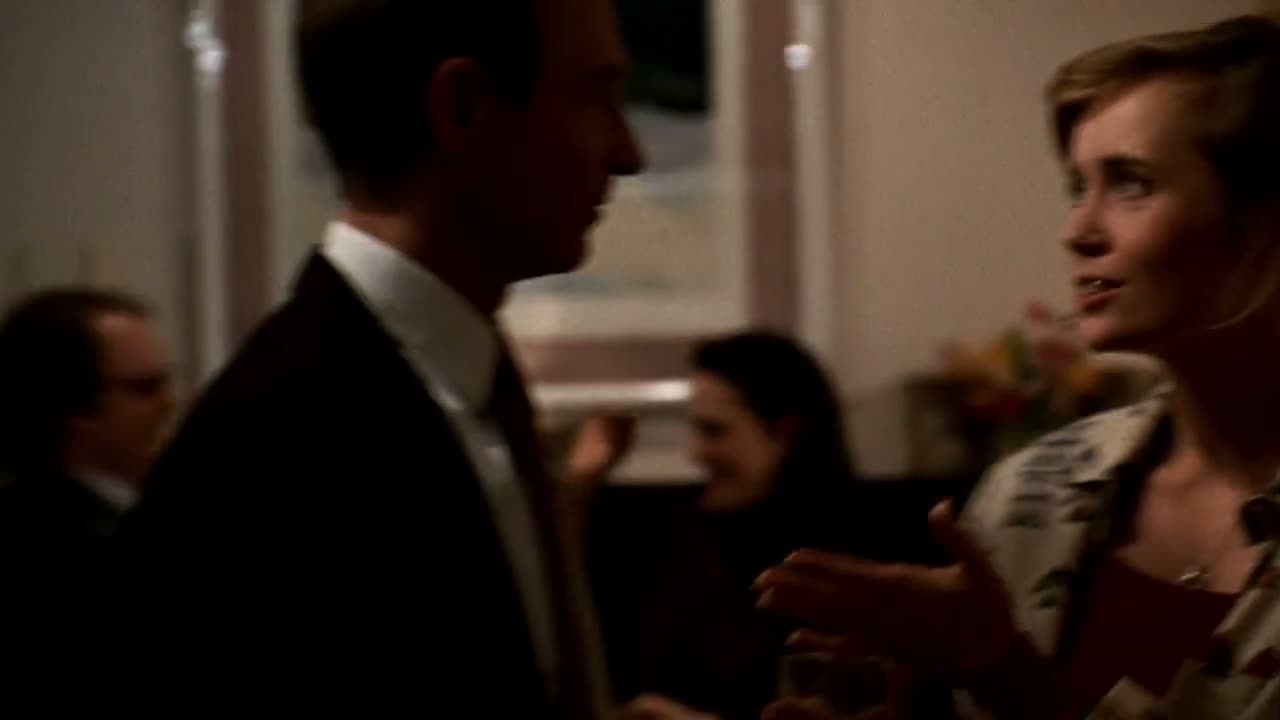
Gabe is introduced to Rain's parents, who tell him how much they admire his writing. Then Rain pulls him aside and tells the whole story of her affairs with older men, including the analyst who fell in love with her. At the end her parents return to invite Gabe to her birthday party.

Small talkConfessingInvitingTeacher & studentB2fastamericanClean

Key moments

Start here, then watch the full scene
  1. ❝ Monólogo · 29 frases The Analyst Who Fell in Love With Her

    2:15–2:49
    35s
  1. ❝ MonólogoRain's confession29 frasesPracticar ↗

Gabe Meets Rain's Parents, explained

What happens

Gabe visits Rain's parents, who greet him warmly and tell him they are fans of his stories. Once her parents step away, Rain decides to tell him everything from the beginning: the older men she dated, the analyst who fell in love with her and stopped treating her, and how she finally came to her senses. Her parents return to invite him to her birthday.

What's really going on

The scene is a confession staged as small talk. Gabe sits with Rain's parents, absorbing their flattery, and then Rain takes him aside to explain her past in one long, orderly story. The comedy is in how neatly she lists her romantic disasters: the business partner, the friend's father, and then the analyst. The line that gives the scene its edge is about the analyst: "something inside me told me that he couldn't be a very stable person, I mean, let alone a good analyst." She is confessing and auditioning at the same time, offering Gabe material she thinks he can use. His reaction is the most revealing thing about him: instead of alarm, he immediately sees a novel, "the sequel and... an opera by Puccini." By the end the parents return to invite him to Rain's birthday, and the ordinary social frame comes back around the very personal story.

Key lines & what they mean

“But, in the end, I just felt like I was some kind of symbol of lost youth or unfulfilled dreams.”
Rain's summary of how the older men saw her: not a person they loved but a stand-in for something they had lost.
“And what the hell am I doing with the mid-life crisis set?”
Her self-mocking question about dating older men, which names the pattern while she is still inside it.
“My God. You've got material for your first novel, and the sequel and, and an opera by Puccini here.”
Gabe's reaction to her story: he converts a life story into literary material, which says as much about him as about her.
“But something inside me told me that he couldn't be a very stable person, I mean, let alone a good analyst.”
Her reason for pulling away from the analyst: if he could not stay professional with her, he was in no position to treat anyone.

Theme

  • Romance — Rain narrates a string of relationships with older men, and Gabe reacts as a reader rather than as a jealous suitor.
  • Identity — She describes herself as a symbol of lost youth or unfulfilled dreams, and asks whether she is being too dramatic.

Qué aprendes en este capítulo

Puntos de enseñanza

Repasa justo después de ver
Mi nivel0/4

A1–C2 es la escala MCER. Las tarjetas por encima del nivel elegido se atenúan y la reproducción no se pausa en ellas.

Husbands and Wives: tu progreso

Capítulo 10 de 15 · quedan unos 19 min

← Anterior
Siguiente · 11out of lineLa escena: Jack and Sam Fight About Astrology

Ideas clave

Lo que te llevas
  1. 'mid-life crisis set' carries more than its dictionary gloss.
  2. 'what the hell' changes the pressure of the reply.
  3. The surrounding lines set the social temperature.

Preguntas frecuentes

La pregunta, luego la frase
Why does Rain tell Gabe the whole story of her love life?

She trusts him and wants him to understand her, and she also enjoys the drama of telling it. Starting from the beginning suggests she wants him to see the whole pattern, not just one episode.

What does Rain mean by calling herself a symbol of lost youth?

She believes the older men were drawn to her youth rather than to her as a person, so she felt like a reminder of what they had lost. It is her way of explaining why the affairs left her unhappy.

Why did the analyst stop treating Rain?

He said he had fallen in love with her and that continuing the treatment would not be right. Rain notes that this itself showed he was not stable enough to be a good analyst.

Why does Gabe turn her story into a novel?

He is a writer first, so he hears a life and sees material. His joke about the sequel and a Puccini opera shows how quickly he converts real pain into art, which the film treats as both funny and telling.

Why do Rain's parents invite Gabe to her birthday?

They admire him and want him involved, and the invitation brings the scene back to ordinary politeness after Rain's confessional monologue. Rain doubts he will come.