
“Because it's over, and we both know it.”
Por qué es buena
The end is stated as a shared fact, which makes it final.
Registro
Neutral
Úsala tú
Let's stop pretending, because it's over and we both know it.
Capítulo 14 de 15 · 3'55"
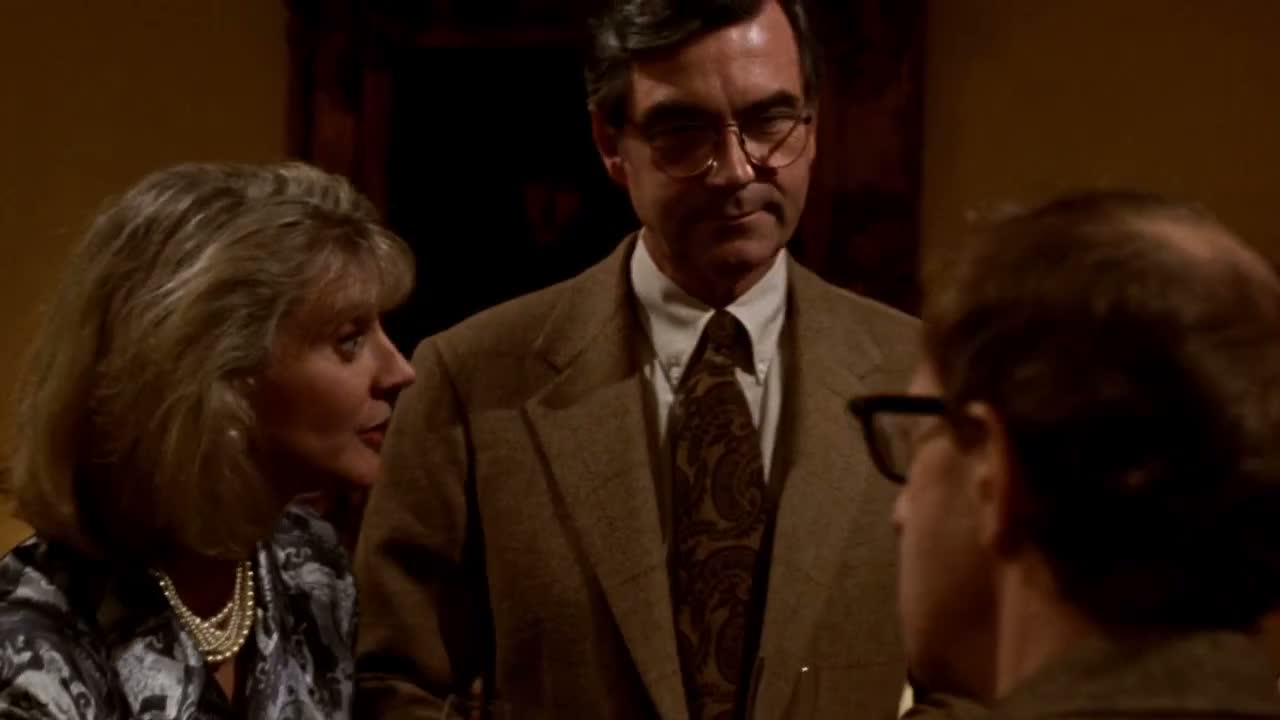
In bed, a long-married couple argues from poetry to psychotherapy to flirting, and the fight keeps getting more personal. One side insists that "Change equals death," and the other answers that sex is used to express every emotion except love. It ends quietly, with one line that settles everything: "Because it's over, and we both know it."
You Use Sex to Express Everything but Love
❝ Monólogo · 12 frases Because It's Over, and We Both Know It
Gabe and Judy lie in bed and pick at each other until the old arguments come back: her poetry, his harsh judgments, her therapy, and whether he flirts. He defends himself by saying that change is death, and she tells him he uses sex to express everything but love. He tries to soften the mood with shared memories, but she refuses the comfort and says the marriage is over.
The bedroom argument is the end of a marriage played as an ordinary evening. The couple moves through everything at once: poetry, therapy, jealousy, how each one behaves at parties. He offers his bleak formula, "Change equals death," and she answers with the sharper line, "You use sex to express every emotion except love." Neither is trying to win; they are cataloguing what went wrong. Then he changes strategy and reaches for tenderness, recalling the night they skipped a faculty dinner, walked into Central Park, and watched the sky. Her reply ends it: "Because it's over, and we both know it." When he calls the memories real, she calls them just memories, from years gone by. The scene is a goodbye that neither of them quite says out loud.
A1–C2 es la escala MCER. Las tarjetas por encima del nivel elegido se atenúan y la reproducción no se pausa en ellas.
“Because it's over, and we both know it.”
The end is stated as a shared fact, which makes it final.
Neutral
“You use sex to express every emotion except love.”
The accusation is precise: everything can be expressed, except love.
Neutral
“In your own quiet way, you're as crazy as Harriet was.”
Quiet does not mean sane; the same chaos can hide in silence.
Neutral
“Those memories. They're just memories.”
Repetition strips the past of its power: memory, nothing more.
literary
Uh, w-w-we both couldn't sleep one night, remember? And we found... the movie of Wild Strawberries on the cable station and we stayed up all night watching it? - Remember that? That was such a great... - Yeah. For some reason, a great moment for me. Or when we were going to the faculty dinner and... I'll never forget this. We were on Fifth Avenue, and it was just an icy, black night. We were walking downtown. You remember that? - Suddenly we decided not to go to dinner. - Mm-hmm. Mm-hmm. We said the hell with it. It was such a beautiful night, We walked into Central Park. It was so snowy that night, and you could see every star. Mmm, remember how cold it was? You were so beautiful in that black dress. Really.
 Siguiente · 15get the wrong ideaLa escena: Rain's Birthday Party in a Blackout
Because she believes they both already know it. The evening's argument is less a fight than a summary of everything that stopped working, and she refuses to pretend the good memories change that.
He is defending his resistance to change, treating it as a kind of principle. Judy hears it as an excuse and calls it nonsense, since for her, change is what life is made of.
He is trying to reach her through a happy memory, the night they skipped a faculty dinner and walked in the snow. She answers that such moments are just memories and do not tell the whole story.
She says that in his quiet way he is as unstable as Harriet, the woman from his past. It is meant to hurt, and it does, because it suggests his calm is only on the surface.
Not here. The scene ends with the marriage recognized as finished, and the memories set aside as belonging to years gone by, so this is the point of no return.