00:00 / 03:31
00:00 / 03:31

Tyler Makes Soap and Burns a Hand, Explained

Fight Club · 1999

Capítulo 10 de 19 · 3'31"

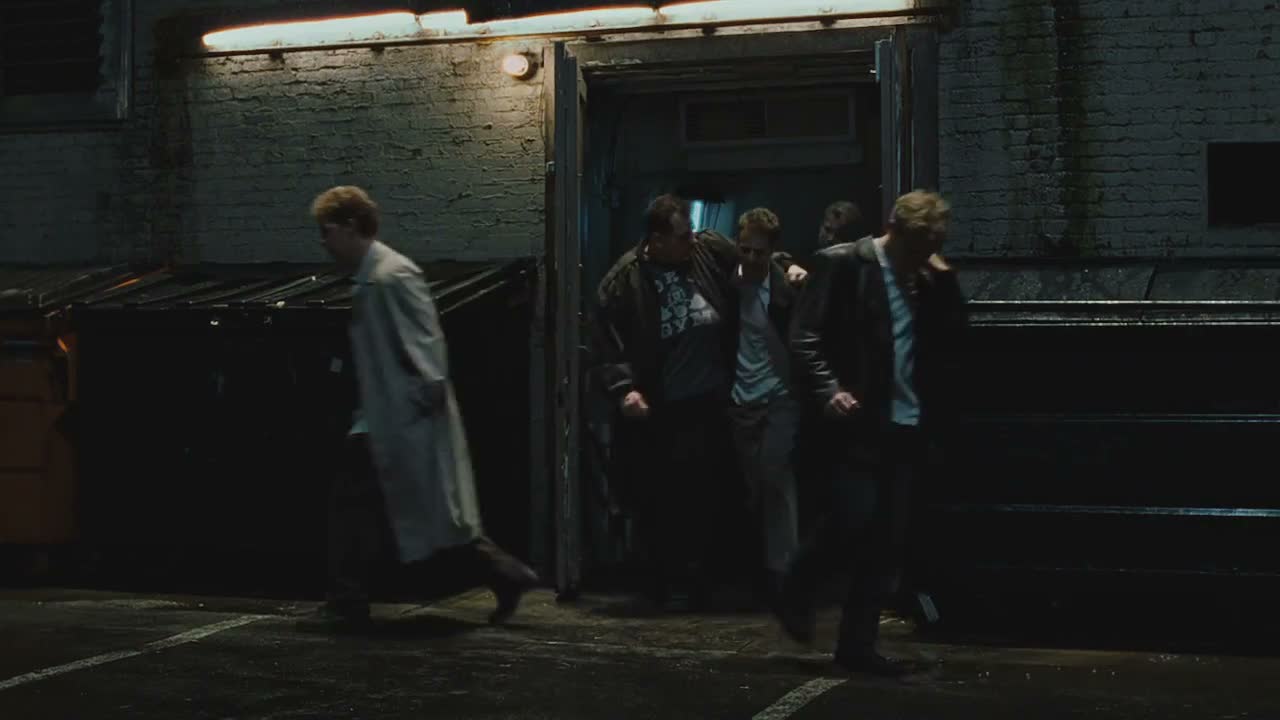
Half of the scene is a chemistry lesson: Tyler collects human fat from a liposuction clinic and explains how soap, glycerin, and even dynamite are made. The other half is a test, as he pours lye onto the Narrator's hand — "This is a chemical burn" — and dares him not to pull away.

At the doctorExplainingWarningFriendsC1mediumamerican

Key moments

Start here, then watch the full scene
  1. Tyler Burns the Narrator and Preaches Sacrifice

    2:36–3:29
    54s

Tyler Makes Soap and Burns a Hand, explained

What happens

Tyler takes the Narrator to a liposuction clinic and harvests bags of human fat, calling it the best material for soap. Back home he walks him through the chemistry — tallow, glycerin, nitroglycerin, dynamite — and tells him ancient people were sacrificed to make the first soap. Then he pours lye on the Narrator's hand.

What's really going on

The scene disguises a lesson in pain as a lesson in soap. Every step of the chemistry doubles as a story about sacrifice — tallow, ashes, lye — and Tyler lands the point with a line that sounds like scripture: "Without pain or sacrifice, we would have nothing." When he pours the lye, he is not just testing the Narrator's endurance; he is forcing him to stop treating the burn as something to escape. The Narrator tries to retreat into the support-group language he has learned, saying he will go to his cave and find his power animal, and Tyler rejects it as a cheat: that is how "those dead people" cope. The burn becomes a rehearsal for the film's larger claim, stated at the end: "It's only after we've lost everything that we're free to do anything." The comfort the Narrator once found in groups is now something to be burned away.

Key lines & what they mean

“It's only after we've lost everything that we're free to do anything.”
Tyler's closing claim: total loss removes the fear that keeps people stuck, so it becomes a kind of freedom.
“The first soap was made from heroes' ashes, like the first monkey shot into space.”
The historical framing of sacrifice: someone always paid first, so the product people take for granted hides a cost.
“Without pain or sacrifice, we would have nothing.”
The thesis in one line: everything of value comes at a cost, which is why Tyler refuses to let the Narrator escape the burn.
“Listen to me. You have to consider the possibility that God does not like you.”
Tyler pushing the argument to its bleakest point, turning a father's absence into proof that God has abandoned them.
“First, you have to give up.”
The instruction before any of the philosophy can land: stop resisting, stop fleeing the pain, and let go.
“With enough soap, one could blow up anything.”
The dark punchline of the soap lesson: the same material that cleans can, with the right chemistry, destroy.
“It's the greatest moment of your life, and you're missing it!”
Tyler's response to the Narrator trying to flee the burn: he frames agony as the high point of a life.

Theme

  • Philosophy — The soap-making and the burn are used to argue that pain and sacrifice, not comfort, are what give life meaning.
  • Faith — Tyler recasts God as a father who abandoned his children, and tells the Narrator he does not need him anyway.

Qué aprendes en este capítulo

Puntos de enseñanza

Repasa justo después de ver
Mi nivel0/4

A1–C2 es la escala MCER. Las tarjetas por encima del nivel elegido se atenúan y la reproducción no se pausa en ellas.

Fight Club: tu progreso

Capítulo 10 de 19 · quedan unos 37 min

← Anterior
Siguiente · 11middle children of historyLa escena: Tyler's Middle Children Speech

Ideas clave

Lo que te llevas
  1. 'pay dirt' carries more than its dictionary gloss.
  2. 'the fat of the land' changes the pressure of the reply.
  3. The surrounding lines set the social temperature.

Preguntas frecuentes

La pregunta, luego la frase
Why does Tyler take the Narrator to a liposuction clinic?

To get human fat, which he says makes the best soap. The errand is also a lesson: something people throw away becomes, in his hands, both a product and a weapon.

What is Tyler trying to prove with the chemical burn?

That the Narrator should stop trying to escape pain. By refusing to let him pull away or use water, Tyler forces him to accept the burn and stay with it.

Why does Tyler reject the 'power animal' idea?

Because it is the coping language of the support groups, which he sees as a way of hiding from reality. He calls it premature enlightenment and insists pain has to be felt, not meditated away.

Why does Tyler say God hates them?

He argues that their fathers abandoned them, and that since fathers were the model for God, the same must be true of God. The conclusion is meant to free them from needing approval.

Why does Tyler explain the history of soap while burning him?

The lecture keeps the Narrator's mind busy and gives the pain a meaning. Tyler wants the lesson and the burn to arrive together, so the philosophy is felt, not just heard.