
“I no longer have any fear of death.”
Por qué es buena
The calmest possible statement from someone at the end: fear, removed.
Registro
Neutral
Úsala tú
I no longer have any fear of public speaking.
She no longer has any fear of being alone.
Capítulo 3 de 19 · 5'03"
Two people who don't belong at a cancer support group recognize each other instantly: each has been faking illness to sit in the room. One threatens to expose the other, and the answer is that they can expose each other. What looks like a confrontation is really a standoff neither of them can win.
Marla Is a Tourist Who Fakes Being Sick
❝ Monólogo · 8 frases Chloe's last ask
Each polite step strips certainty until the ask is bluntly sexual and lonely.
Marla and the Narrator Catch Each Other Faking
The Narrator realizes that Marla Singer, the woman he keeps seeing at his support groups, has no disease either. He plans to scream at her during the hugging exercise, but at the next meeting they only trade threats: each knows the other's secret. Chloe, a dying woman in the group, shares her loneliness, and Marla later asks the Narrator why he keeps coming.
The scene turns on a symmetry the Narrator cannot escape. Marla is a fake, but so is he, and the recognition is what finally breaks him: "Her lie reflected my lie." He had been using the groups to feel something, and once he sees his own fraud mirrored in her, the tears stop and the insomnia returns — the cure was never real. What follows is not a moral reckoning but a negotiation. Each threatens to expose the other, and each knows the threat is empty, because exposing Marla means exposing himself. The comic twist is that the groups are so welcoming that even a fraud can name the appeal out loud: "When people think you're dying, they really listen to you instead of... waiting for their turn to speak." That is the most honest line in the film about why anyone is there. Marla's warning — that it becomes an addiction — lands because the audience has watched him lose one source of feeling and start hunting the next.
A1–C2 es la escala MCER. Las tarjetas por encima del nivel elegido se atenúan y la reproducción no se pausa en ellas.
“I no longer have any fear of death.”
The calmest possible statement from someone at the end: fear, removed.
Neutral
“It's cheaper than a movie and coffee's free.”
Grief priced as cheap entertainment; the joke exposes how numb he is.
Informal
“The scratch on the roof of your mouth that would heal if you could stop tonguing it, but you can't.”
A mouth sore as self-harm: it heals if you stop, and you never stop.
literary
“If I did have a tumor, I'd name it Marla.”
Hatred disguised as a medical joke; the specificity is what makes it sting.
Informal
“You don't want to get into this. It becomes an addiction.”
A warning in two beats: name the addiction, skip the explanation.
Informal
Well, I'm still here. But I don't know for how long. That's as much certainty as anyone can give me. But I've got some good news. I no longer have any fear of death. But... I am in a pretty lonely place. No one will have sex with me. I'm so close to the end, and all I want is to get laid for the last time.
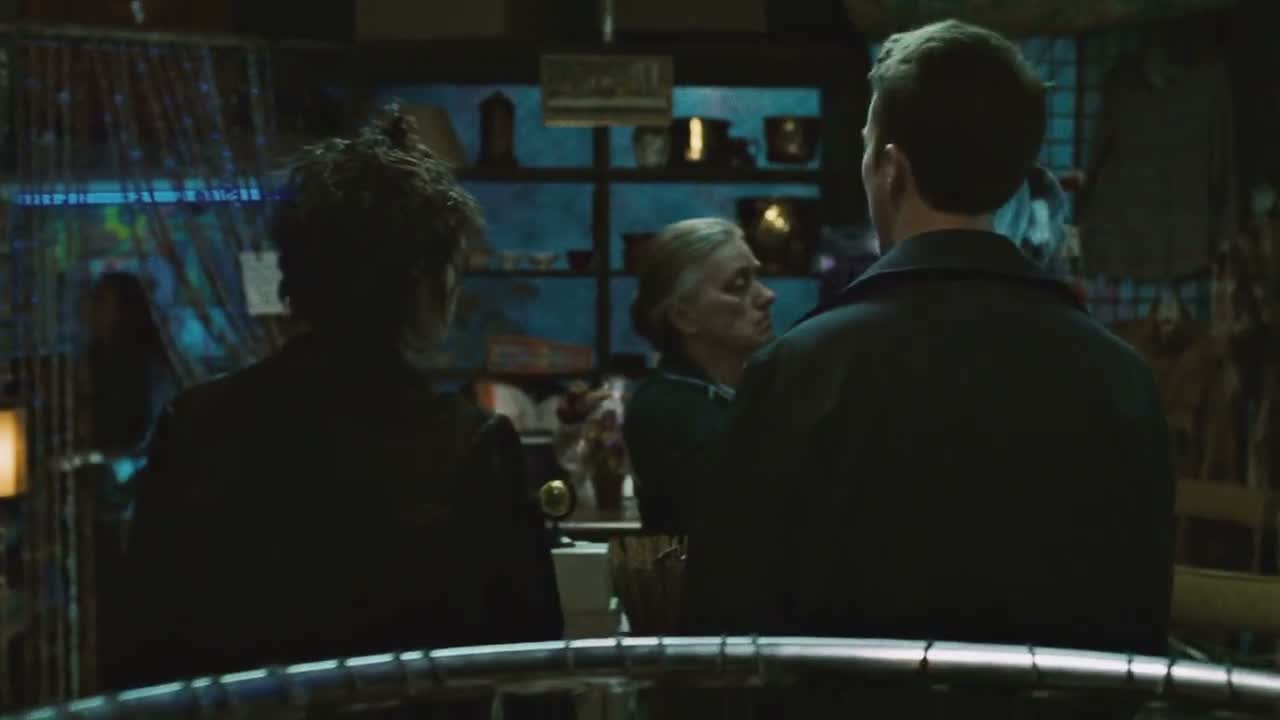 Siguiente · 04single-serving friendsLa escena: Jack Meets Marla at Support Group
She has seen him at melanoma, tuberculosis, and testicular cancer meetings, practicing how to tell her off. Since he shows up everywhere without being sick, she reads him as a fellow fake.
Because the exposure would cut both ways. If Marla tells the group that the Narrator is healthy, he can tell them the same about her, so the threat is mutual and useless.
Marla's presence makes him see that his comfort was built on a lie. Once he recognizes his own fraud reflected in hers, the feeling he came for disappears and the insomnia returns.
Because the groups give him something he cannot find elsewhere: people who truly listen. When he says people act as if you are dying, he is describing attention he does not get anywhere else.
Chloe is a group member who is genuinely dying. Her calm speech about having no fear of death is the real thing the Narrator and Marla are imitating.