
“I still want to get a second opinion, wouldn't I?”
Por qué es buena
A medical metaphor makes a refusal sound like simple common sense rather than distrust.
Registro
Neutral
Úsala tú
I still want to get a second opinion before we sign.
Capítulo 8 de 30 · 3'08"
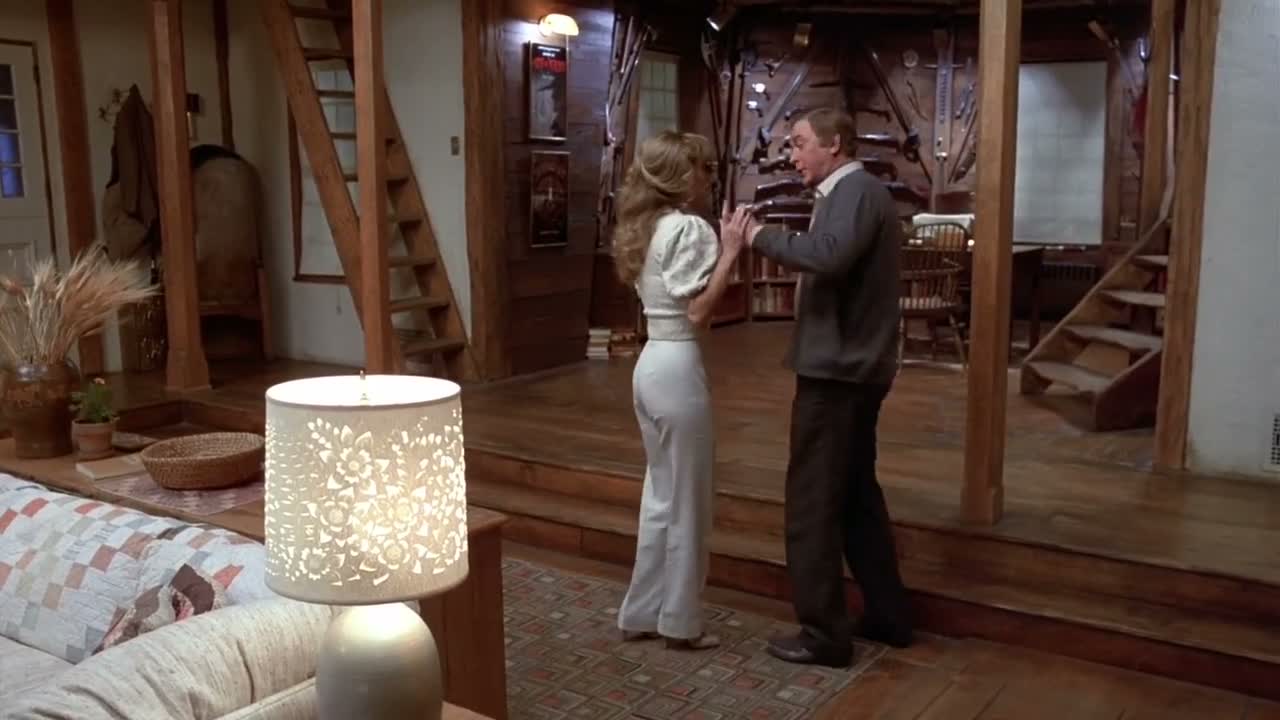
Clifford won't hear Sidney's rewrite ideas until there's a deal on paper. He makes his case with a doctor analogy: even a top specialist's advice deserves "a second opinion." It is a polite no, and it quietly reverses the power in the room — the young playwright sets the terms, not the famous author.
❝ Monólogo · 7 frases Clifford Wants a Second Opinion
❝ Monólogo · 4 frases Sidney Refuses to Play Wet Nurse
Clifford Anderson visits the Bruhls to discuss a collaboration on his play, Deathtrap. Sidney is eager to share his rewrite ideas, but Clifford politely refuses to hear them before any deal is settled. He compares it to wanting a second medical opinion, and says he would rather send the play to agents first.
The scene is a negotiation disguised as good manners. Everyone is complimentary, and nobody is agreeing. Clifford's doctor analogy — 'I still want to get a second opinion, wouldn't I?' — sounds modest, but it is a refusal, and it puts Sidney in the position of waiting. Clifford even thanks Sidney 'for going out of your way to help me' while making clear he won't hear a single idea until an 'understanding or arrangement' exists. Myra tries to smooth things over, and Sidney bristles, jealous of the rival play and unwilling to waste time on 'wet-nurse work.' Underneath the courtesy, the younger writer is already holding the cards.
A1–C2 es la escala MCER. Las tarjetas por encima del nivel elegido se atenúan y la reproducción no se pausa en ellas.
“I still want to get a second opinion, wouldn't I?”
A medical metaphor makes a refusal sound like simple common sense rather than distrust.
Neutral
“He'll think he has the wealth of the Indies...”
An old-world exaggeration exposes both the visitor's imagined riches and the couple's fear.
literary
“I am very grateful to you for going out of your way to help me.”
The thanks is pinned to the trouble taken, which makes gratitude sound specific and sincere.
Formal
“Look, it's as if I went to a doctor.”
It reframes a deal as a visit to the doctor, making caution sound reasonable.
Neutral
“I'll be back begging you to do what Mrs. Bruhl suggested.”
He offers to come back begging, which quietly keeps the whole deal in his hands.
Informal
But you see, the thing is .... Look, it's as if I went to a doctor. One of the world's leading specialists and he recommended surgery. Even with all my respect for his eminence, his experience... I still want to get a second opinion, wouldn't I? I'm sure that your ideas are terrific... And when I hear them, I'm probably going to say: "Why didn't I think of doing it that way?"
Myra here has just been rattling on for a moment. The fact is, I do not wish to set aside a play... As timely and inventive as The Drowning Wife... In order to do wet-nurse work on something as speculative as Deathtrap.
 Siguiente · 09hit a snagLa escena: Sidney Handcuffs Clifford
He won't hear them before there is a deal, saying it wouldn't be fair to listen and then walk away. It also lets him keep all his options open.
He uses a medical analogy to justify not hearing Sidney's ideas yet: a patient would still want another doctor's view before agreeing to treatment.
She wants the collaboration to work. She urges Sidney to help Clifford the way George S. Kaufman once helped him, which is what puts Sidney on the spot.
Badly. He doesn't want to set aside his own play, The Drowning Wife, to do 'wet-nurse work' on something as uncertain as Deathtrap.