
“Who could ever have believed it would end this way?”
Por qué es buena
A rhetorical question lets the disaster echo instead of being named outright.
Registro
literary
Úsala tú
Who could ever have believed they would lose at home?
Capítulo 1 de 30 · 2'18"
The reviews land live: Sidney's new mystery has bombed, and the TV critics are already tearing it apart on air. Myra keeps asking if the audience is laughing at all, while a rival producer needles him. "She should know, Seymour. It's her money," is the closest he gets to fighting back.
Myra Calls on Opening Night
❝ Monólogo · 6 frases Seymour's rapid rant
A roll call of critics, ending with his own wife, exposes how thin show-business loyalty is.
Burt Tries to Calm Sidney
❝ Monólogo · 8 frases The critic's verdict
The verdict builds from bad sets to public shame, slow and lethal.
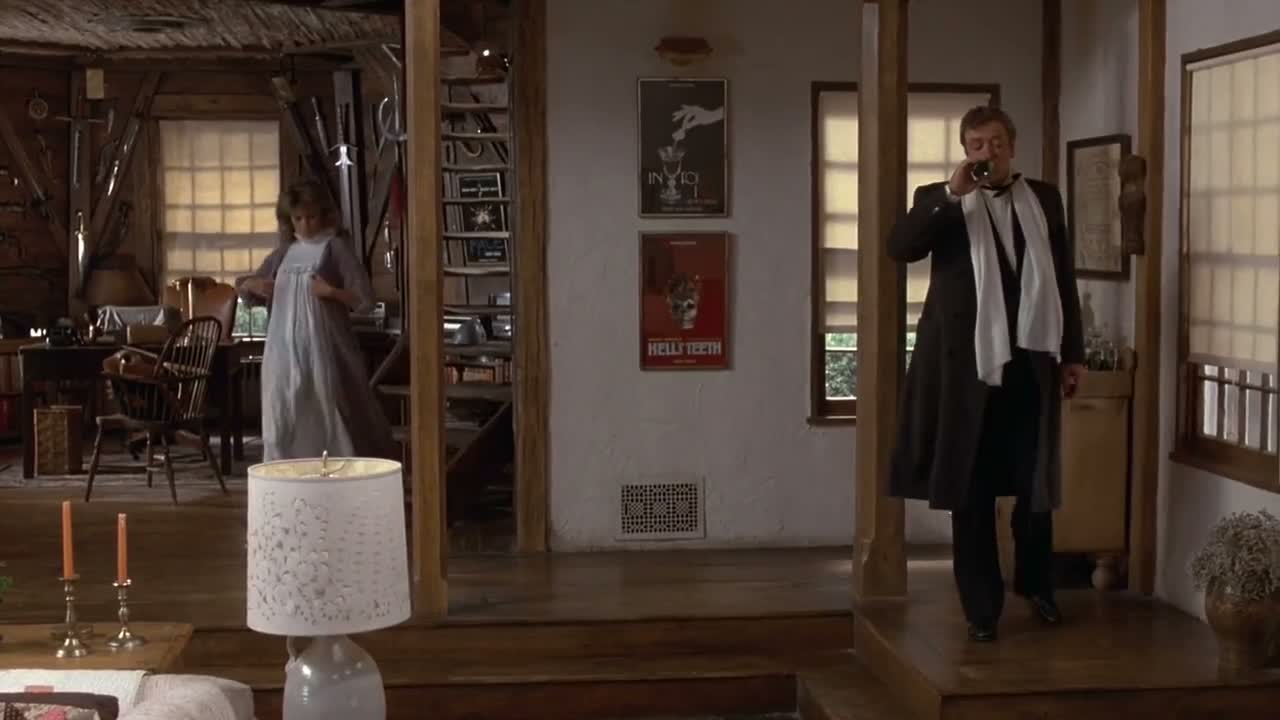
It's opening night for Sidney Bruhl's new play, Murder Most Fair, and it is going badly. His wife Myra phones to ask how it's going, and he can barely hide that it's a disaster. Backstage and on television, critics call the sets, costumes and acting worthless, while producer Burt tries to calm him down and a rival gloats.
Nobody in this scene says the obvious thing out loud. Myra keeps pressing — "Are they laughing at all?" — because a hit or a flop decides whether Sidney's career and her money survive. The TV critics have already moved on from reviewing the play to exposing it, spoiling the mystery on air, and a rival producer twists the knife by naming everyone who wants Sidney finished. Sidney's only answer is "She should know, Seymour. It's her money," which turns a professional humiliation into a family argument about who is paying. Even Burt's reassurance — "The critics are gonna love you. You got my promise" — lands as a line from a man who knows it is already over.
A1–C2 es la escala MCER. Las tarjetas por encima del nivel elegido se atenúan y la reproducción no se pausa en ellas.
“Who could ever have believed it would end this way?”
A rhetorical question lets the disaster echo instead of being named outright.
literary
“She should know, Seymour. It's her money.”
It never raises its voice, yet the money line settles who holds the power.
Neutral
“Count your loot, and drink your orange blossom.”
A breezy line about money and a drink carries a veteran's weary acceptance.
Informal
“The critics are gonna love you. You got my promise, okay?”
It buys a doomed man a moment of hope with pure showbiz bluff.
Informal
“And what's inexcusable is he done it in public.”
It names the offence, then makes it worse with just two words.
Formal
Audience clapping: SEYMOUR: Bruhl, you want to know who? I'll tell you who. My lawyer, my accountant... My proctologist, even my goddamn wife. She said, "You produce another crock by that putz Sidney... "you deserve to go broke." Even my goddamn wife!
TV knob clicking: Well, theater lovers, there is bad news tonight. Bad sets, bad costumes, bad direction, bad actors... And from playwright Sidney Bruhl, a spectacularly bad play. Sidney Bruhl's new whodunit Murder Most Fair... But there's no point in you folks going there... 'cause I'm gonna tell you who done it. Sidney Bruhl done it. And what's inexcusable is he done it in public.
Deathtrap: tu progreso
Capítulo 1 de 30 · quedan unos 86 min
 Siguiente · 02add insult to injuryLa escena: Sidney Rants About Being Written Out
A rival producer who appears on the opening-night TV coverage and openly taunts Sidney, listing the lawyer, accountant and even the wife who are all done with him.
It's a sarcastic aside. After the play is praised in its ads, the critic sneers that the promotion was false — so much for honesty in advertising.
Burt argues it didn't — 'it ain't your opening night crowd that hands down the verdict' — but the television reviews seem to settle the matter anyway.
He fires back at Seymour's rant about his wife by pointing out that the play is paid for with her money, so she has a right to complain about it.
The drama critic reviewing the play on television, who calls the sets, costumes, direction and actors bad and then spoils the mystery by naming the killer.