
“This was my doing and my doing alone.”
Por qué es buena
Repeating my doing piles the whole blame on the speaker and leaves no room to share it.
Registro
Neutral
Úsala tú
The broken vase was my doing and my doing alone.
Capítulo 17 de 30 · 2'44"
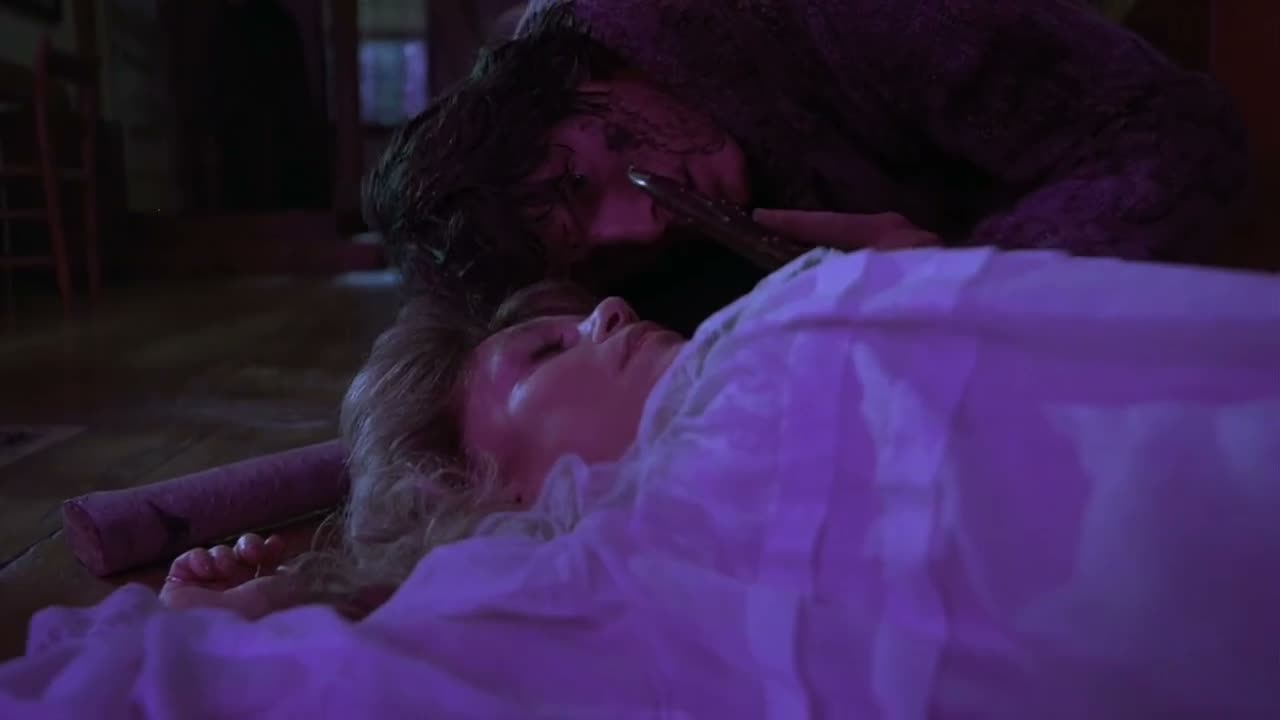
After the killing, Myra admits she was both terrified and hopeful, and Sidney answers with a promise: "This was my doing and my doing alone." The scene turns guilt into intimacy, ending on her question, "That murder is an aphrodisiac?" Their marriage is now built on a shared secret.
❝ Monólogo · 6 frases Sidney Takes All the Blame
Is Murder an Aphrodisiac?
Alone after the murder, Sidney and Myra have a drink. Myra confesses that part of her wanted Sidney to go through with it, even as she was afraid he would. Sidney refuses to let her share the blame, promises nothing will go wrong, and asks her to believe in him. She does.
The scene is the real consummation of the murder plot, and it happens over a drink. Myra's confession, that a part of her hoped Sidney would act, takes the pressure off him and puts them on the same side: 'This was my doing and my doing alone' becomes an act of protection, not honesty. He promises that nothing will go wrong and asks her to trust him, and she answers, 'I believe you.' What they have built is a marriage with a corpse in it, and the scene lets them speak that aloud as intimacy. The line about murder being an aphrodisiac is the joke that seals it.
A1–C2 es la escala MCER. Las tarjetas por encima del nivel elegido se atenúan y la reproducción no se pausa en ellas.
“This was my doing and my doing alone.”
Repeating my doing piles the whole blame on the speaker and leaves no room to share it.
Neutral
“But nothing will go wrong. I promise you.”
A flat promise first, a personal guarantee second; it ends the argument fast.
Neutral
“That's hardly surprising, everything considered.”
It excuses the absurdity in one calm breath, which is pure Sidney.
Neutral
“That murder is an aphrodisiac?”
Pairing murder with desire in one question makes the absurd line impossible to forget.
Informal
Part of me tonight .... Sidney. Some terrible, unknown part of me .... Oh, God. ...was hoping that you would do it. At the same time that I was terrified that you would... Part of me was really hoping.
 Siguiente · 18for future referenceLa escena: The Fake Murder Kills Myra
That part of her hoped he would go through with the murder, even while another part was terrified he would. She is admitting she is not innocent in her heart.
He wants to take the blame off Myra and keep her close and quiet. Framing it as his alone also keeps him in control of the cover-up.
She says, 'I believe you.' Whether she means it is left open, but the scene ends with the two of them going upstairs together.
She is asking whether the danger and guilt of what they did have drawn them closer. It turns the horror of the night into a strange kind of intimacy.