“During the Clough glory years, we were at the centre of the footballing universe.”
A modest town inflated into the centre of the universe, carried entirely by nostalgia.
Neutral
Capítulo 9 de 25 · 4'44"
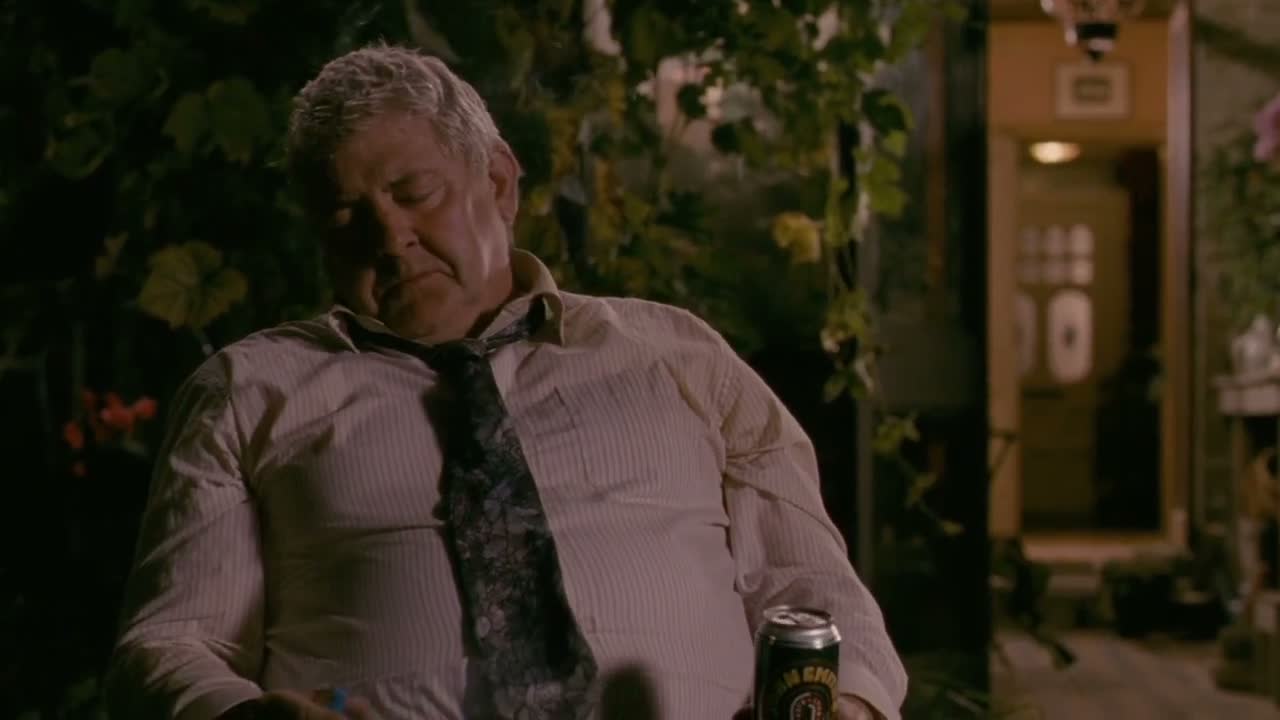
Ken arrives for one of his long visits, all noise and affection, and the talk drifts from his messy flat and annoying young boss to the retirement he keeps postponing. "What thanks do you get? I'm sick of it," he says of forty years of work, before the three of them slip into old football stories.
Ken Remembers the Clough Glory Years
Ken, an old friend, turns up at Tom and Gerri's house for one of his visits, greeted with jokes and hugs. Over food he talks about his flat, which is a mess but suits him, and about the young supervisor who treats him like a child. Then the conversation turns to retirement and to shared memories of Derby, football crowds and old friends.
The visit is warm, but the chapter keeps brushing against what Ken will not quite say. His chatter about the flat and the young supervisor — '35, looks 12, treats me like a child' — is the sound of a man whose working life has worn him down, and his line about the job, 'What thanks do you get? I'm sick of it!' states the complaint outright. Retirement is the obvious answer, and everyone can see it; Ken can even joke that he would eat, drink and be merry, and call freedom from work 'the tyranny of regular employment.' But he admits it is 'not that easy.' The football memories that follow are the scene's real comfort: a shared past where he belonged, with old friends and a team, standing on the terraces and hearing the crowd roar.
A1–C2 es la escala MCER. Las tarjetas por encima del nivel elegido se atenúan y la reproducción no se pausa en ellas.
“During the Clough glory years, we were at the centre of the footballing universe.”
A modest town inflated into the centre of the universe, carried entirely by nostalgia.
Neutral
“Yep, that's one of the advantages of being free from the tyranny of regular employment.”
He dresses up being out of work as freedom from tyranny; the deadpan irony is the joke.
Informal
“What would you do with your time if you retired, Ken?”
A hypothetical question hands Ken the floor and quietly presses him about the future.
Neutral
“What thanks do you get? I'm sick of it!”
A rhetorical question and a burst of fatigue sum up years of thankless work.
Informal
Siguiente · 10stuck in a rutLa escena: Ken Breaks Down at DinnerHe admits it is not that easy. Work has organized his life for decades, and when asked what he would do with his time, he can only say the pub and eating, drinking and being merry.
It is northern English dialect for "anything." Ken asks whether there was owt worth cheering at the match, meaning whether anything was worth cheering about.
His young supervisor, who is thirty-five but looks twelve and treats him like a child. Ken is a graduate too, but the younger man still talks down to him.
It is where he felt he belonged. The shared memories of the terraces, the roar of the crowd and the Clough era give him a past that is warmer than his present.
Ronnie is Ken's brother, now seventy. The friends remember drinking with him, and joke that he never bought a round, which Ken cheerfully agrees with.