
In our galaxy alone, there are billions of stars, each one a sun to its own solar system.
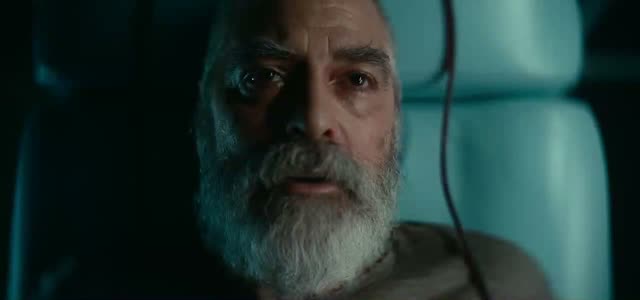
The Potential of K-23 · The Midnight Sky (2020)
AUDITION CUE SHEET & SCRIPT
The Midnight Sky (2020)
The Potential of K-23
Lines: 10 | Words: 132
Time: 0m 52s
Target Pace: 152 WPM
| # | Time | Dialogue & Cue Beats | Acting Notes / Subtext / Blocking |
|---|---|---|---|
| 1 | 0:00 | In our galaxy alone, there are billions of stars, each one a sun to its own solar system. | |
| 2 | 0:06 | And most of those suns have planets, so it stands to reason that of these hundreds of billions of exoplanets that exist in our galaxy, at least one of them has the potential to support life. | |
| 3 | 0:19 | This is K-23, Jupiter's previously undiscovered moon. | |
| 4 | 0:24 | Not quite an exoplanet. | |
| 5 | 0:26 | The moon's atmosphere is governed not by the sun, but by its thermal volcanic activity. | |
| 6 | 0:30 | In simpler terms, when studying K-23's lunar spectrum, | |
| 7 | 0:30 | its biomarkers and water vapors, it appears as though it's being heated from the inside out. | |
| 8 | 0:40 | While further probing will need to test for atmospheric habitability, we can confidently say that based on its mass, | |
| 9 | 0:40 | radial velocity, and orbit, | |
| 10 | 0:50 | it could be just right. |
In our galaxy alone, there are billions of stars, each one a sun to its own solar system.
And most of those suns have planets, so it stands to reason that of these hundreds of billions of exoplanets that exist in our galaxy, at least one of them has the potential to support life.
No pauses, keep up with the actor
Space play/pause · ← → previous/next line · R replay
Why it's worth practising
The scientific exposition uses rhythmic, complex sentence structures ideal for practicing pacing and emphasis.
Sign in to save monologues and keep track of the lines you've practised.
Sign up freeMore monologues from The Midnight Sky
 B17 lines · 32s
That's Aether.
A Glimpse of Our Lost FutureThe Midnight Sky · 2020The speaker's reflective and melancholic tone provides excellent rhythmic variation for shadowing. B122 lines · 1m 40s
Given all the variables, the fact that we can't contact the K-23 colony flight and can't raise Mojave on any frequency,
The Lingering Question of SilenceThe Midnight Sky · 2020The speaker uses a rhythmic, contemplative pace that is perfect for practicing emotional nuance and pauses. B19 lines · 25s
Jupiter probes, the beacon we left behind at K-23, the supply probe on its way there now, some dying satellites...
Navigating Through the UnknownThe Midnight Sky · 2020The rapid-fire technical instructions and sense of urgency provide excellent practice for rhythmic pacing and stress.
More monologues
 B15 lines · 17s
You see that cockroach?
The cockroach speechPaths of Glory · 1957A bug becomes a mirror for his own death, and the calm makes it worse. B14 lines · 11s
I don't like the look of this, fred.
Condition RedDr. Strangelove or: How I Learned to Stop Worrying and Love the Bomb · 1964Staccato orders turn anxiety into command—brusque, paranoid, decisive.