
❝ Monologues · 23 lines · B1
Anyway, this is just one step in a very, very long process.
Mapping the Evolutionary Gaps · I Origins (2014)
Audition Cue SheetFree & unlimited after sign-in122 WPM1m 20s23 cues
AUDITION CUE SHEET & SCRIPT
I Origins (2014)
Mapping the Evolutionary Gaps
Lines: 23 | Words: 162
Time: 1m 20s
Target Pace: 122 WPM
| # | Time | Dialogue & Cue Beats | Acting Notes / Subtext / Blocking |
|---|---|---|---|
| 1 | 0:00 | Anyway, this is just one step in a very, very long process. | |
| 2 | 0:06 | This is a rough estimation... | |
| 3 | 0:09 | but let's just say that the human eye has 12 working parts, right? | |
| 4 | 0:13 | Simplest eye having one. | |
| 5 | 0:15 | So, if we can fill in the gaps, the evolutionary gaps... | |
| 6 | 0:18 | using single mutations... | |
| 7 | 0:21 | we can map out the most logical progression... | |
| 8 | 0:24 | of the most basic eye... | |
| 9 | 0:26 | to the most complex, fully formed human eye. | |
| 10 | 0:31 | I don't understand, why take the time? | |
| 11 | 0:33 | We know that it evolved. | |
| 12 | 0:35 | It's an assumption, it's not a fact. | |
| 13 | 0:39 | When you're no longer a first year, you'll see how important facts are. | |
| 14 | 0:43 | Right. | |
| 15 | 0:49 | Each of these animals has an eye that's best selected for its environment. | |
| 16 | 0:54 | It would be cleaner... | |
| 17 | 0:57 | less variables, if you had an origin. | |
| 18 | 1:02 | Go on. | |
| 19 | 1:03 | You start with one... | |
| 20 | 1:05 | to get to 12. But what if you had zero? | |
| 21 | 1:09 | A non-seeing organism and built genetically an eye from scratch... | |
| 22 | 1:15 | a zero to 12. | |
| 23 | 1:16 | It'd be a perfect proof, unassailable. |
WinkLingo Actor Audition Toolkit • I OriginsTarget Delivery: 122 WPM • Printed for Rehearsal
Anyway, this is just one step in a very, very long process.
Line 1 of 23
This is a rough estimation...
No pauses, keep up with the actor
Space play/pause · ← → previous/next line · R replay
Why it's worth practising
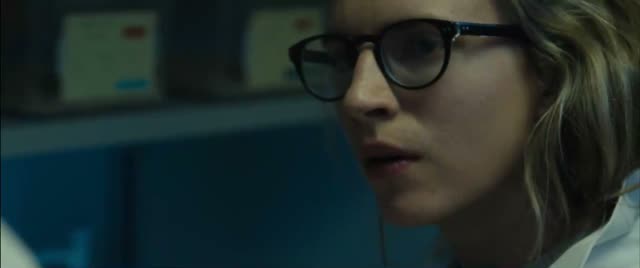
The speaker uses a logical, explanatory rhythm that is perfect for practicing academic and scientific storytelling.
Make shadowing a habit
Sign in to save monologues and keep track of the lines you've practised.
Sign up freeMore monologues from I Origins
 B18 lines · 31s
Why did you sleep with me that night?
A Feeling of Past Life ConnectionI Origins · 2014The emotional vulnerability and rhythmic pacing make it perfect for practicing expressive intonation. B15 lines · 23s
I start to see these elevens, like, everywhere. Too many elevens.
The Unlikely Connection of EyesI Origins · 2014The rhythmic repetition and emotional buildup make it perfect for practicing pacing and emphasis. B117 lines · 57s
You live in this room, right?
The Door to the Other SideI Origins · 2014The use of metaphors and short, punchy sentences provides excellent training for conversational flow.
More monologues
 B15 lines · 17s
You see that cockroach?
The cockroach speechPaths of Glory · 1957A bug becomes a mirror for his own death, and the calm makes it worse. B14 lines · 11s
I don't like the look of this, fred.
Condition RedDr. Strangelove or: How I Learned to Stop Worrying and Love the Bomb · 1964Staccato orders turn anxiety into command—brusque, paranoid, decisive.