
How the West Was Won Monologue: A Land Won from Wilderness
But the names and the marks and the land all had to be won.
· How the West Was Won (1962)
AUDITION CUE SHEET & SCRIPT
How the West Was Won (1962)
A Land Won from Wilderness
Lines: 39 | Words: 379
Time: 2m 39s
Target Pace: 143 WPM
| # | Time | Dialogue & Cue Beats | Acting Notes / Subtext / Blocking |
|---|---|---|---|
| 1 | 0:00 | This land has a name today and is marked on maps. | |
| 2 | 0:05 | But the names and the marks and the land all had to be won. | |
| 3 | 0:11 | Won from nature and from primitive man. | |
| 4 | 0:15 | Five generations ago, a mere 125 years back... | |
| 5 | 0:20 | ... this land was known only as the West. | |
| 6 | 0:24 | Known only to a handful of white men... | |
| 7 | 0:27 | ... lonely trappers wandering its vastness in search of beaver. | |
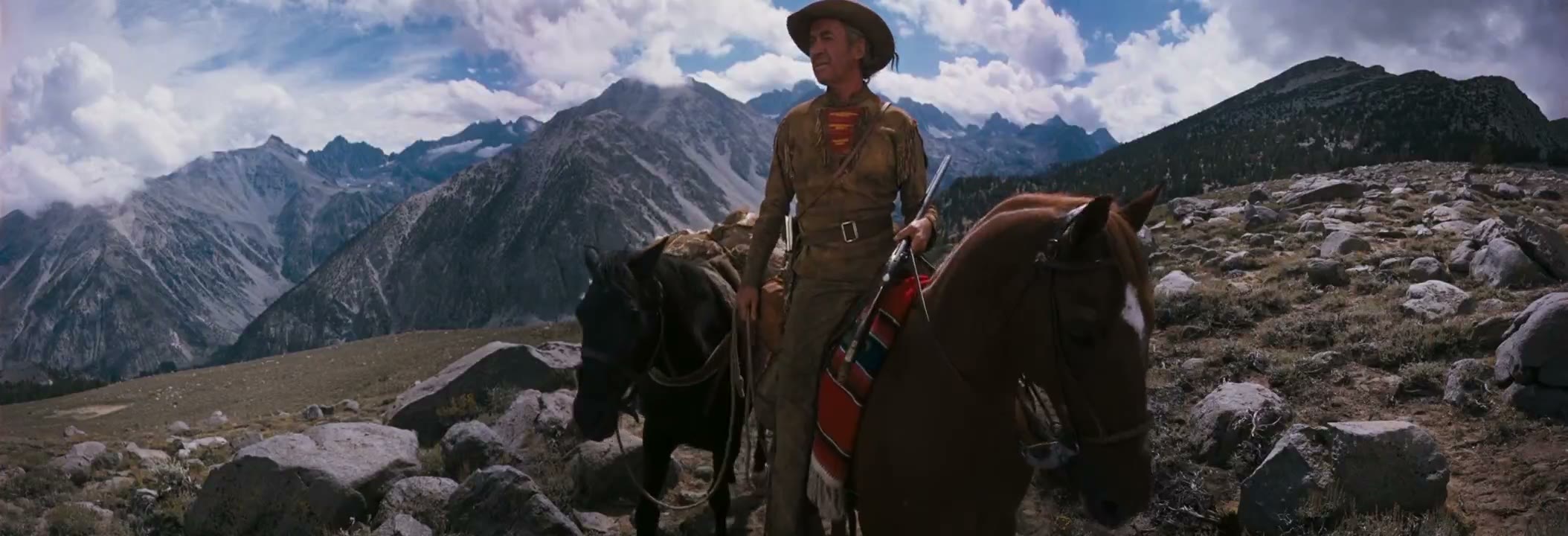
| 8 | 0:32 | They were known as mountain men, a new breed. | |
| 9 | 0:35 | Men like Jim Bridger, Franchère and Sublette, Linus Rawlings. | |
| 10 | 0:40 | More Indian than the Indians in all but blood. | |
| 11 | 0:44 | They held to no law but their own... | |
| 12 | 0:47 | ... drifted free as the clouds, settled nowhere, kept forever on the move. | |
| 13 | 0:53 | Their mocassined feet and unshod horses leaving no trace on the land. | |
| 14 | 1:00 | Like the Indians, with whom they were at peace... | |
| 15 | 1:03 | ... they wanted nothing beyond what they found, and little of that. | |
| 16 | 1:08 | The mountains, the forests, the harsh country... | |
| 17 | 1:12 | ... were as unchanging to them as the stars... | |
| 18 | 1:16 | ... and just as unyielding. | |
| 19 | 1:20 | Far behind the mountains, beyond the rolling plains... | |
| 20 | 1:25 | ... they had left the people of the East, people who were restless in another way. | |
| 21 | 1:31 | The kind who'd look at a mountain and see a watershed... | |
| 22 | 1:34 | ... look at a forest and see lumber for houses... | |
| 23 | 1:37 | ... look at a stony field and see a farm. | |
| 24 | 1:40 | Their faces and their instincts had been turned to the West... | |
| 25 | 1:44 | ... ever since Plymouth Rock and Jamestown. | |
| 26 | 1:47 | The trapper's road was the trail of a wolf or the bend of a canyon. | |
| 27 | 1:52 | But for whole families chaffing to follow the sun... | |
| 28 | 1:56 | ... there had to be broader ways. | |
| 29 | 1:58 | There were no roads into the wilderness, only rivers. | |
| 30 | 2:03 | And they flowed in the wrong direction: North or south. | |
| 31 | 2:06 | Or else they stopped at the Alleghenies. | |
| 32 | 2:09 | Until one day, a new river took source in the mind of a man named DeWitt Clinton. | |
| 33 | 2:16 | He conceived of a river that would go west. | |
| 34 | 2:20 | And in the way Americans have of acting out their dreams, it came to be. | |
| 35 | 2:25 | The Erie Canal left the Hudson above Albany... | |
| 36 | 2:28 | ... and carried clear across to the Great Lakes. | |
| 37 | 2:32 | People who yearned for virgin land and a new life... | |
| 38 | 2:35 | ... now had a highway to take them. | |
| 39 | 2:38 | And they moved along. |
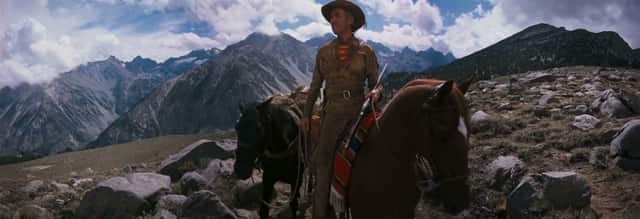
This land has a name today and is marked on maps.
But the names and the marks and the land all had to be won.
No pauses, keep up with the actor
Space play/pause · ← → previous/next line · R replay
Why it's worth practising
The narrator builds momentum from lonely trappers to families on the move, turning a historical survey into a stirring invitation to chase the horizon.
A narrator frames the settling of the American West, tracing how trappers, settlers and a canal builder transform a wild land into a road toward new lives.
Delivery tip
Keep a measured, documentary calm early, then let the pace lift on 'they moved along' as the horizon opens.
Phrases in this speech
Sign in to save monologues and keep track of the lines you've practised.
More monologues from How the West Was Won
 B211 lines · 40s
I don't like the way that fella's looking at us.
A Winged Stranger in the RockiesHow the West Was Won · 1962AmusedConfrontationA dry correction blooms into a frontier tall tale, then snaps into panic. The shift lets actors play certainty, wonder, and cowardice without losing the storyteller's charm. C17 lines · 21s
I'm a sinful man. Deep, dark, sinful.
Sinful Man Walking AwayHow the West Was Won · 1962DefiantIdentity & GrowthHe brands himself unworthy, then piles on exaggerated vices until the confession turns into a dare. The shift lets an actor play charm, shame, and armor in one breath. C117 lines · 1m 8s
The westward course was no smoother than that of true love.
Gold Calls Across ContinentsHow the West Was Won · 1962ReflectivePower & MoneyA sweeping historical overview shifts from war and territory to the electric pull of gold. The narrator balances measured authority with mounting excitement, making the expansion feel both inevitable and explosive. B27 lines · 23s
Many opportunities for an energetic young man.
A Letter Brings OpportunityHow the West Was Won · 1962HopefulMotivationalA family letter first sounds practical, then opens into possibility. The shift from report to invitation gives the reader a warm, grounded arc with room for quiet anticipation.
More monologues
 B26 lines · 25s
you are the only ones who can do it
Phase Two UltimatumSplice · 2009DeterminedWorkplace PersuasionThe speaker trades grand ambition for a blunt production demand, giving actors a clean shift from polite agreement to controlled pressure. It is sharp material for studying persuasive corporate tone. B27 lines · 34s
A watched pot never boils
Quantum Lesson With a Wry JabEscape Room · 2019WittyDramedyA dry classroom aside shifts from familiar proverb to eerie quantum rule, giving actors a clean arc from casual wit to precise authority. B213 lines · 1m 15s
Something is wrong in this country
A Father's Quiet OutrageBowling for Columbine · 2002DeterminedHeartbreak & GriefA grieving father moves from personal loss to public accusation, then lands on resolve. The shift from controlled sorrow to blunt moral certainty gives actors a precise change to play. B29 lines · 22s
I couldn't believe that I actually... Could represent an innocent man.
Doubting the InnocentThe Lincoln Lawyer · 2011VulnerableIdentity & GrowthThe speaker starts with brisk inward blame, then admits he may have failed an innocent client. The shift from legal certainty to private doubt gives actors a tight study in restraint, rhythm, and regret.