
David Attenborough's Natural History Museum Alive Monologue: The Moa's True Stance
You can tell how an animal holds its head
· David Attenborough's Natural History Museum Alive (2014)
AUDITION CUE SHEET & SCRIPT
David Attenborough's Natural History Museum Alive (2014)
The Moa's True Stance
Lines: 6 | Words: 79
Time: 0m 43s
Target Pace: 110 WPM
| # | Time | Dialogue & Cue Beats | Acting Notes / Subtext / Blocking |
|---|---|---|---|
| 1 | 0:00 | There were several different species of moa, but this one was the biggest. | |
| 2 | 0:13 | But is this really what it looked like when it was alive? | |
| 3 | 0:22 | You can tell how an animal holds its head from the junction between the skull and its neck. | |
| 4 | 0:28 | If that is underneath the skull, then its neck would have been upright. | |
| 5 | 0:33 | But this moa's neck joint is at the back of the skull, | |
| 6 | 0:37 | so it must have held its neck more horizontally, like this. |
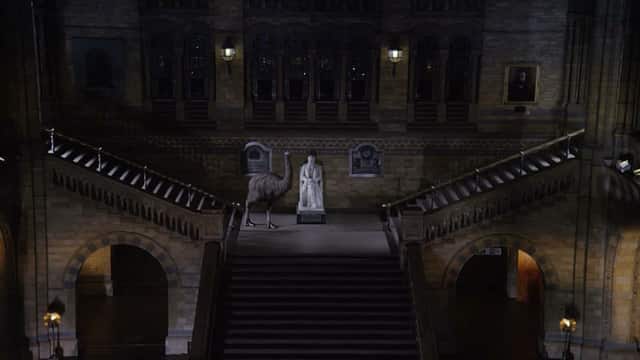
There were several different species of moa, but this one was the biggest.
But is this really what it looked like when it was alive?
No pauses, keep up with the actor
Space play/pause · ← → previous/next line · R replay
Why it's worth practising
A museum skeleton becomes a living animal as Attenborough turns anatomy into discovery. The pleasure is in the controlled reveal, where curiosity builds to a clear physical image.
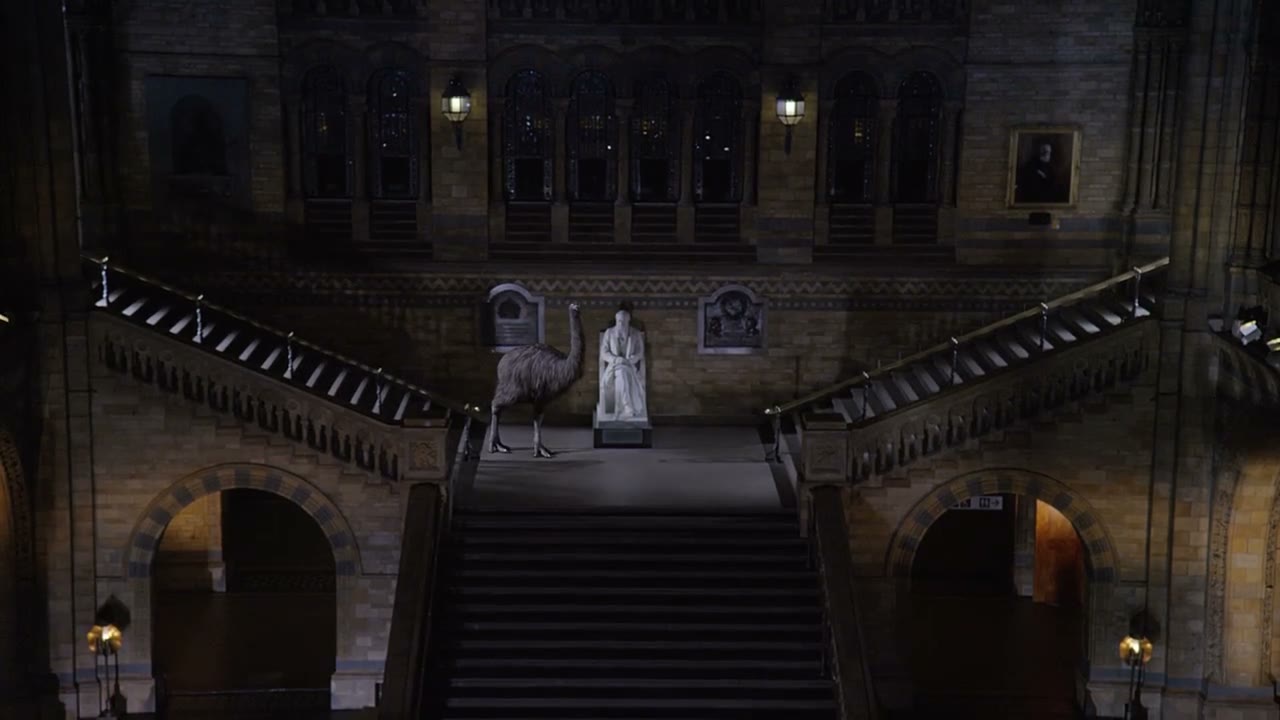
A natural history presenter addresses viewers beside a moa skeleton, questioning its appearance in life. The skull and neck joint become evidence for how the bird actually held itself.
Delivery tip
Keep the opening question curious, then slow down on 'from the junction between the skull and its neck.' Land 'at the back of the skull' as the proof, and let 'like this' feel visual.
Phrases in this speech
Sign in to save monologues and keep track of the lines you've practised.
More monologues from David Attenborough's Natural History Museum Alive
 B252 lines · 5m 27s
It's hard to imagine a time when the world didn't know about dinosaurs
A Tooth Rewrites the WorldDavid Attenborough's Natural History Museum Alive · 2014ReflectiveInspirationalThe piece builds from a tiny odd tooth to a rewritten view of prehistoric life, giving the narrator a clean arc from curiosity to awe. Its measured explanations leave room for precise emphasis and quiet wonder. B26 lines · 39s
certain ancient animals that we'll never see with our own eyes
Extinct Creatures, Quiet WonderDavid Attenborough's Natural History Museum Alive · 2014ReflectiveInspirationalAttenborough moves from familiar wildlife to creatures no one can ever see alive, letting curiosity and a dry hint of suspicion build the scene. The measured pacing is ideal for studying documentary narration and restrained emphasis. B210 lines · 1m
This creature was half reptile, half bird.
Half Reptile, Half BirdDavid Attenborough's Natural History Museum Alive · 2014CalmIdentity & GrowthWonder builds line by line as bone marks, muscle anchors and skull scans turn a static fossil into a creature caught mid-evolution, giving actors a clean model for patient, evidence-led persuasion. B213 lines · 1m 26s
This was no myth.
From Myth to MoaDavid Attenborough's Natural History Museum Alive · 2014ReflectiveDramaticA cool scientific account gathers real suspense as legend becomes evidence and a question hangs in the air. It rewards controlled pacing, precise emphasis, and quiet awe.
More monologues
 B26 lines · 25s
you are the only ones who can do it
Phase Two UltimatumSplice · 2009DeterminedWorkplace PersuasionThe speaker trades grand ambition for a blunt production demand, giving actors a clean shift from polite agreement to controlled pressure. It is sharp material for studying persuasive corporate tone. B27 lines · 34s
A watched pot never boils
Quantum Lesson With a Wry JabEscape Room · 2019WittyDramedyA dry classroom aside shifts from familiar proverb to eerie quantum rule, giving actors a clean arc from casual wit to precise authority. B213 lines · 1m 15s
Something is wrong in this country
A Father's Quiet OutrageBowling for Columbine · 2002DeterminedHeartbreak & GriefA grieving father moves from personal loss to public accusation, then lands on resolve. The shift from controlled sorrow to blunt moral certainty gives actors a precise change to play. B29 lines · 22s
I couldn't believe that I actually... Could represent an innocent man.
Doubting the InnocentThe Lincoln Lawyer · 2011VulnerableIdentity & GrowthThe speaker starts with brisk inward blame, then admits he may have failed an innocent client. The shift from legal certainty to private doubt gives actors a tight study in restraint, rhythm, and regret.