
David Attenborough's Natural History Museum Alive Monologue: An Unnervingly Familiar Face
I suspect I'd find its look rather unnervingly familiar.
· David Attenborough's Natural History Museum Alive (2014)
AUDITION CUE SHEET & SCRIPT
David Attenborough's Natural History Museum Alive (2014)
An Unnervingly Familiar Face
Lines: 6 | Words: 58
Time: 0m 25s
Target Pace: 139 WPM
| # | Time | Dialogue & Cue Beats | Acting Notes / Subtext / Blocking |
|---|---|---|---|
| 1 | 0:00 | An upright animal has its head on the top of its spine, as I do. | |
| 2 | 0:06 | And if that head is to be well-balanced, | |
| 3 | 0:08 | it's better not to have a long muzzle, but a rather flat face. | |
| 4 | 0:13 | So if I were to observe Gigantopithecus | |
| 5 | 0:17 | and it stared back at me, | |
| 6 | 0:20 | I suspect I'd find its look rather unnervingly familiar. |
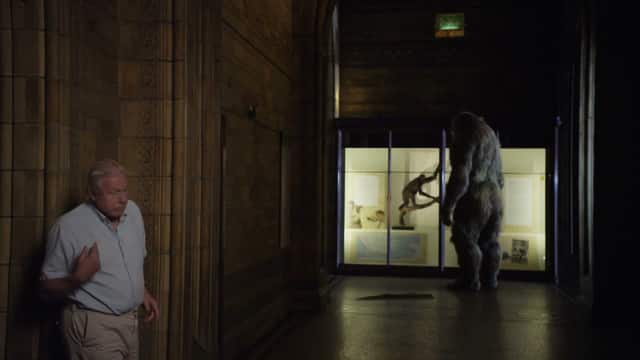
An upright animal has its head on the top of its spine, as I do.
And if that head is to be well-balanced,
No pauses, keep up with the actor
Space play/pause · ← → previous/next line · R replay
Why it's worth practising
A precise anatomical explanation quietly shifts into something uncanny when the ancient ape seems to return the gaze. The shift gives performers a useful study in controlled curiosity turning to unease.
A museum presenter explains to viewers why upright animals balance their heads differently, using his own posture as a reference. The comparison leads him to imagine meeting Gigantopithecus face to face.
Delivery tip
Keep the first half measured and explanatory, then let the final phrase slow down with a small puzzled smile. The subtext is startled kinship rather than fear.
Phrases in this speech
Sign in to save monologues and keep track of the lines you've practised.
More monologues from David Attenborough's Natural History Museum Alive
 B252 lines · 5m 27s
It's hard to imagine a time when the world didn't know about dinosaurs
A Tooth Rewrites the WorldDavid Attenborough's Natural History Museum Alive · 2014ReflectiveInspirationalThe piece builds from a tiny odd tooth to a rewritten view of prehistoric life, giving the narrator a clean arc from curiosity to awe. Its measured explanations leave room for precise emphasis and quiet wonder. B26 lines · 39s
certain ancient animals that we'll never see with our own eyes
Extinct Creatures, Quiet WonderDavid Attenborough's Natural History Museum Alive · 2014ReflectiveInspirationalAttenborough moves from familiar wildlife to creatures no one can ever see alive, letting curiosity and a dry hint of suspicion build the scene. The measured pacing is ideal for studying documentary narration and restrained emphasis.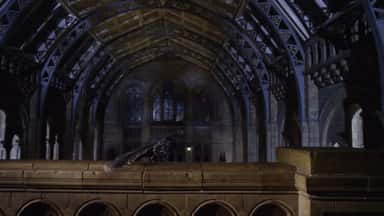 B210 lines · 1m
This creature was half reptile, half bird.
Half Reptile, Half BirdDavid Attenborough's Natural History Museum Alive · 2014CalmIdentity & GrowthWonder builds line by line as bone marks, muscle anchors and skull scans turn a static fossil into a creature caught mid-evolution, giving actors a clean model for patient, evidence-led persuasion.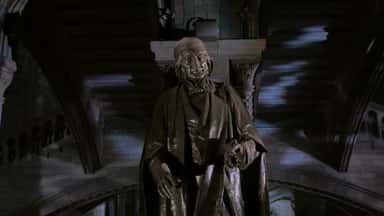 B213 lines · 1m 26s
This was no myth.
From Myth to MoaDavid Attenborough's Natural History Museum Alive · 2014ReflectiveDramaticA cool scientific account gathers real suspense as legend becomes evidence and a question hangs in the air. It rewards controlled pacing, precise emphasis, and quiet awe.
More monologues
 C121 lines · 1m 6s
Everything is safe. Everything is careful.
A Cruel Box SeatEscape Room · 2019GrimPower & MoneyThe speaker starts with stinging accusation, then widens into a cold defense of spectacle and cruelty. The shift gives actors a sharp study in controlled contempt and rising menace. C112 lines · 56s
I think all bullets should cost $5,000.
The $5,000 BulletBowling for Columbine · 2002WittyConfrontationChris Rock twists a serious gun debate into escalating absurdity, moving from deadpan proposal to mock outrage. The shift gives performers sharp timing practice and a bold punchline attitude. C19 lines · 23s
Do I have to tell you what kind of knife it was?
Controlled Courtroom FuryThe Lincoln Lawyer · 2011IntenseJustice & RevengeMickey's voice stays eerily controlled while the facts get uglier, then lands a final rhetorical punch. Great for practicing restraint, escalation, and courtroom pressure. C16 lines · 28s
You were supposed to be the witness.
A Witness Left UnharmedYou're Next · 2011CalmConfrontationThe speaker sounds almost reasonable while describing an unforgivable scheme, then snaps into a short question about Zee. It is a sharp study of control, subtext, and sudden alarm.