
“he wrote a few letters, and he faded into a footnote.”
Por qué es buena
Two calm clauses that measure a whole life from noise to footnote.
Registro
literary
Úsala tú
He made some noise, then became a footnote.
Capítulo 22 de 30 · 5'04"
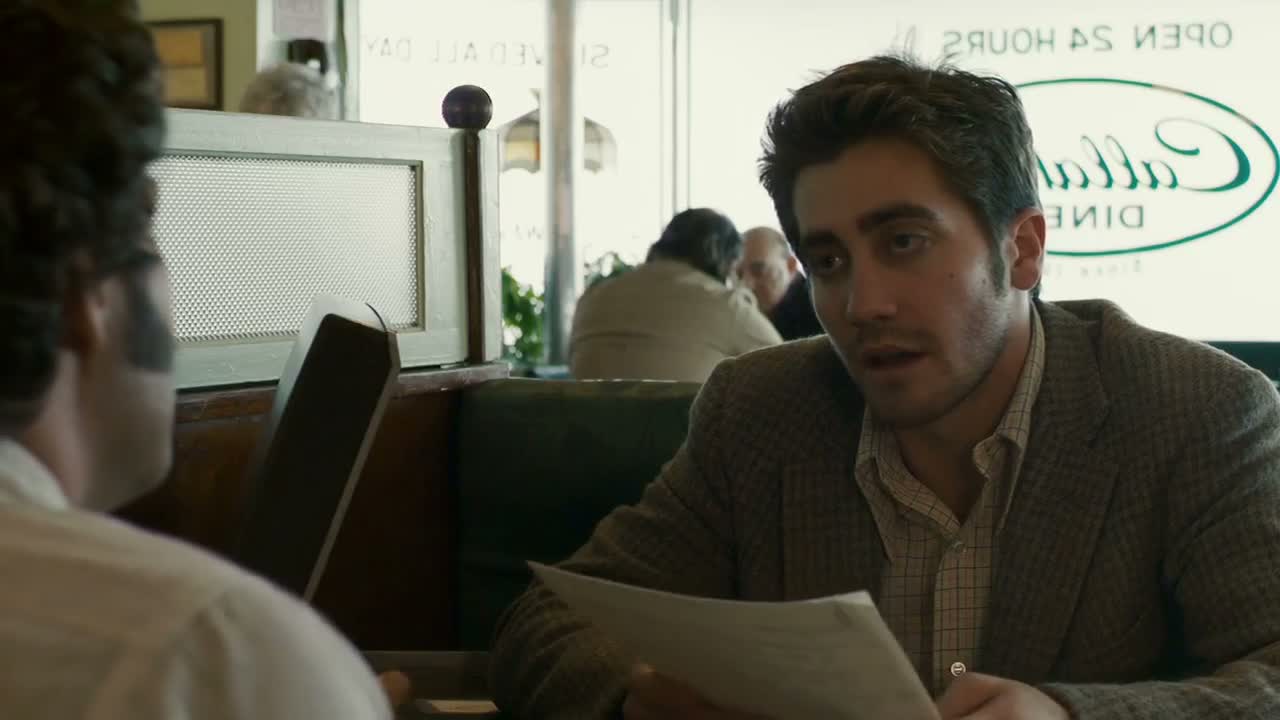
On the surface it is two colleagues drinking and catching up. Underneath, one is still haunted by the case while the other insists it is over: the killer "wrote a few letters, and he faded into a footnote." The conversation becomes a fight about whether the past still matters.
Two Friends Argue About the Case
Graysmith visits Paul Avery for a drink and suggests that someone should write a book about the Zodiac case. Avery, bitter and drinking, says the killer has faded into a footnote and tells him to let it go. Undeterred, Graysmith later approaches Inspector Toschi with his own library research.
The scene is a study in two ways of living with an unsolved case. One man needs it to matter; the other has decided it doesn't. Avery waves the whole thing off with "he faded into a footnote," and tells his friend to let it go, but the bitterness in his voice says the case still owns him. Graysmith keeps pushing, asking what anyone ever did and proposing a book that might jog something loose. When the police dismiss him too, he doesn't stop—he goes to the library and finds that nearly every book on ciphers was stolen, which turns a dead case back into a lead. The stubbornness that annoys everyone is exactly what keeps the hunt alive.
A1–C2 es la escala MCER. Las tarjetas por encima del nivel elegido se atenúan y la reproducción no se pausa en ellas.
“he wrote a few letters, and he faded into a footnote.”
Two calm clauses that measure a whole life from noise to footnote.
literary
“You're wrong. It was important.”
Two short sentences that refuse to let an important thing be dismissed.
Informal
“Somebody didn't want a record of ever having checked out these books.”
A quiet deduction that turns a library detail into a chilling intent.
Neutral
“Somebody should write a book.”
A casual verdict that something deserves to be written down before it fades.
Informal
 Siguiente · 23yesterday's newsLa escena: Graysmith Talks His Way In
He treats the case as finished, saying the killer wrote a few letters and faded away, and he tells Graysmith to let it go.
He thinks the first cipher was built from books an amateur could find, so tracing those books might trace the killer.
Almost every book on ciphers was missing or stolen from the Presidio and Oakland Army Terminal libraries, as if someone erased the record.
He says Zodiac hasn't written in three years and that the city has plenty of other murders and grieving families to handle.