
“I can't allow you to help.”
Por qué es buena
A polite but absolute no: the refusal is about you, not about helping.
Registro
Neutral
Úsala tú
I'm not allowed to let you get involved.
Capítulo 23 de 30 · 5'05"
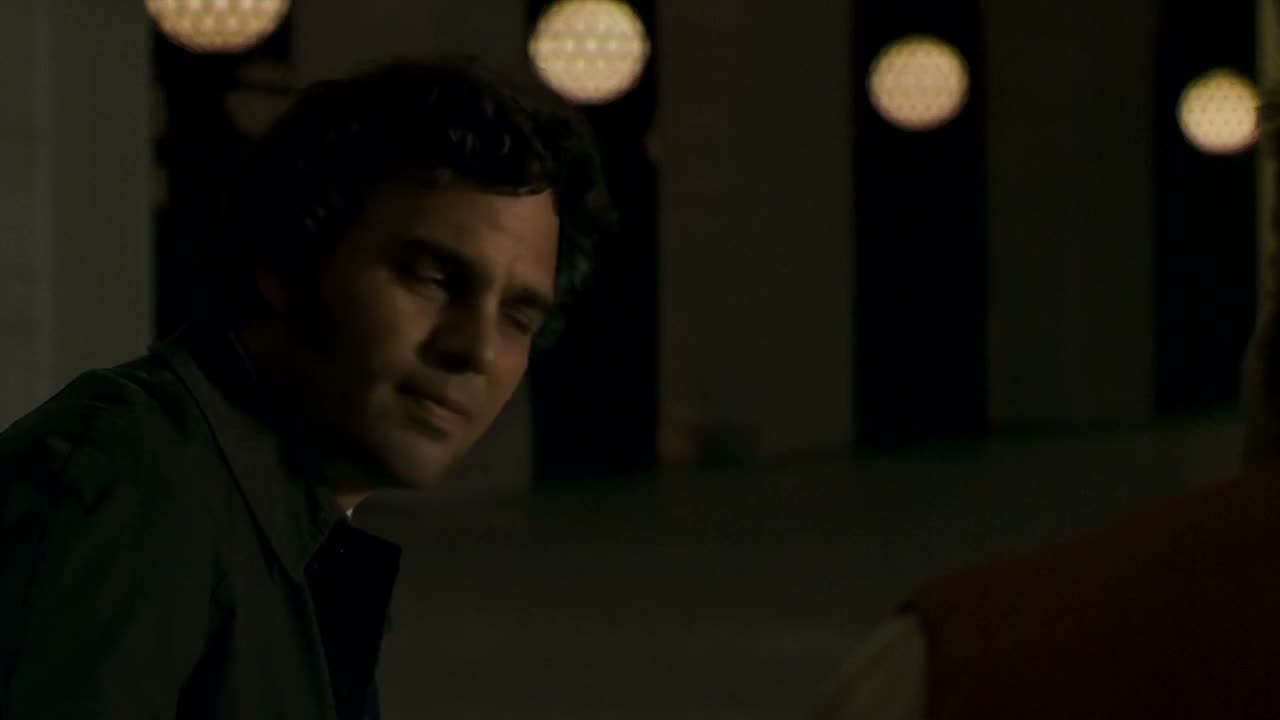
A cartoonist who wants to help on the Zodiac case is turned away — "I can't allow you to help" — because the police don't cooperate with writers. He keeps pushing, trading on a friend's name and a mild "what's the harm," until he is allowed to read the files with one condition: no pens, no paper.
Graysmith Argues His Way Into the Files
Not a Meeting, Just a Bench
Robert Graysmith asks to help with the Zodiac investigation and is refused: it's an open case, and the police don't work with writers. He mentions a recommendation from a detective and argues it can't hurt, until he is allowed to read the files from memory, with no pens or paper. Later he corners the inspector to ask about Darlene.
The scene is about access, and about how a civilian gets it. The inspector's refusals are formal, almost rehearsed — "I can't allow you to help," "we don't cooperate with writers" — and Graysmith's countermove is to be harmless: not a writer, an Eagle Scout, a friend of a friend. The line "we're not meeting" that denies even their bench conversation shows how carefully the rules are drawn. His persistence is both admirable and a little unsettling, since he is chasing a case everyone else calls "yesterday's news." The files he is allowed to touch teach the audience the same rule he learns: look, but don't take anything away.
A1–C2 es la escala MCER. Las tarjetas por encima del nivel elegido se atenúan y la reproducción no se pausa en ellas.
“I can't allow you to help.”
A polite but absolute no: the refusal is about you, not about helping.
Neutral
“We're just two guys who happen to be sitting on the same bench at the same time.”
A clever dodge that defines a meeting as pure coincidence.
Informal
“I mean, the case is dead. Zodiac's long gone.”
Two flat clauses that declare an old case not just unsolved but over.
Informal
“I understand what you're trying to do.”
A calm acknowledgment that sees through someone without calling them out.
Neutral
 Siguiente · 24more than just a coincidenceLa escena: Graysmith Follows the Birthday Clue
They say it's an open investigation and that they don't cooperate with writers, since a book or article could compromise the case.
He draws cartoons for a living, so he uses that to argue he isn't a journalist chasing a story, even though he clearly wants in on the case.
No pens and no paper. He can read anything relevant but must remember it in his head, so nothing leaves the room.
Only on his own terms. The later bench conversation is framed as two men coincidentally sharing a seat, not as an official meeting or help.