
“We have been happy, haven't we?”
Por qué es buena
A tag question turns a happy memory into a plea for confirmation.
Registro
Neutral
Úsala tú
We have been close, haven't we?
Capítulo 4 de 15 · 2'39"
Everyone is being kind to Leslie the night before the trial — her husband, the guests, even the lawyer. The kindness is a cover for a harder question: "some of the shots must have been fired after he was lying on the ground." Leslie's answer is terror and confusion, and no one pushes further.
Leslie and Robert Before the Trial
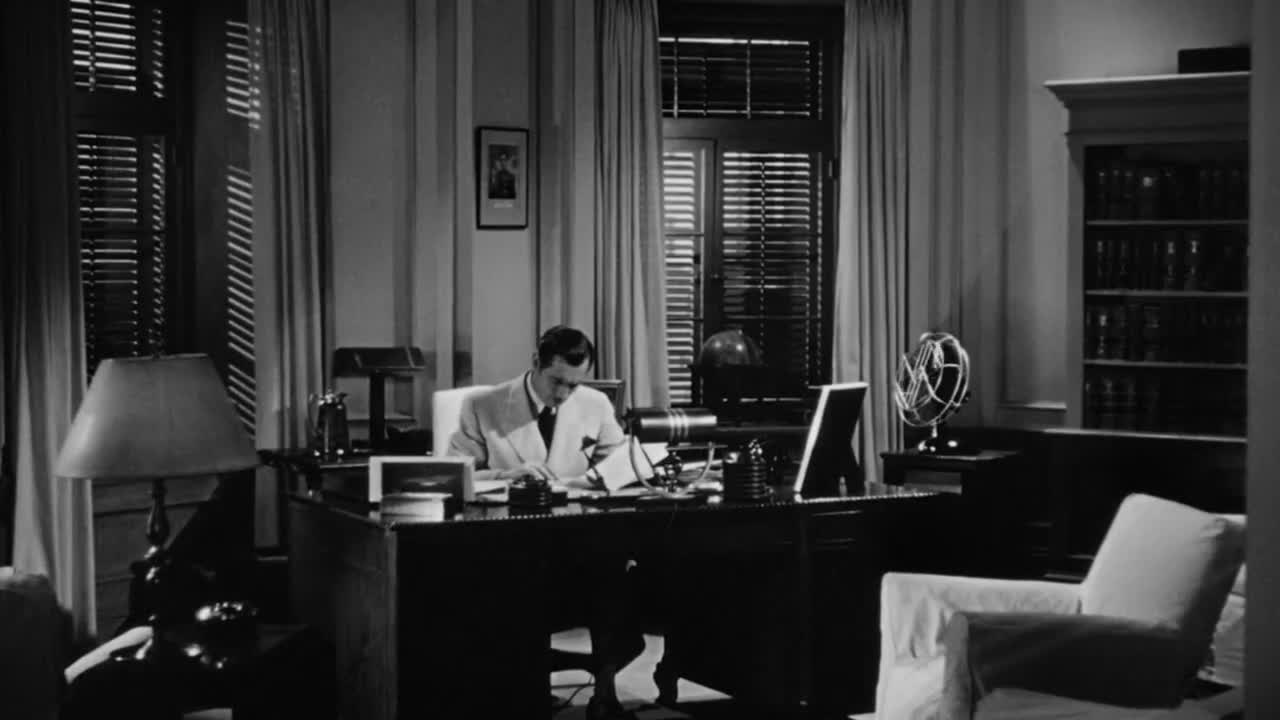
On the night before Leslie Crosbie's trial, she and her husband Robert reassure each other at home while guests chat about the dead man, Hammond. Later the lawyer Howard Joyce takes Leslie aside and asks about the body: some shots, he says, appear to have been fired after Hammond was already on the ground. Leslie says she was terrified and confused.
The night before the trial is built as a quiet social occasion, and that is exactly what makes it tense. Everyone is careful with Leslie: Robert promises "Nobody's going to do anything to you," and the guests praise how she told her story, saying "You could see that she was just holding on to herself like grim death." But the scene is also an investigation in disguise. Joyce's question — "some of the shots must have been fired after he was lying on the ground" — is the first hard piece of physical evidence that does not match a simple story of one terrified woman firing at an attacker. Leslie does not deny it; she explains it away with fear — "I was so terrified" and "I didn't know what I was doing" — and the room lets her. Joyce even apologises for raising it, then tells her to put it out of her mind. The politeness is the problem: everyone already knows which answer they want.
A1–C2 es la escala MCER. Las tarjetas por encima del nivel elegido se atenúan y la reproducción no se pausa en ellas.
“We have been happy, haven't we?”
A tag question turns a happy memory into a plea for confirmation.
Neutral
“You could see that she was just holding on to herself like grim death.”
The image of grim death turns self-control into a physical struggle we can see.
Informal
“You know the sort... very breezy, devil-may-care, generous with his money.”
One hyphenated phrase captures a whole type: breezy, reckless and generous at once.
Informal
“Well, how can you tell what a man will do when he's drunk?”
The rhetorical question refuses to judge, which keeps sympathy moving toward Leslie.
Neutral
“I'm sorry, my dear, but this is a question that's bound to come up.”
Bound to come up admits the question is unavoidable, softening a blow he still delivers.
Formal
“I shouldn't have brought it up tonight.”
The should-not-have regret shows the lawyer knows he has pushed too soon.
Neutral
 Siguiente · 05go to blazesLa escena: Ong Brings Joyce a Delicate Matter
He has examined Hammond's body and noticed that some shots were fired after Hammond was already on the ground. He wants her explanation before the trial, when the question is certain to come up.
She says she was terrified and that everything was confused and blurred, so she did not know what she was doing. It explains the extra shots as panic rather than intent.
It means holding on with desperate determination, as if to the death. A guest says Leslie held on to herself like grim death while telling her story.
He apologises for raising it and tells Leslie to put it out of her mind. He is protecting her as much as preparing her defence.
They call him a swine for what he did, yet also recall him as a charming, generous drinker you could not help liking, a mix that shows their sympathy lies with Leslie.