
“I didn't write it. I swear I didn't write it.”
Por qué es buena
One denial, then the same denial sworn: the louder the protest, the less it is believed.
Registro
Informal
Úsala tú
I didn't take it. I swear I didn't take it.
Capítulo 8 de 15 · 2'20"
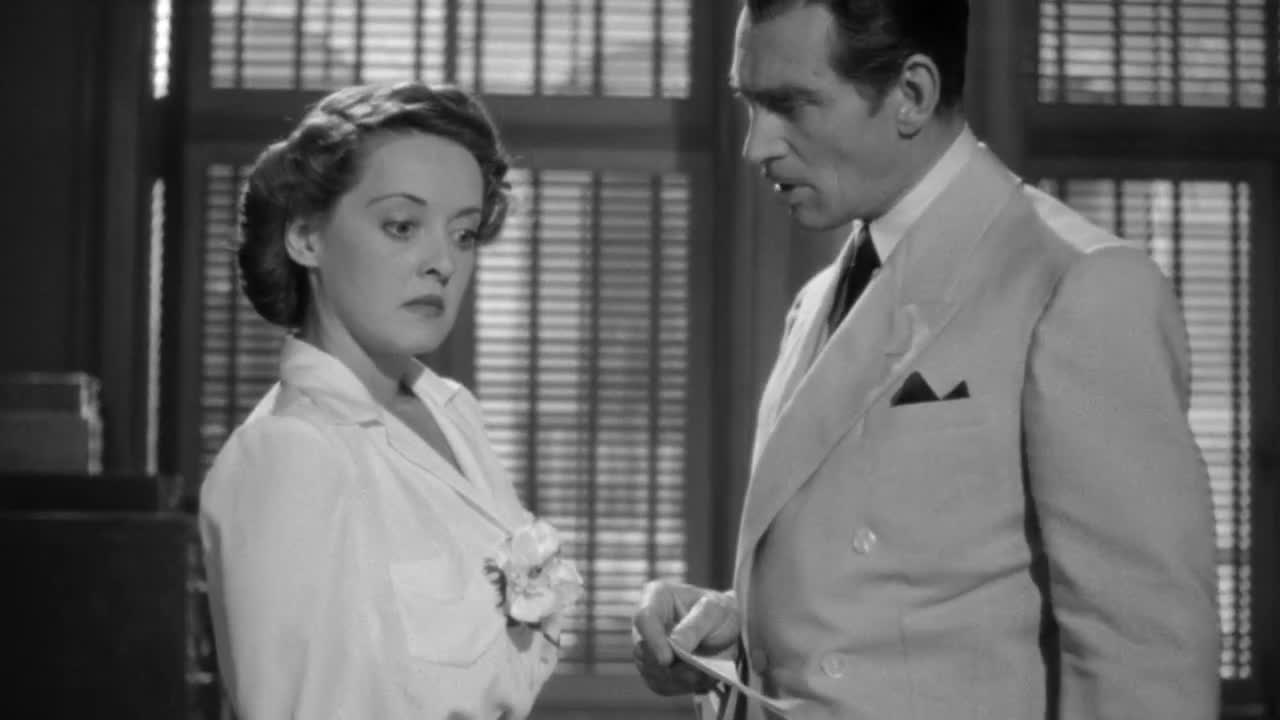
Howard has the letter, and he wants Leslie to explain it. She swears, "I didn't write it," then admits she did and offers a birthday surprise as the reason. The scene is really about whether Howard believes her—and how far he will go to protect her.
Leslie Admits She Wrote the Letter
Howard Reads the Letter Aloud
Howard Joyce brings Leslie the letter that was sent to Geoffrey Hammond and asks what it means. Leslie denies writing it, then admits she did, claiming she invited Hammond to arrange a birthday surprise for Robert. Howard points out that the prosecution could question her servants, and finally reads the letter aloud before telling her he must speak plainly.
Leslie's story shifts with the pressure. First she is certain—"I didn't write it. I swear I didn't write it"—then, once Howard mentions the servants who could be questioned, she concedes the handwriting and reaches for the birthday surprise. The excuse is plausible enough to say out loud, but Howard's reply shows he is not buying it: he offers to read the letter back to her, and the words—"Robert will be away for the night. I absolutely must see you"—make a shopping errand for a gun sound unlikely. His closing line, "I shall have to talk very plainly to you," signals the private conversation is only beginning.
A1–C2 es la escala MCER. Las tarjetas por encima del nivel elegido se atenúan y la reproducción no se pausa en ellas.
“I didn't write it. I swear I didn't write it.”
One denial, then the same denial sworn: the louder the protest, the less it is believed.
Informal
“Then it'll be a forgery.”
Five words that move the blame entirely elsewhere, delivered with unnerving calm.
Neutral
“It's not dated. It might have been written years ago.”
One sentence removes the date as evidence, the oldest defensive move there is.
Neutral
“I did write that letter, but I was afraid to mention it.”
The whole turn of the scene sits in this one line: full denial gives way to a confession.
Neutral
“I was forced to stick to it.”
She calls her lie a force of circumstance, quietly shifting the blame off herself.
Neutral
“Then you'll be called upon to explain why you asked him to come to see you when Robert was away.”
He states no verdict, just hands her the impossible question to answer herself.
Formal
“Leslie, I shall have to talk very plainly to you.”
A warning and a last offer in one line: from here on, there is no more room for evasion.
Formal
 Siguiente · 09save your neckLa escena: Howard Refuses to Buy the Letter
She says she wanted to buy a new gun as a birthday surprise for Robert; Howard treats the story as doubtful once the letter is read back.
She admits she wrote it but keeps changing the reason, and the letter's pleading tone fits an affair better than a shopping errand.
He warns that the prosecution could question her servants and find out whether a letter was delivered to Hammond on the day he died.
He wants her to see that a forgery claim is hard to prove, while a genuine letter is easy to confirm, so her best hope is to be honest with him.
She claims she was only planning a surprise; he offers the letter so she can hear how it actually sounds and answer for it.