00:00 / 02:10
00:00 / 02:10

Fletcher Pitches His Story to Ray, Explained

The Gentlemen · 2020

Capítulo 1 de 15 · 2'10"

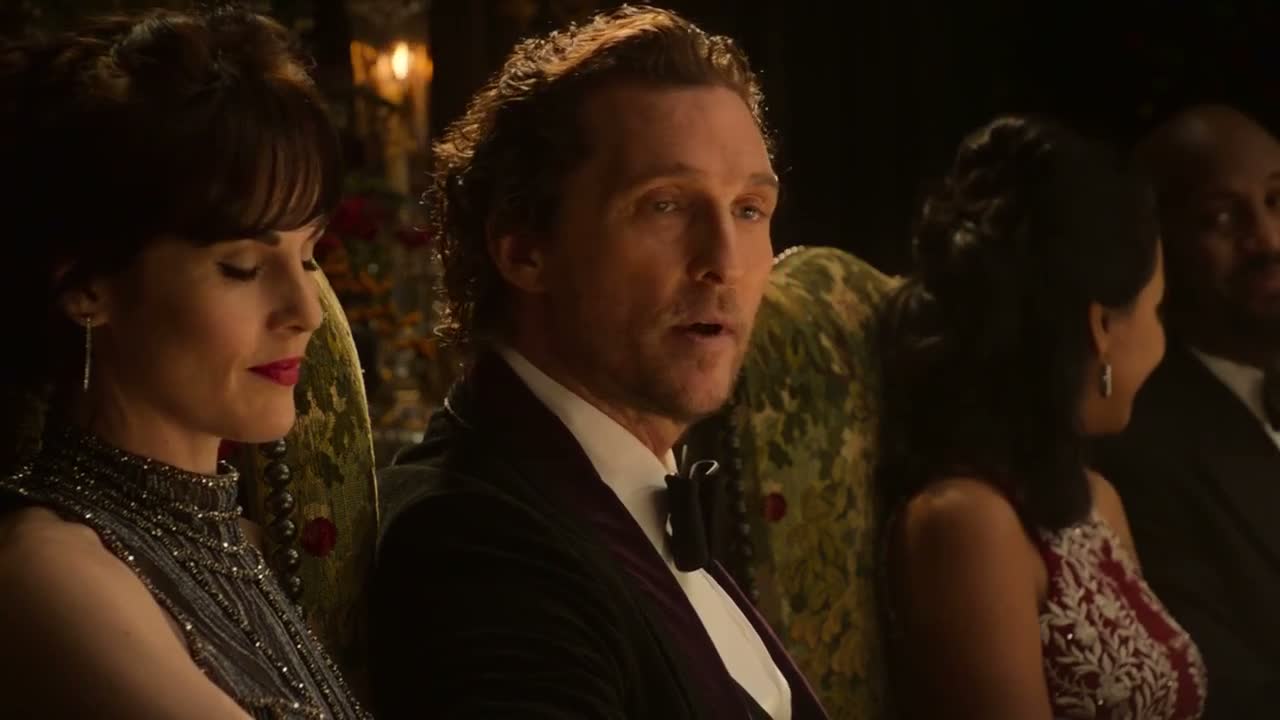
Fletcher, drinking a bottle of scotch worth a fortune, refuses to lower his price and turns his pitch into a movie. He asks Ray to imagine a character, insists on film, grain and old-school cinema, and invites him along on the 'cinematic journey' — while insulting him with a smile.

NegotiationStorytellingPersuadingThreateningRivalsC1mediumbritish

Key moments

Start here, then watch the full scene
  1. ❝ Monólogo · 11 frases Fletcher Turns His Pitch Into a Movie

    1:19–2:04
    45s
  1. ❝ MonólogoFletcher's film speech11 frasesPracticar ↗

Fletcher Pitches His Story to Ray, explained

What happens

At Mickey Pearson's mansion, the journalist Fletcher shares an expensive scotch with Ray and refuses to lower his price. He proposes a game: Ray must imagine a dramatic character, on actual film, not digital. Fletcher calls it a 'cinematic journey,' names the old-school format, says 'roll camera,' and starts narrating his protagonist.

What's really going on

The scene is the film explaining its own method. Fletcher refuses to just tell Ray the story; he makes Ray watch it the way he wants it told — on film, with grain, in the old-school format — and his insistence on 'cinema' is both an aesthetic credo and a power move. He controls the frame, so he controls the deal. The language slides between threats and flirtation — he calls Ray lucky, jokes about talking dirty, and says that what he could ask for is bigger than what he is asking — and the charm is the trap. The line "And I want you to join me on this cinematic journey" is the invitation that is really a demand, and the cut to "roll camera" turns an extortion pitch into a movie. It is the film telling you exactly how it will be told.

Key lines & what they mean

“And I want you to join me on this cinematic journey, 'cause it is cinema, Ray.”
Fletcher invites Ray into the story as if it were a movie, which is also his way of running the negotiation on his own terms.
“Yeah, but I would argue that you're lucky, because that is nothing”
A threat dressed as generosity: what Fletcher is asking for is minor next to what he could demand, so Ray should feel fortunate.
“Now, I want you to imagine a character.”
The framing device begins: Fletcher asks Ray to picture a character, casting the tale as fiction even though it is about real people.
“Analog. Chemical process. Keep the grain in the picture, I say.”
Fletcher's aesthetic manifesto: film, chemical development, visible grain — old-school cinema as a mark of taste and control.

Theme

  • Power — Fletcher controls the story, the frame, and the price; turning the pitch into a film is his way of staying in charge.
  • Deception — The charm and the movie talk hide an extortion; a friendly drink is the setting for a threat delivered as entertainment.

Qué aprendes en este capítulo

Puntos de enseñanza

Repasa justo después de ver
Mi nivel2/6

A1–C2 es la escala MCER. Las tarjetas por encima del nivel elegido se atenúan y la reproducción no se pausa en ellas.

The Gentlemen: tu progreso

Capítulo 1 de 15 · quedan unos 42 min

Siguiente · 02pull the plug onLa escena: Mickey and Matthew's Dinner Standoff

Ideas clave

Lo que te llevas
  1. Fletcher sells threats with a filmmaker's confidence.
  2. Praise can be the sharpest insult in the room.
  3. Movie jargon here is a status game, not small talk.
  4. The price sounds fixed because his story never changes.

Preguntas frecuentes

La pregunta, luego la frase
Why does Fletcher insist on telling the story as a film?

It keeps him in control of how the events are framed and lets him move between charm and threat. By casting it as cinema, he decides what Ray sees and when.

Why won't Fletcher lower his price?

He says his quote is his quote and argues Ray is lucky, because what he is asking is small compared to what he could demand. The refusal is part of the pressure.

What is the game Fletcher proposes?

He wants Ray to imagine a dramatic character, as if in a book, play, or film, and he insists it be played on film rather than digital — a storytelling game that is really a power play.

Why does Fletcher keep insulting Ray?

He mixes insults with flattery on purpose. The crude jokes and the expensive scotch are all part of the same performance, keeping Ray unsettled while the deal is negotiated.