
“My name is Raymond Smith.”
Por qué es buena
A bare name-and-surname line that lands like a curtain-raiser: trouble has arrived.
Registro
Neutral
Úsala tú
My name is Daniel and I'll be your guide today.
Capítulo 7 de 15 · 2'40"
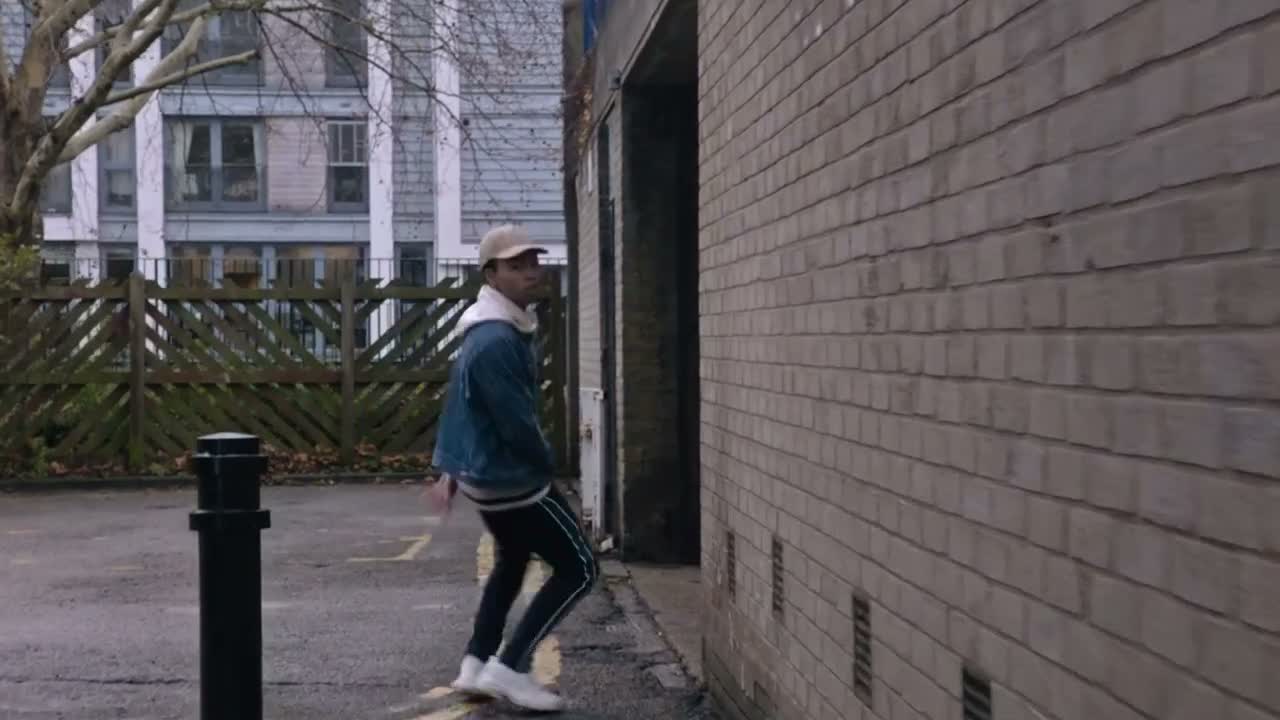
Raymond Smith arrives at a door with a polite request: a moment of the occupant's time, to talk about Laura Pressfield. "It would be much easier for all parties concerned if I could just step inside," he says, and the charm goes nowhere.
The Narrator Sets Up Raymond's Moment
Raymond Smith Comes to the Door
Raymond Warns Brown and His Mates
Raymond Smith comes to a house and asks, politely, to be let in. He introduces himself, says he only needs a moment, and mentions Laura Pressfield. The man at the door denies knowing the name and tells him to leave. Out on the street, two lads admire Raymond's car and ask to borrow the keys.
The scene is about manners as leverage. Raymond stays almost painfully polite — "It would be much easier for all parties concerned if I could just step inside for a moment" — and every soft phrase is doing work, pressing the man at the door to open it. When the door stays shut, the tone flips: this is a man who has a plan and expects the name Laura Pressfield to change the conversation. Around him, the street supplies the comedy and the threat. Two lads praise his car, mock the rims, and ask for the keys, treating a stranger's property as fair game; later, the same kind of swagger meets someone who is not amused. The scene runs on the idea that courtesy, when it fails, is one line away from menace — and the golden line states the theme: no good deed goes unpunished.
A1–C2 es la escala MCER. Las tarjetas por encima del nivel elegido se atenúan y la reproducción no se pausa en ellas.
“My name is Raymond Smith.”
A bare name-and-surname line that lands like a curtain-raiser: trouble has arrived.
Neutral
“It would be much easier for all parties concerned if I could just step inside for a moment.”
The conditionals dress a demand as a courtesy, so refusing feels rude rather than firm.
Formal
“I can be dangerous if I want to be. Get the fuck out now.”
A conditional promise of danger followed by a flat order makes the threat feel certain.
Informal
“And this is where you have your moment, isn't it, Raymondo? This is where you step on stage.”
The narrator casts an errand as a stage entrance, announcing who directs the scene.
Informal
 Siguiente · 08come in peaceLa escena: Roadmen Try to Rob a Phone Buyer
Because politeness is his tool. He wants inside without a scene, so he offers an "easier" option for everyone and only turns harsh when the door stays shut.
It is a wry saying that helping people brings trouble. The narrator uses it to set up Raymond's arrival, hinting that his visit will cost everyone involved.
She is the name Raymond drops to change the conversation. The man at the door claims not to know her, which is exactly the reaction Raymond seems prepared for.
They are sizing up Raymond's car — praising it, criticizing the rims, then asking to borrow the keys. It is a soft shakedown dressed up as friendly admiration.