
Pequeño gran hombre: contar cómo lo adoptaron
I wasn't just playing Indian, I was living Indian.
· Pequeño gran hombre (1970)
AUDITION CUE SHEET & SCRIPT
Pequeño gran hombre (1970)
contar cómo lo adoptaron
Lines: 17 | Words: 203
Time: 1m 46s
Target Pace: 115 WPM
| # | Time | Dialogue & Cue Beats | Acting Notes / Subtext / Blocking |
|---|---|---|---|
| 1 | 0:00 | I reckoned she figured we both couldn't get away, and she'd send help back to rescue me. | |
| 2 | 0:08 | Next morning, I found myself in that Indian camp all alone. | |
| 3 | 0:19 | But the Cheyenne, who call themselves the "Human Beings," had no idea to hurt me. | |
| 4 | 0:26 | I was an honored guest, and they gave me a real treat for breakfast: Boiled dog. | |
| 5 | 0:31 | Dog ain't bad, neither. | |
| 6 | 0:33 | Now dog is greasy, I'll admit, but you'd be surprised how downright delicate the flavor is, especially when you're starving. | |
| 7 | 0:41 | You see, the Human Beings adopted me as one of their own. | |
| 8 | 0:45 | Shadow That Comes In Sight taught me the bow and arrow and how to stalk game. | |
| 9 | 0:51 | Burns Red In The Sun showed me how to protect my pale skin from sunburn. | |
| 10 | 0:57 | It's a little known fact that some Indians, like Burns Red, will sunburn their own selves. | |
| 11 | 1:03 | But my real teacher was my adopted grandpa, Old Lodge Skins. | |
| 12 | 1:09 | He taught me to read a trail, the Cheyenne language, and lots of other things. | |
| 13 | 1:22 | For a boy, it was a kind of paradise. | |
| 14 | 1:25 | I wasn't just playing Indian, I was living Indian. | |
| 15 | 1:39 | Only one thing bothered me. | |
| 16 | 1:42 | I was small for my years. | |
| 17 | 1:44 | In fact, a durn near runt. |
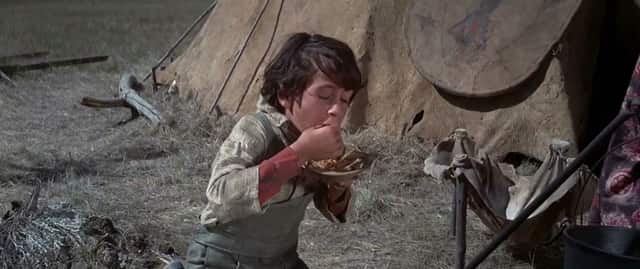
I reckoned she figured we both couldn't get away, and she'd send help back to rescue me.
Supuse que ella pensaba que ambos no podíamos escapar, y que enviaría ayuda para rescatarme.
Next morning, I found myself in that Indian camp all alone.
Sin pausas, sigue el ritmo del actor
Espacio reproducir/pausa · ← → frase anterior/siguiente · R repetir
Por qué vale la pena
El relato mezcla asombro, gratitud y humor seco al describir una infancia inesperada. Es útil para observar cómo una anécdota se vuelve cercana con detalles simples y un remate breve.
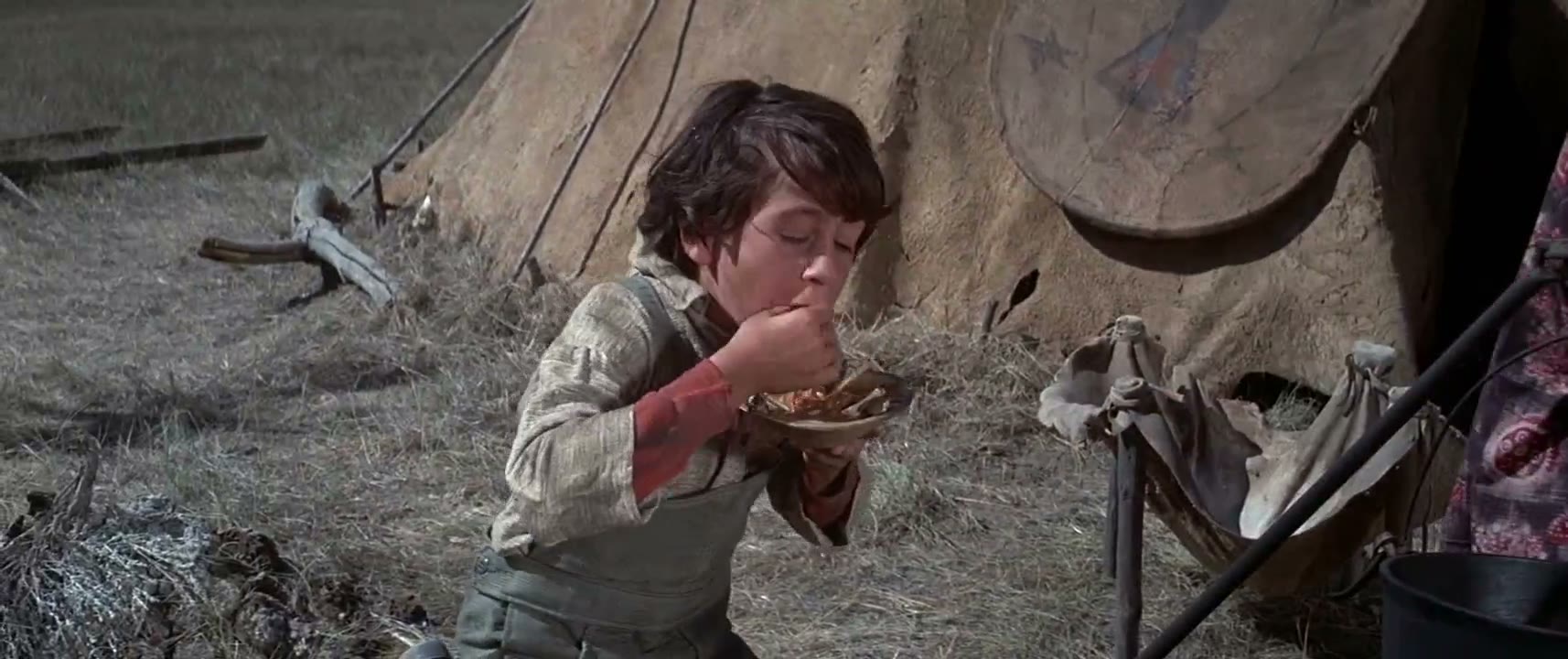
Jack Crabb recuerda los primeros días en el campamento cheyenne, donde lo reciben como huésped y lo adoptan. Explica lo que aprende allí y termina señalando, con humor, que era muy pequeño para su edad.
Consejo de práctica
Mantén un ritmo tranquilo al enumerar las enseñanzas y deja que el último detalle suene a confesión divertida. Marca el contraste con una pausa breve antes de hablar de su tamaño.
Frases de este monólogo
Inicia sesión para guardar monólogos y llevar la cuenta de las frases que has practicado.
Más monólogos de Pequeño gran hombre
 B29 frases · 1m 6s
Do you see this fine thing?
explicar el valor de la vidaPequeño gran hombre · 1970ReflexivoIdentidad y crecimientoEl anciano muestra un cuero cabelludo y convierte una explicación tranquila en una denuncia sobre dos formas opuestas de entender la vida. La calma de su voz hace que el contraste resulte más inquietante y ofrece una gran oportunidad para trabajar la entonación. B26 frases · 47s
As long as grass growed and wind blow and the sky is blue.
recordar un refugio prometidoPequeño gran hombre · 1970ReflexivoIdentidad y crecimientoLa voz cansada de Jack convierte una promesa legal en un refugio emocional. El ritmo pausado y la repetición final permiten practicar pausas, enlaces y un tono de esperanza frágil. B27 frases · 59s
Now you just set there, and you'll learn something.
contar un pasado dolorosoPequeño gran hombre · 1970SombríoDesamor y dueloLa escena arranca con una orden seca y se abre a una herida antigua. Es útil para trabajar el contraste entre autoridad, memoria y dolor contenido. B26 frases · 21s
I ain't had no use for Pawnee ever since.
hablar de un viejo rencorPequeño gran hombre · 1970ReflexivoIdentidad y crecimientoEl giro es potente: empieza con una herida aún viva y termina con un nombre que revela respeto. Sirve para practicar contraste, pausas y tono al contar una experiencia.
Más monólogos
 B26 frases · 25s
you are the only ones who can do it
anteponer resultados a los sueñosSplice: Experimento mortal · 2009DecididoPersuasión laboralEl giro es seco y convincente: primero acepta el ideal ajeno y después lo cambia por un objetivo comercial. Sirve para practicar entonación firme y pausas de oficina. B27 frases · 34s
A watched pot never boils
explicar una rareza cuánticaEscape Room · 2019IngeniosoTragicómicoParte de una frase cotidiana y entra en una explicación científica con un toque irónico. Es útil para practicar cómo introducir una idea, hacer una pregunta y mantener el control del tono. B213 frases · 1m 15s
Something is wrong in this country
exigir que se aborde el problemaBowling for Columbine · 2002DecididoDesamor y dueloEl peso de la pérdida se siente desde la primera frase, y el giro hacia la exigencia deja un momento muy potente. Para practicar, conviene observar cómo las pausas y la repetición sostienen la emoción sin perder claridad. B29 frases · 22s
I couldn't believe that I actually... Could represent an innocent man.
dudar de un inocenteEl inocente · 2011VulnerableIdentidad y crecimientoEl giro de la seguridad legal a la duda personal tiene mucha fuerza. Es útil para practicar cómo encadenar frases cortas y cómo dejar caer el final con peso contenido.