
“Naturally, your own opinion is more informed than mine.”
Por qué es buena
It sounds humble but quietly mocks the major's sense of her own authority.
Registro
Formal
Úsala tú
Naturally, your plan is more informed than mine.
Capítulo 7 de 22 · 2'51"
A chief nurse sits down with a captain and starts correcting him: the nurses on his shift, the nickname everyone uses, the informality of it all. He answers with insults wrapped in courtesy. "You put me right off my fresh fried lobster," he says, then finishes with a verdict on her.
A Sight for Sore Eyes
He Doesn't Know His Way Around
❝ Monólogo · 5 frases A Regular Army Clown
A new chief nurse joins Captain Pierce at his table and begins listing her objections: she has watched the nurses on his shift, and she dislikes that enlisted men call him by his nickname. Pierce parries the criticism with wisecracks, then delivers his verdict on her.
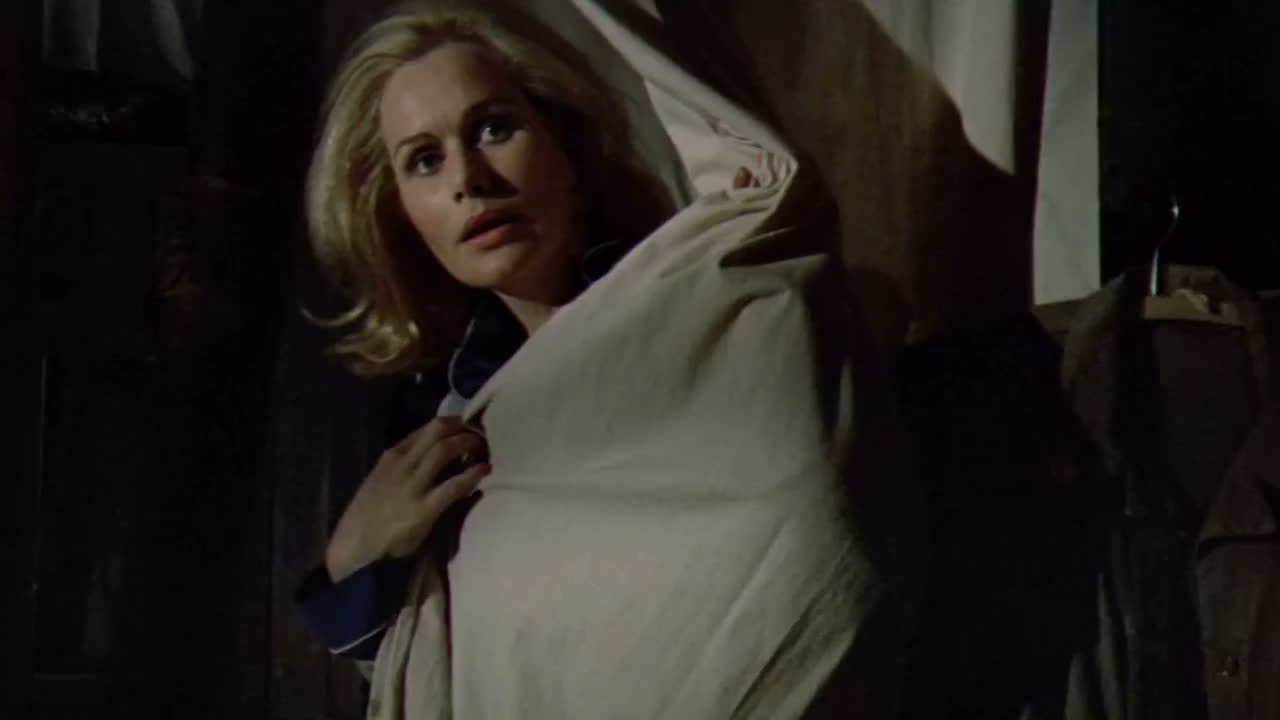
The scene is a power struggle fought with manners. She is a major; he is a captain who lets everyone call him Hawkeye, and she treats that informality as a discipline problem: "that kind of informality is inconsistent with maximum efficiency in a military organization." He refuses to be corrected, and his weapon is mock courtesy. Frank Burns comes up as a professional argument, but the real subject is authority — who gets to set the tone of the unit. Pierce's answer is to make her absurd: "You put me right off my fresh fried lobster," he complains, as if her lecture were merely bad table company, before landing on "a regular army clown." The comedy works because the insult sounds almost friendly, and because he never raises his voice. She came to put him in his place and leaves as the punchline.
A1–C2 es la escala MCER. Las tarjetas por encima del nivel elegido se atenúan y la reproducción no se pausa en ellas.
“Naturally, your own opinion is more informed than mine.”
It sounds humble but quietly mocks the major's sense of her own authority.
Formal
“Frank Burns does not know his way around an operating theater.”
It damns Burns with clinical calm instead of an insult.
Neutral
“He does not know his way around a body.”
One beat further than the first jab, it turns incompetence into something bodily and final.
Neutral
“He has flipped his wig, that he's out of his head, that he's a lousy surgeon.”
Three stacked clauses escalate from madness to incompetence in one breath.
Informal
“You put me right off my fresh fried lobster, do you realize that?”
The insult hides inside a dinner detail, which is exactly what makes it land.
Informal
“I mean, you're what we call a regular army clown.”
The polite framing 'what we call' makes the label army clown hit harder.
Informal
You put me right off my fresh fried lobster, do you realize that? I'm going to go back to my bed, I'm gonna put away the best part of a bottle of scotch, and under normal circumstances— you being normally what I would call a very attractive woman— I would have invited you back to share my little bed with me, and you might possibly have come. But you really put me off. I mean, you're what we call a regular army clown.
 Siguiente · 08makes me soreLa escena: The Hot Lips Radio Broadcast
She sees the nickname as a discipline problem. In her view, enlisted men and nurses using a first-name-style tag for an officer is inconsistent with the efficiency a military organisation needs, so she raises it as a formal complaint.
It is a joke used as an insult. By saying her lecture ruined his fresh fried lobster, he dismisses her authority as nothing more than bad company at a meal. The food is beside the point.
Because she has spent the scene correcting him about nurses, nicknames and regulations. Calling her an army clown is his way of saying that her rule-obsession is comic rather than serious, and it ends the exchange on his terms.
The film keeps it one-sided: the surgeons treat Burns as incompetent, and the praise of him as a "good military surgeon" sounds like faint, backhanded defence. His unsuitability is a running joke, so the criticism lands.