
“No, it's not that. It's time.”
Por qué es buena
The obstacle is not physics but time, and two words say it.
Registro
Neutral
Úsala tú
No, it's not the money. It's trust.
Capítulo 6 de 13 · 2'53"
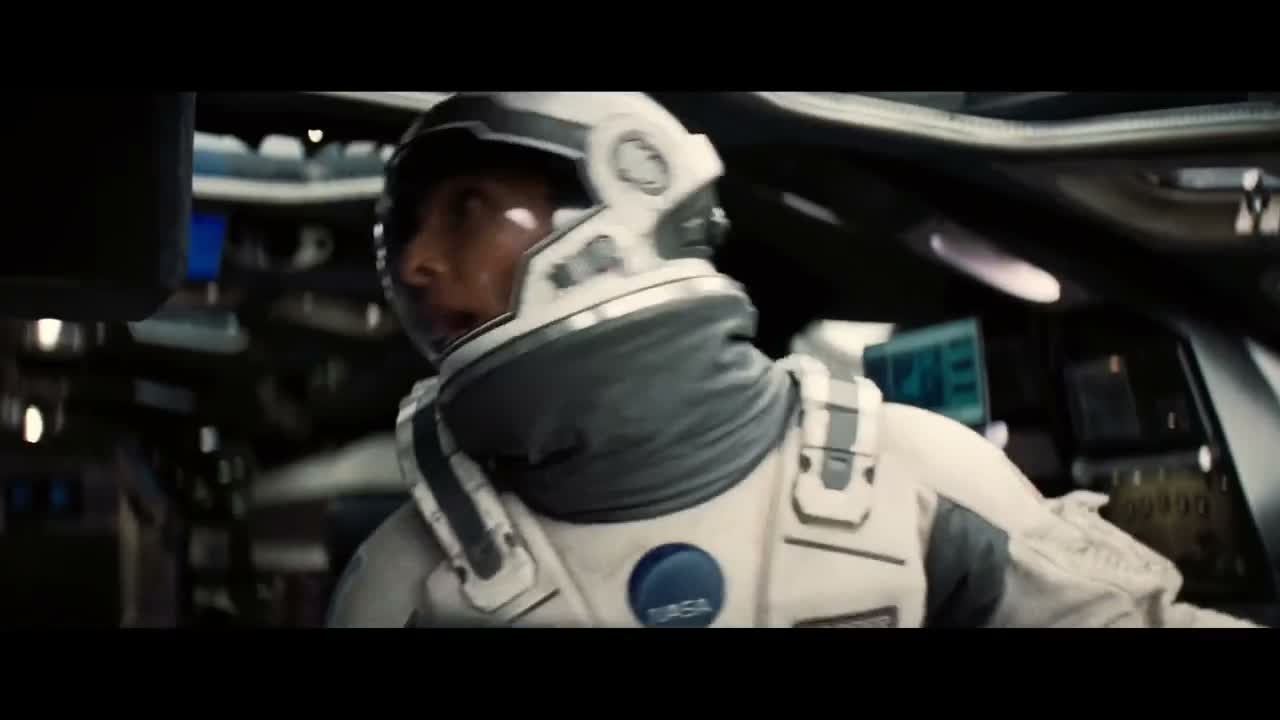
Miller's planet orbits so close to the black hole that every hour there costs seven years on Earth. They argue about whether that is worth it: someone says they have to "think of time as a resource," while another warns, "Plan A does not work if the people on Earth are dead by the time we pull it off."
An Hour Costs Seven Years
On the Endurance, the crew go over the data from the lost signals. Miller's beacon is still pinging "thumbs up," but Edmunds' went dark. The real problem is time: Miller's planet is so near the black hole that an hour there equals seven years on Earth. Cooper argues they can't ignore the people they left behind, and the team works out a wider orbit that saves time.
This is a scene about arithmetic, not adventure. The scare isn't the black hole; it's the price of a single visit. Someone spells it out - an hour on the surface, "seven years back on Earth" - and the room has to treat time like a finite supply. That is the argument behind the line "We need to think of time as a resource, like oxygen and food." Cooper pushes back against a colleague who tells him to "think bigger," insisting that a plan which saves humanity after everyone has starved is no plan at all. The resolution is quietly practical: a wider orbit, a little more fuel, a lot less lost time. The film keeps its stakes human - not whether the physics works, but whether the people left behind are still alive when you return.
A1–C2 es la escala MCER. Las tarjetas por encima del nivel elegido se atenúan y la reproducción no se pausa en ellas.
“No, it's not that. It's time.”
The obstacle is not physics but time, and two words say it.
Neutral
“Plan A does not work if the people on Earth are dead by the time we pull it off.”
A plan is only as good as the people it is meant to save.
Formal
“We need to think of time as a resource, like oxygen and food. Going down will cost us.”
Time joins oxygen and food as a budget item, which makes every choice cost something.
Neutral
“You can't just think about your family. Now you have to think bigger.”
A blunt demand to weigh family against the whole species, and the film's central conflict in one breath.
Neutral
 Siguiente · 07the stuff of lifeLa escena: Escaping the Wave on Miller's Planet
It orbits extremely close to the black hole Gargantua, so its gravity drastically slows their clock. Every hour they spend on the surface equals seven years back on Earth.
It means to succeed in completing something difficult. The warning is that Plan A only works if people on Earth are still alive when the crew finally manage to carry it out.
Instead of parking the Endurance in orbit, they take a wider path around Gargantua that keeps them out of the time shift. They burn a bit more fuel but lose far less time.
He argues the mission exists to save the people still living on Earth, including his own family, so a plan that reaches them too late has failed them.