
“He's remarkable. He's the best of us.”
Por qué es buena
Praise and ranking in two lines set up both the hope and the fall.
Registro
Neutral
Úsala tú
She's one of a kind. The best of us, really.
Capítulo 5 de 13 · 4'24"
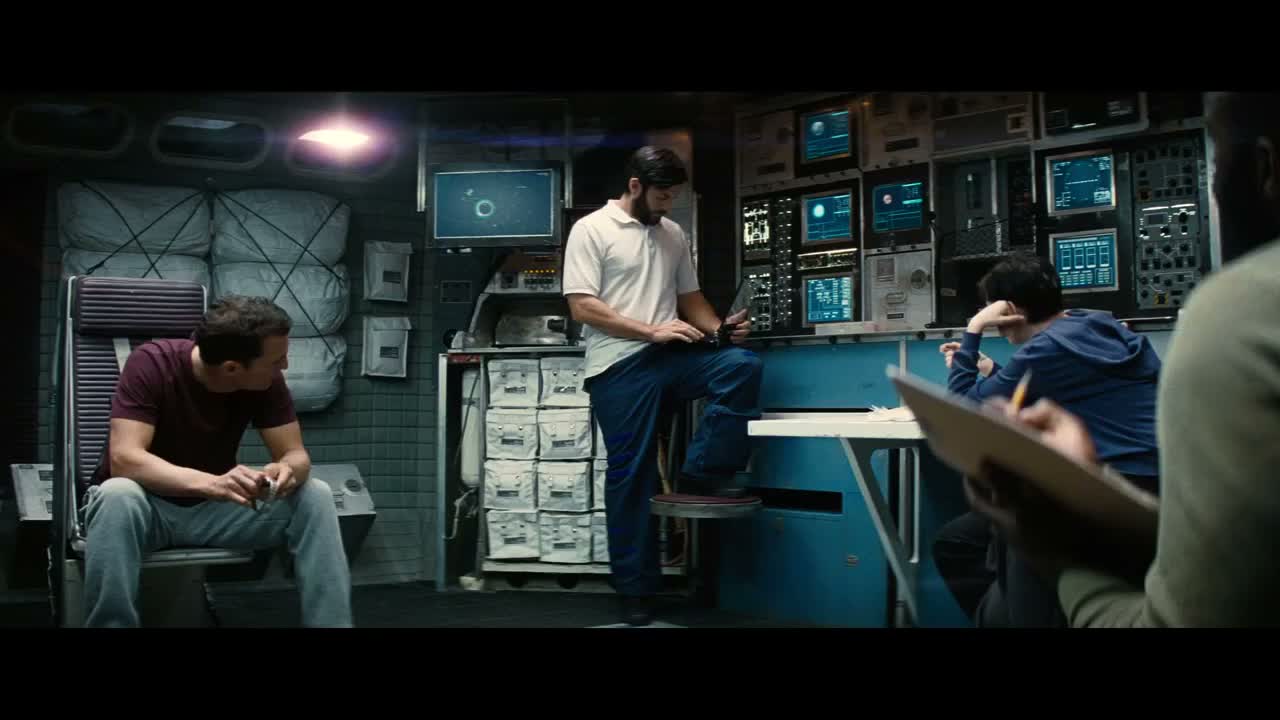
The crew weigh three possible worlds and what each one costs, while on Earth a message is being arranged. The talk keeps circling a single worry: that the settlers may never see another human being again. "He's remarkable. He's the best of us," one of them says of a colleague.
The Best of Us, and a Lion
You're Wasting Your Breath, Coop
Aboard the Endurance, the crew discuss three candidate planets — Miller's, Edmunds's and Mann's — and ask who these explorers left behind. On Earth, Professor Brand visits the farm with a message for Murph and her brother, hoping to recruit her. Cooper records a farewell to his family.
What looks like mission planning is really a debate about what humanity is worth saving. The crew keep circling the same fact: the explorers they are about to meet chose to be alone, aware that they would probably never see another person again. Even the most admired colleague is described with a line of pure respect, "He's remarkable. He's the best of us." The scene then turns philosophical: asked whether nature can be evil, one of them answers that a lion is not evil for tearing a gazelle apart, it is only formidable and frightening. That argument sets up the film's choice — what to carry to a new world, and what to leave behind. Meanwhile the cut to Earth, where Brand comes looking for Murph, quietly links the search for a home to the family Cooper abandoned.
A1–C2 es la escala MCER. Las tarjetas por encima del nivel elegido se atenúan y la reproducción no se pausa en ellas.
“He's remarkable. He's the best of us.”
Praise and ranking in two lines set up both the hope and the fall.
Neutral
“Is a lion evil because it rips a gazelle to shreds?”
Nature is terrifying but not malicious, and one question carries the whole idea.
Neutral
“They all knew the odds against ever seeing another human being again.”
Quiet understatement: everyone accepted near-certain loss before signing up.
Neutral
“It's a perfect planet, and we won't find another one like her.”
Calling the planet her, then pairing perfect with we won't find another, turns hope into grief in one sentence.
literary
 Siguiente · 06pull it offLa escena: The Cost of Time
Someone explains that it was deliberate: none of them had attachments, because his father insisted. They all knew the odds against ever seeing another human being again.
No. Asked whether nature can be evil, one of the crew argues it is formidable and frightening but not evil, using a lion tearing a gazelle as the example.
He brings Cooper's truck and a message, and he seems to be testing Murph's potential. He calls her a bright spark and says he should fan the flame, hinting he wants to recruit her.
They plan the trajectory for Miller's planet first, then Edmunds, then Mann. On the way they pass Mars and Saturn, and TARS notes the trip times.