
“When I came here, you weren't even a gang. I formed ya!”
Por qué es buena
Butch reminds them he built the gang, turning history into an accusation.
Registro
Informal
Úsala tú
When I came here, we weren't even a team. I built it.
Capítulo 2 de 12 · 2'31"
On the surface it's a debate about banks versus trains: Butch argues the money sits still, while the gang wants to hit the Union Pacific Flyer. Underneath, it's a power struggle. When Harvey says "Used to you did" to Butch's claim that he runs things, the argument turns into a challenge.
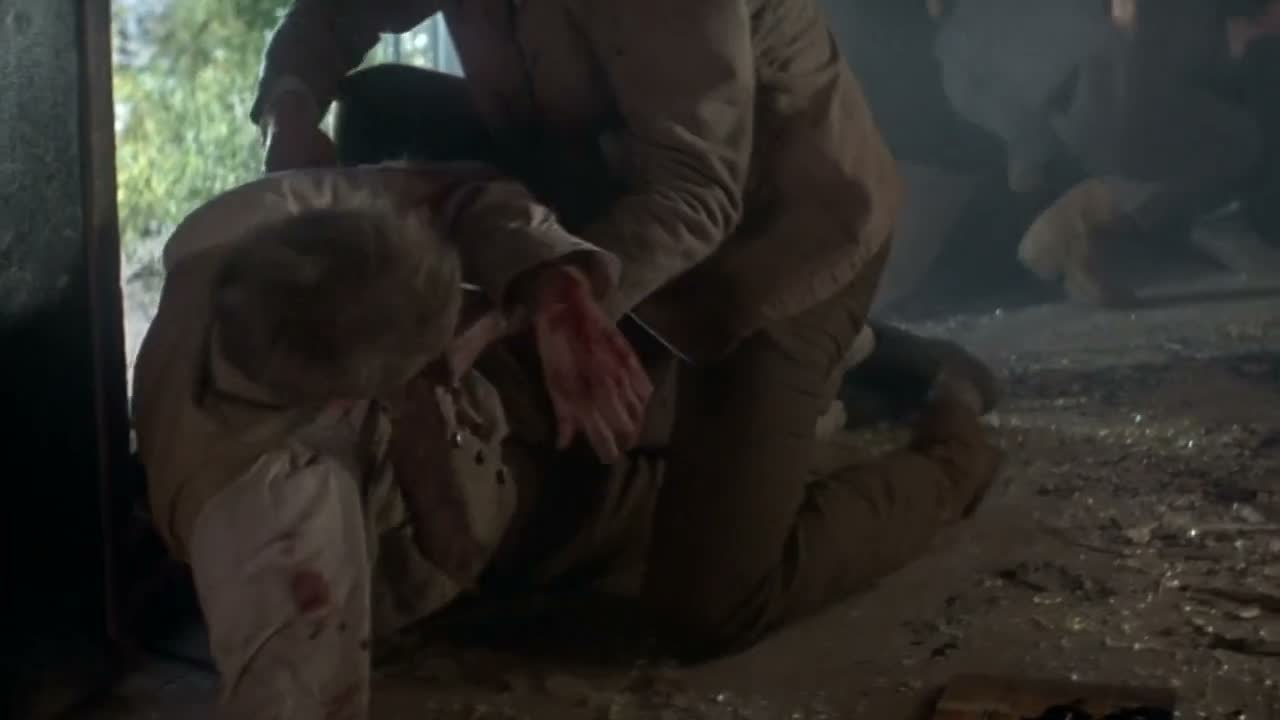
Harvey Forces Butch to Choose
Butch comes back to the Hole-in-the-Wall gang and finds they've made plans without him: they want to rob the Union Pacific Flyer, and they're ready to let Harvey Logan take over. Butch insists he built the gang and still runs it, but Harvey and the others push back.
The fight isn't really about banks or trains. It's about who gets to decide. Butch keeps reaching for his record — 'When I came here, you weren't even a gang. I formed ya!' — while the others only care that he's rarely around. Harvey answers Butch's claim that he runs things with a flat 'Used to you did,' which reframes the whole argument as a question of the present, not the past. Butch's case for banks, 'They don't move. They stay put,' is practical and a little sad: he wants the world to stand still so he can keep control of it.
A1–C2 es la escala MCER. Las tarjetas por encima del nivel elegido se atenúan y la reproducción no se pausa en ellas.
“When I came here, you weren't even a gang. I formed ya!”
Butch reminds them he built the gang, turning history into an accusation.
Informal
“You want Harvey to do your plannin'? To do your thinkin'? To run things?”
Three parallel questions escalate until letting Harvey lead sounds absurd.
Informal
“They don't move. They stay put. You know the money's in there.”
Short flat sentences make robbing a bank sound like simple common sense.
Informal
“I just love to read my name in the paper, Butch.”
An outlaw admits the small vanity that outlives the danger: seeing his own name in print.
Informal
 Siguiente · 03head someone offLa escena: The Posse Rides Out
A bank stays in one place and the money is definitely inside, while a train moves and the take is uncertain. It's also the safer, more controllable target, which is what Butch prefers.
Because Harvey is around and leads in the moment, while Butch is often away. They measure a leader by day-to-day presence, not by who founded the gang.
Harvey is forcing Butch to pick how their fight will go: gun or knife. The choice has no third option, so it's really a formal challenge.
He says he doesn't want to shoot him, and he leaves the choice open rather than accept the duel on Harvey's terms. It avoids turning an argument among partners into a killing.
Harvey, for now — he answers Butch's claim with 'Me now,' and the others back him. Butch's title still rests on the past, which is why he has to argue for it.