00:00 / 02:23
00:00 / 02:23

Bob Visits His Son, Explained

Auto Focus · 2002

Capítulo 15 de 16 · 2'23"

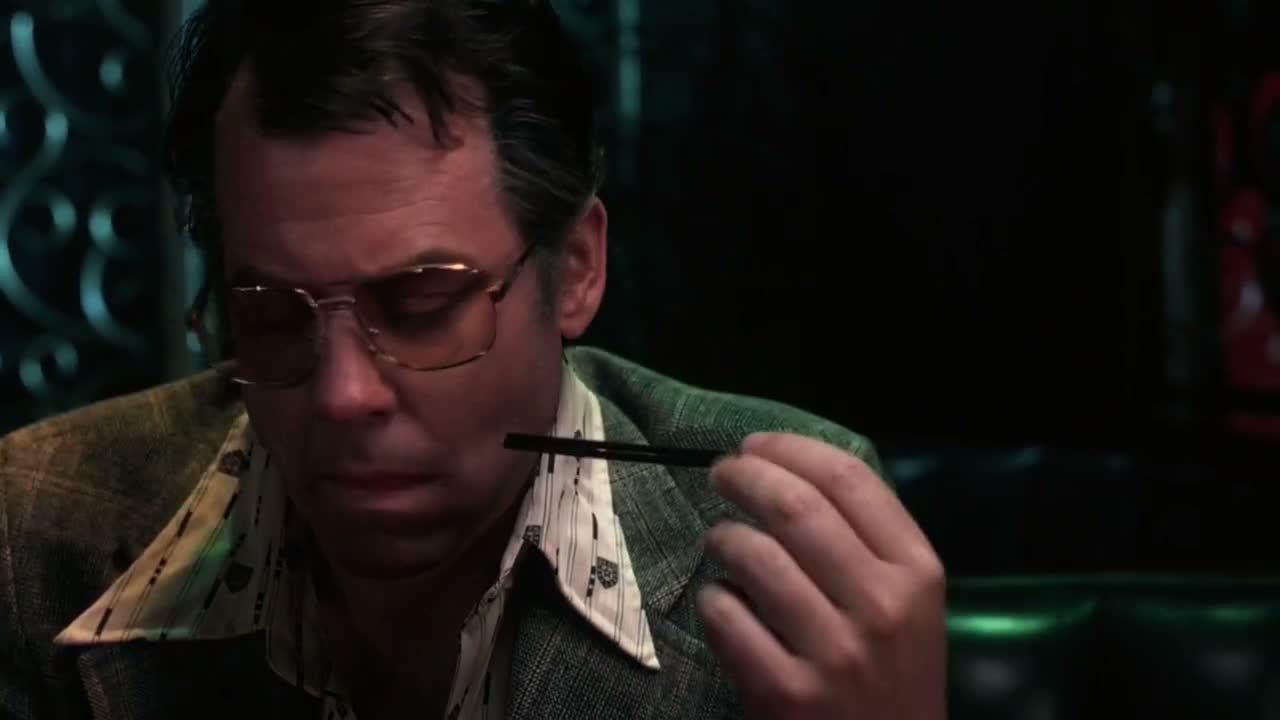
Bob drops in on his son and the small talk, all "How you doing?" and "What's up?", never covers the distance between them. The son passes on what his mother really thinks, and when the talk turns to the colour orange, it is less a conversation than an escape.

Small talkParents & kidsExplainingSmall talkParent & childB1slowamerican

Key moments

Start here, then watch the full scene
  1. Bob Tells His Son About the Divorce

    0:29–0:51
    22s
  2. Bob Rambles About the Colour Orange

    1:23–1:56
    33s
  3. The Son's Verdict on John Carpenter

    1:58–2:22
    24s

Bob Visits His Son, explained

What happens

Bob visits his son at work, and the two make polite small talk that never really closes the gap between them. Bob brings up his divorce, says he wanted his son to hear it from him, and listens as the boy reports what his mother thinks of John. Talk drifts to the colour orange, and Bob ends with a vague promise to make some changes.

What's really going on

Almost nothing is said directly, which is exactly the point. Bob's visit is full of questions that are really delays: how are you, what's up, what have you been up to. He mentions the divorce only to manage it, "I just didn't want you to hear about it the wrong way," and then drops the subject when it gets close. The son is more honest than the father in small ways, saying his mother never says anything bad about him and that "Mom thinks he's a creep." Bob's answer to all of it is the puzzle about the colour orange, a joke that also buys him distance: what is orange, really? You take it for granted, and never think about it, which is precisely how he treats his own family. The scene ends on a promise to change, offered the way he offers everything, lightly.

Key lines & what they mean

“I just didn't want you to hear about it the wrong way.”
His reason for bringing up the divorce himself: not honesty exactly, but control over how the news reaches his son.
“The color orange. But what is it, really?”
A sudden turn into abstraction, and a way of changing the subject when the conversation gets too close.
“She never says anything bad about you.”
A small gift from the son: reassurance about his mother, offered without being asked.
“Mom thinks he's a creep.”
A blunt aside about John, the one moment the son says plainly what the family really thinks.
“We'll see. Got to make some changes.”
A vague promise at the doorway, more a way of ending the conversation than a plan.

Theme

  • Family conflict — Father and son talk in polite questions and answers, and every real subject is stepped around rather than named.
  • Loneliness — Bob fills the silence with a lecture about the colour orange, using ideas to avoid the person in front of him.

Qué aprendes en este capítulo

Puntos de enseñanza

Repasa justo después de ver
Mi nivel1/4

A1–C2 es la escala MCER. Las tarjetas por encima del nivel elegido se atenúan y la reproducción no se pausa en ellas.

Auto Focus: tu progreso

Capítulo 15 de 16 · quedan unos 2 min

← Anterior
Siguiente · 16lower the boomLa escena: Bob and Carpenter's Falling Out

Ideas clave

Lo que te llevas
  1. Name habits with take it for granted
  2. Deliver news before the wrong way
  3. Close a topic with get into it

Preguntas frecuentes

La pregunta, luego la frase
Why does Bob visit his son?

He wants to tell him about the divorce in person, so the boy hears it from him rather than secondhand. The visit is awkward precisely because the reason for it is hard to say out loud.

Why does Bob talk about the colour orange?

It lets him avoid the actual subject. The philosophical riff fills the silence and keeps the conversation on safe ground, away from the divorce and the family's opinion of John.

What does the son say about John Carpenter?

He passes on his mother's view, that she thinks John is a creep. It is an early hint that others see through the friend Bob keeps defending.

Does Bob's promise to change mean anything?

The line "Got to make some changes" is left open. He says it to close the visit, and the film lets the audience decide how serious he really is.