
“We only go around once in this life.”
Por qué es buena
A timeless truth that doubles as a license for anything.
Registro
Neutral
Úsala tú
We only go around once, so quit the job you hate.
You only go around once; book the flight tonight.
Capítulo 9 de 16 · 1'51"
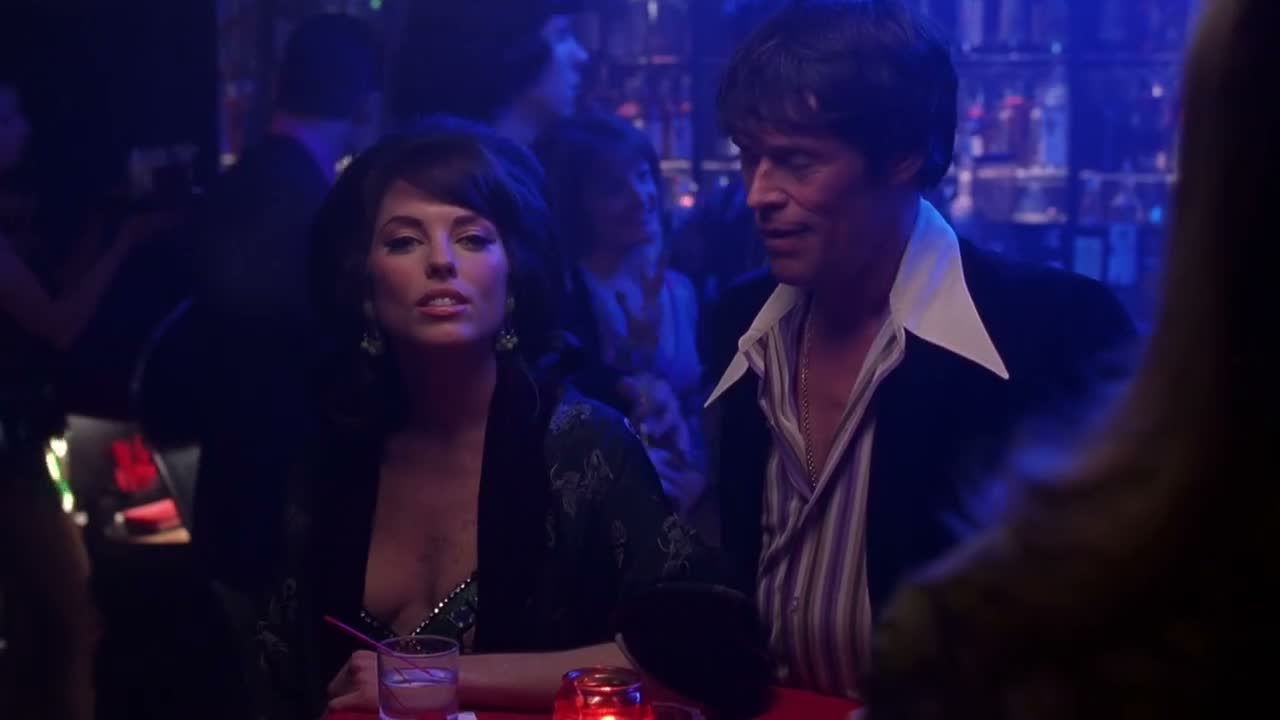
The confrontation doesn't go the way it should. Instead of an ultimatum, the wife says she already knows about the other women - "The other women, I know all about them" - and offers permission rather than punishment. "We only go around once in this life" is the philosophy, and it is not a joke.
Bob's Vegas Trip Comes Up
The Wife Offers an Open Marriage
Back from Las Vegas, Bob faces his wife's questions about the trip and the women. He tries to explain that his wife is good but doesn't understand his world. She turns out to know everything already, and instead of leaving, she offers a deal: an open marriage, no more lying, and the promise that she loves him as he is.
The scene sells itself as a wife being sensible, and that is exactly what makes it unsettling. She doesn't fight the affairs; she absorbs them. "The other women, I know all about them" turns her husband's secrets into something she has already processed and priced in. Then she supplies the rationale - "We only go around once in this life" - and asks only that no one lie about it. The last line, "I know who you are, and I love you," sounds like devotion but also like resignation dressed as acceptance. What the film plants here is the cost of a permission slip: a marriage that stays intact on paper while the honest part of it quietly disappears.
A1–C2 es la escala MCER. Las tarjetas por encima del nivel elegido se atenúan y la reproducción no se pausa en ellas.
“We only go around once in this life.”
A timeless truth that doubles as a license for anything.
Neutral
“I know who you are, and I love you.”
Love placed after full knowledge, not before it.
Neutral
“The other women, I know all about them.”
She reveals she has known all along, without raising her voice.
Informal
“We've got nothing to be ashamed of.”
A refusal of outside judgment, stated as simple fact.
Neutral
 Siguiente · 10dead airLa escena: Bob's Party and Career Blowup
She presents it as realism rather than surrender: life is short, she says, and she would rather grant permission than live with lies and secrets.
Only honesty. Her condition is that neither of them should have to lie about who they are, which is how the open marriage becomes an agreed rule.
They're raised as a practical worry, and the answer is that the couple feels they have nothing to hide, even floating a wedding on the set for publicity.
Not in this scene. The arrangement is offered as a settled decision, but the film shows the cost of it building through the rest of the story.