
“No wonder you never look at me anymore.”
Por qué es buena
She turns a pile of magazines into evidence about herself.
Registro
Neutral
Úsala tú
No wonder you never call me back anymore.
Capítulo 2 de 16 · 1'58"
Anne finds a stack of adult magazines hidden in the garage and confronts her husband. He calls himself "a photo nut" and insists they are harmless, but the real wound is elsewhere, and she names it: "No wonder you never look at me anymore." The real fight is about his attention toward her.
Anne Finds the Magazines in the Garage
Bob Refuses to Air Their Problems
Anne discovers the adult magazines her husband has been hiding in the garage and confronts him. He calls them photography magazines and calls himself a photo nut, trying to pass it off lightly. She stays on the one line that hurts most, then asks whether he is seeing another woman; he denies it flatly. She wants the magazines out of the house, and he says he gets the message.
The magazines are only the visible part of the problem. Anne has known about them, as she says: "I've seen them before. I just ignored it." What she cannot ignore is the distance behind them, and she puts it in one line: "No wonder you never look at me anymore." Bob reaches for every available defence at once, calling himself a hobbyist, vowing there is no other woman, and complaining that he has to hide things "like some teenager." Each move shrinks the accusation. Her answer is that this is not a private hobby at all, which is why she wants those magazines out of the house. She is asking to be looked at; he is asking to be left alone.
A1–C2 es la escala MCER. Las tarjetas por encima del nivel elegido se atenúan y la reproducción no se pausa en ellas.
“No wonder you never look at me anymore.”
She turns a pile of magazines into evidence about herself.
Neutral
“Bad enough I've got to hide them like some teenager.”
He skips the apology and complains about the humiliation.
Informal
“I just thought that when you started shooting Hogan's that this would change things.”
Hope pinned on a milestone that keeps getting pushed back.
Neutral
“Family business... we'll keep it at home.”
A principled-sounding line that really means keeping the problem secret.
Neutral
“I've seen them before. I just ignored it.”
Years of silent tolerance in two calm clauses.
Neutral
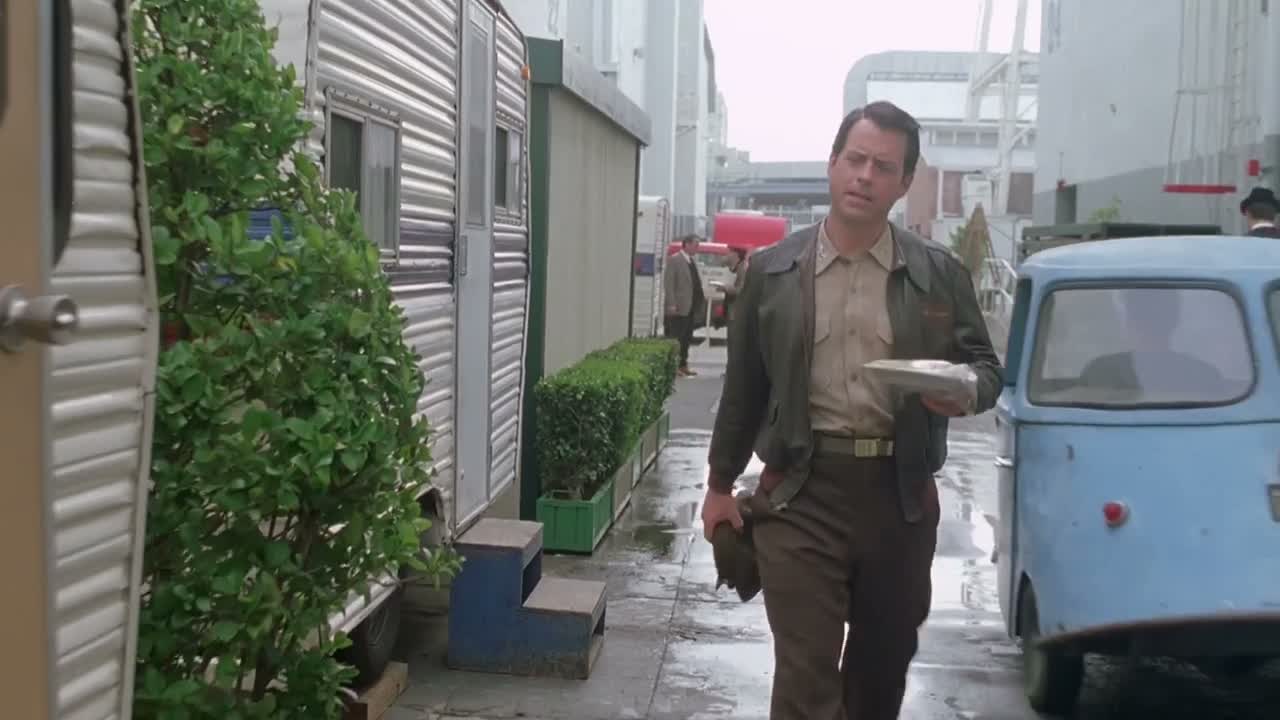 Siguiente · 03always been my thingLa escena: Bob Meets the VTR Salesman
They are adult "gentlemen's" magazines, the kind Bob collects and hides in the garage. He calls them photography magazines, but both of them know exactly what they are.
Not only because of the magazines themselves but because they seem to explain his distance. She says, "No wonder you never look at me anymore," tying them to a loss of intimacy.
No. He answers "Absolutely not" when she asks. The scene leaves the question of infidelity open, but he insists the magazines are the whole story.
He wants to keep the problem private, saying it is family business that should stay at home. It is partly about privacy and partly about avoiding outside judgment.