
“We were apes. They were human.”
Por qué es buena
Two flat sentences settle a whole ship's account, and the self-contempt carries all the sorrow.
Registro
literary
Úsala tú
We were the ones shouting. They were the ones listening.
Capítulo 14 de 18 · 2'21"
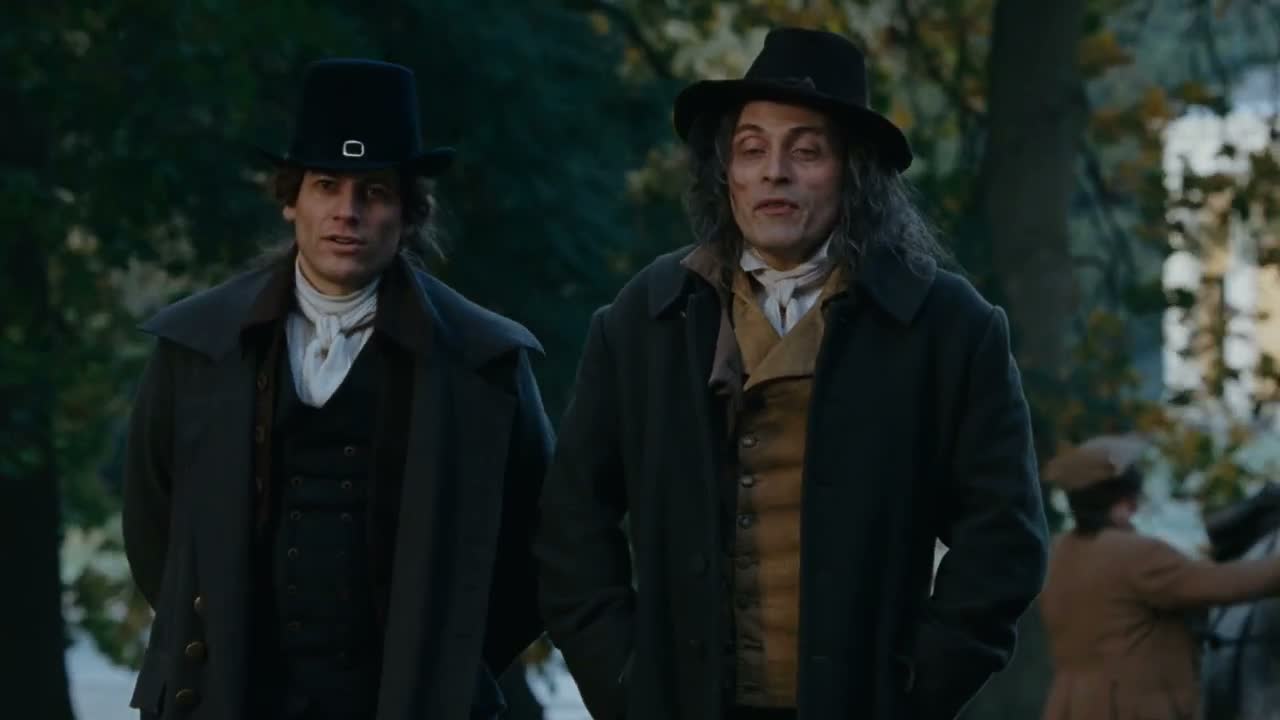
John Newton is blind and near the end of his life, handing Wilberforce the written record of his years as a slave-ship captain. On the surface it's a gift; underneath it's a demand. "Everything I remember is in here," he says — names, ports, people — and he wants it used as a weapon: "You must publish it."
❝ Monólogo · 4 frases Newton Hands Over His Confession
❝ Monólogo · 9 frases Newton's 20,000 Ghosts
Wilberforce visits the blind former slave-ship captain John Newton, who is dictating his life story. Newton confesses that he remembers two things clearly: he is a great sinner and Christ is a great saviour. He gives Wilberforce his manuscript — names, ships' records, ports, people — and tells him to publish it and use it to destroy the slave trade.
The scene is a handover from one generation to the next. Newton spent years carrying enslaved Africans across the Atlantic; now blind and unable to act, he turns his guilt into ammunition for the younger man. His line "I never did things by halves" is almost a boast, but it cuts both ways: the same single-mindedness that made him a ruthless captain now makes him demand that the trade be blown apart. What he cannot live with is forgetting. "My 20,000 ghosts, they all had names," he says, and the horror is in the past tense — a whole human archive reduced to "just grunts." Wilberforce doesn't argue. He takes the manuscript, and the scene quietly becomes the moral engine of his campaign.
A1–C2 es la escala MCER. Las tarjetas por encima del nivel elegido se atenúan y la reproducción no se pausa en ellas.
“We were apes. They were human.”
Two flat sentences settle a whole ship's account, and the self-contempt carries all the sorrow.
literary
“Although my memory is fading, I remember two things very clearly: I'm a great sinner and Christ is a great saviour.”
He sets fading memory aside and narrows a whole life to two certainties, sin and salvation.
Formal
“I never did things by halves. God decided I'd seen enough.”
One understated line of self-description carries a whole life of stubborn completeness.
Neutral
“My 20,000 ghosts, they all had names.”
It restores the erased dead to individuals simply by insisting they had names.
literary
This is my confession. You must use it. Names, ships' records, ports, people. Everything I remember is in here.
Although my memory is fading, I remember two things very clearly: I'm a great sinner and Christ is a great saviour. You must publish it. Blow a hole in their boat with it. Damn them with it! I wish I could remember all their names. My 20,000 ghosts, they all had names. Beautiful African names. We called them with just grunts. Noises. We were apes. They were human.
 Siguiente · 15flag of convenienceLa escena: The Neutral Flag Trick
He is old and blind and can no longer fight the trade himself, so he turns his written record of names and ships into a weapon for the younger man. It is both an act of remorse and a demand for action.
The roughly twenty thousand enslaved Africans carried on his ships. He calls them ghosts because they are dead, and stresses that they all had real names rather than the grunts his crews used.
'By halves' means half-heartedly or without full commitment. Newton is saying he always did everything completely — a proud trait that also hints at how extreme he once was.
No. He is a former slave-ship captain who has repented, and the film uses him as a moral witness: his guilt gives Wilberforce firsthand evidence of the trade's cruelty and fuel for the abolition fight.