00:00 / 02:58
00:00 / 02:58

The Neutral Flag Trick, Explained

Amazing Grace · 2006

Capítulo 15 de 18 · 2'58"

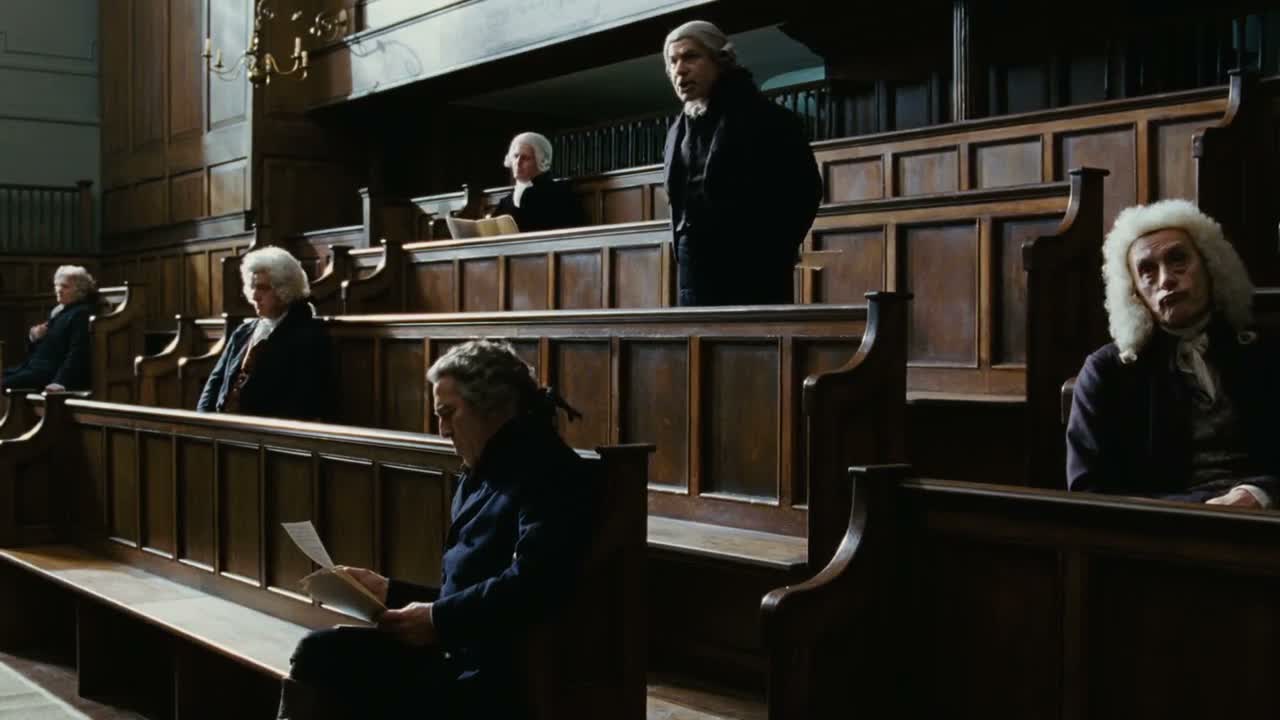
The government won't bring forward an abolition bill — instead it targets "the use of neutral flags on cargo ships." What looks like dull wartime housekeeping is a trap: slave ships hide behind the American flag of convenience, and stripping that protection is meant to end the trade.

MeetingsSpeechesExplainingSuggestingCoworkersC1slowbritishClean

Key moments

Start here, then watch the full scene
  1. The Neutral Flag Trick That Could Kill the Slave Trade

    1:06–1:49
    43s

The Neutral Flag Trick, explained

What happens

In the House of Commons, William Pitt's government tells Wilberforce it will not bring forward an abolition bill. Instead it proposes a measure against French cargo ships sailing under the American flag of convenience — a patriotic-sounding war move meant to let privateers seize them, and with them most of Britain's slave ships.

What's really going on

On the surface this is a wartime trade measure, and everyone in the room knows it isn't. "Without the protection of neutral flags, 80 percent of the British slave trade will be finished overnight." The trick is deniability: the bill is aimed at French ships, and because a vessel under the American flag is legally neither French nor British, British slavers lose their cover without the abolitionists ever naming slavery. That is why "we can't let anyone know that we're behind this," and why the sponsor must be someone "really, really... boring" — a patriot nobody suspects. The scene's real subject is political craft: ending an atrocity by disguising it as patriotism.

Key lines & what they mean

“Without the protection of neutral flags, 80 percent of the British slave trade will be finished overnight.”
Remove the neutral-flag loophole and most British slave ships lose their legal cover; the trade collapses almost immediately because owners won't risk seizure.
“If we pass a law removing that protection, no ship owner will allow his vessel to make the journey.”
The threat isn't capture itself but the risk: once privateers can legally seize these ships, no owner will send a vessel on the slave route.
“Once any ship raises the American flag, by law it is neither French nor British.”
The legal catch that makes the plan work: flying the American flag strips a ship of any national owner, so seizure rules apply no matter who really runs it.
“We just need someone really, really... boring.”
The bill must be introduced by a dull, respectable patriot so no one connects it to the abolitionists — invisibility, not charisma, is the point.

Theme

  • Deception — Abolitionists hide an anti-slavery bill inside an anti-French wartime measure, so slave owners never see the real target.
  • Power — Pitt's government uses procedure and a nobody sponsor to strike at the trade without ever owning the move.

Qué aprendes en este capítulo

Puntos de enseñanza

Repasa justo después de ver
Mi nivel1/4

A1–C2 es la escala MCER. Las tarjetas por encima del nivel elegido se atenúan y la reproducción no se pausa en ellas.

Amazing Grace: tu progreso

Capítulo 15 de 18 · quedan unos 7 min

← Anterior
Siguiente · 16side windLa escena: Abolitionists Come at a Side Wind

Ideas clave

Lo que te llevas
  1. A clever bill never names what it is killing.
  2. Overnight makes the collapse sound sudden and total.
  3. The lawyer's idea hides abolition inside patriotism.

Preguntas frecuentes

La pregunta, luego la frase
Why not just bring an abolition bill?

Because it keeps losing. By attacking French ships and the neutral-flag loophole, the government can cripple the slave trade through a wartime measure that patriotic MPs will actually vote for.

What is a flag of convenience?

A ship registered under another country's flag to dodge taxes or regulation. Here it means slavers flying the American flag so privateers cannot board them — the loophole the bill is designed to close.

Who actually came up with the neutral-flag plan?

The scene only says "a lawyer." The plan isn't attributed on screen, which is the point: the abolitionists keep their fingerprints off it.

Why does the sponsor have to be boring?

So the bill draws no attention and no one ties it to the abolitionists. A famous or controversial sponsor would invite scrutiny the plan cannot survive.

Is the plan meant to end slavery outright?

No. It is meant to make the trade unprofitable, bankrupting half the slavers within two years, so their MPs can then be picked off one by one.