
“And when you touch them, we can't change them back.”
Why it's great
It locks the warning to a single touch and leaves no way to restore the memory.
Register
Neutral
Use it yourself
When you reply to everyone, we can't pull that note back.
Chapter 2 of 6 · 2'34"
Someone nearly touches a core memory, and the warning lands at once: "And when you touch them, we can't change them back." On the surface it is a scolding about one careless moment. Underneath, one person is calling the slip a breakdown while the other renames it stress and keeps pushing to find the fun.
Hands Off That Core Memory
Why the Crying Won't Stop
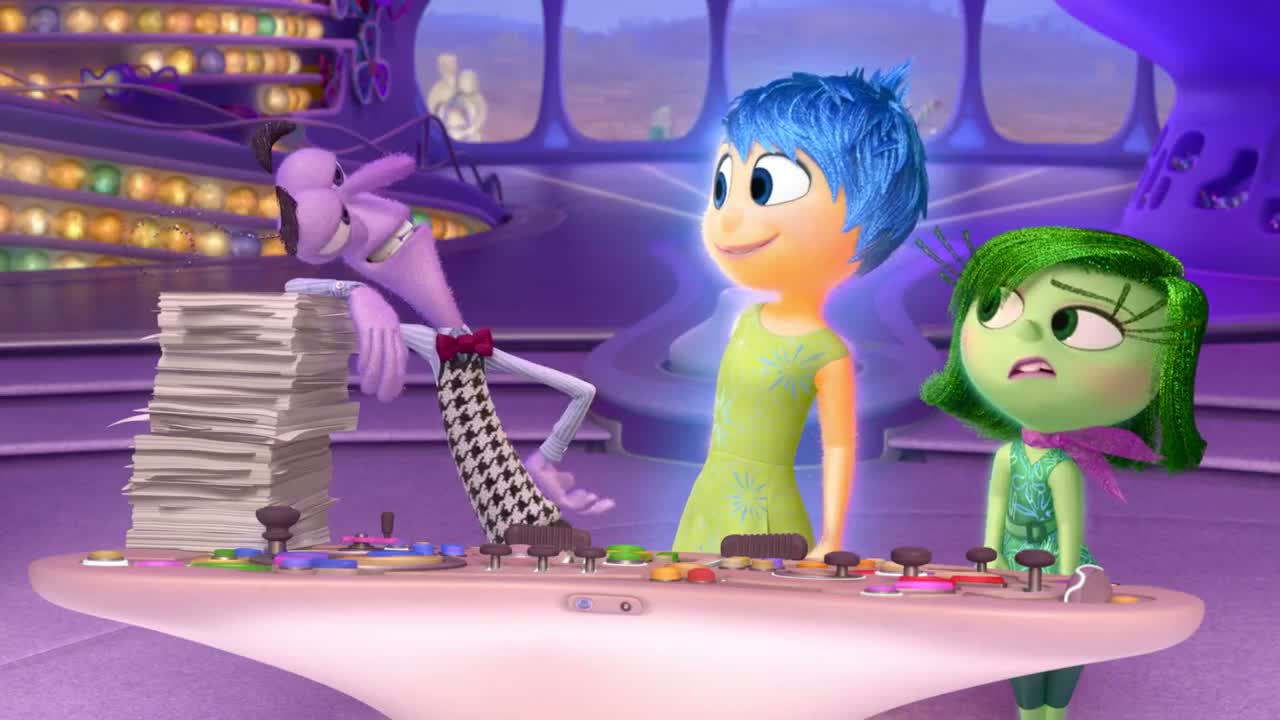
Two people face a core memory that was nearly touched. One wanted to hold it, then says it feels like a breakdown. The other calls it stress, tries and fails to find a funny memory, asks why the crying has started, and finishes by praising an unread mind manual as a page-turner before leaving for work.
The scare is not that a memory looks crooked. It is the rule said next: "And when you touch them, we can't change them back." One person folds that into "Something's wrong with me" and "It's like I'm having a breakdown." The reply refuses the label instead of letting the speaker take it back: "You're not having a breakdown. It's stress." Funny memories then miss. A dog dies, milk comes out of a nose, and rain turns everything droopy. Asked "Why are you crying?", they do not apologize. They answer "Crying helps me slow down and obsess over the weight of life's problems." The manual is the same mismatch. After "This seems interesting" and a "No," the unread book is called "A real page-turner!" The next line is the title, "Long Term Memory data selection via channel subgrouping." The praise is only a way to leave for work.
A1–C2 is the CEFR scale. Cards above the level you pick fade, and playback will not auto-pause on them.
“And when you touch them, we can't change them back.”
It locks the warning to a single touch and leaves no way to restore the memory.
Neutral
“There's always a way to turn things around, to find the fun.”
The two infinitives offer a rescue and then name fun as the place to land.
Informal
“It's just like really the opposite of what we're going for here.”
It holds the tears up against the goal and calls them a miss.
Informal
“Crying helps me slow down and obsess over the weight of life's problems.”
Crying is presented as useful, then loaded with a straight-faced heaviness.
Informal
“You're reading these cool things. I got to go work. Life is so unfair.”
Fake envy turns a dull reading assignment into a prize the speaker pretends to lose.
Informal
 Up next · 03out of the gateThe scene: Riley Introduces Herself and Cries
Because the warning is absolute: "And when you touch them, we can't change them back." The person only wanted to hold one after it looked crooked and fell out. A touch is treated as something they could not undo.
They say "It's like I'm having a breakdown." The other person answers at once, "You're not having a breakdown. It's stress." The speaker does not take the line back. The other person refuses it.
Right after "Why are you crying?" comes "It's just like really the opposite of what we're going for here." The next line answers the question: "Crying helps me slow down and obsess over the weight of life's problems."
No. "This seems interesting" is followed by "No," and then "A real page-turner!" The next line reads the title aloud: "Long Term Memory data selection via channel subgrouping." After that, someone says they have to go work.