
“This is nuts! This is so crazy!”
Why it's great
Two short bursts of disbelief capture a whole room's excitement in a heartbeat.
Register
Informal
Use it yourself
This is nuts! We actually got front-row seats.
Chapter 1 of 25 · 2'07"
The grad students throw a party for Kate's comet discovery, and what starts as celebration turns into serious orbital math. "What would Carl Sagan do?" someone asks, and for a while the room is exhilarated. But when the ephemeris numbers keep dropping, the fun stops and the night quietly ends.
The Night the Numbers Turned Wrong
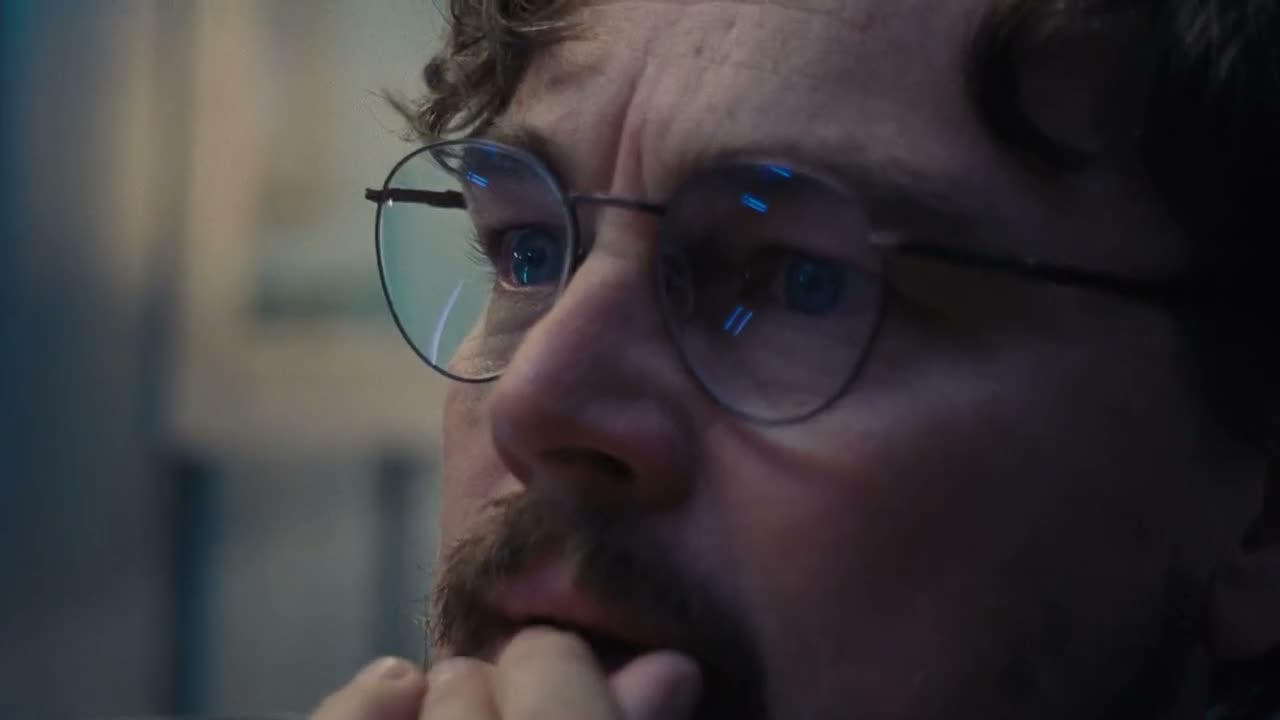
At a party celebrating Kate Dibiasky's comet discovery, her advisor Dr. Mindy arrives with snacks and hard cider. The group starts calculating the comet's orbit, with Mindy invoking Carl Sagan and first principles. One student's numbers get him excited, but as the ephemeris shows the comet drawing closer to Earth, Mindy can't work it out and calls it a night.
This is the last easy night before the end of the world, and nobody in the room knows it. The celebration is genuine — Kate really did find something extraordinary — and Mindy's "What would Carl Sagan do?" shows the scientist's instinct to trust method over panic. But the scene quietly turns: the ephemeris keeps giving smaller and smaller distances, and the man who just called the comet "amazing" cannot explain why. "I can't figure this one out. Not tonight, guys. Sorry," he says, and the party ends on a shrug instead of a warning. The film's whole tragedy is staged here: the data is already telling them the truth, and the smartest people in the room decide to deal with it tomorrow.
A1–C2 is the CEFR scale. Cards above the level you pick fade, and playback will not auto-pause on them.
“This is nuts! This is so crazy!”
Two short bursts of disbelief capture a whole room's excitement in a heartbeat.
Informal
“Probably the last time it was this close to the Sun was long before human civilization.”
One line stretches time past all of human history and shrinks the room in an instant.
Neutral
“What would Carl Sagan do?”
A single question turns a dead end into a method by asking what a hero would have done.
Neutral
“He would take it back to first principles.”
It names a habit of mind: when stuck, go back to what is fundamentally true.
Formal
“I can't figure this one out. Not tonight, guys. Sorry.”
Admitting the math has beaten him makes the professor human instead of a showman.
Informal
Don't Look Up: your progress
Chapter 1 of 25 · about 84 min to go
 Up next · 02extinction-level eventThe scene: The Astronomers Call Dr. Oglethorpe
At this point no one knows it is dangerous. Kate has only just discovered the comet, so her colleagues throw a small party — the danger only becomes visible later, when the distance to Earth keeps shrinking.
It means working from the most basic rules of a subject instead of a shortcut. When Mindy says he will take it back to first principles, he is rebuilding the orbital calculation from scratch.
The ephemeris keeps showing smaller and smaller distances — the opposite of what they expect — and no one can explain it that night, so they end the party and leave the problem for tomorrow.
He does not say so. He only sees that the distances are strange and admits he cannot solve the problem yet, which leaves the real danger for the next stage of the story.