
“Who do you think you are?”
Why it's great
Six words turn a question into an accusation and strip the other person of standing.
Register
Informal
Use it yourself
Who do you think you are, telling me how to do my job?
Chapter 12 of 17 · 3'04"
Danny sees the worst of his brother and can't hide his anger, but the fight turns into something quieter. Derek apologizes for what Danny witnessed, then draws the line: "I can't go back to that, Dan." The prison flashback that follows shows what it cost him to mean it.
Danny Confronts Derek
❝ Monologue · 7 lines The guard's barrage
Command piles on command with no breath, turning the cell block into pure pressure.
Danny confronts Derek after seeing him at his most violent, and the two brothers argue before it cools into an apology. Derek says Danny was never supposed to see that, then tells him he is finished with the gang and the life around it. A prison sequence follows, showing the shouting, marching and humiliation of the yard.
The scene is built as a fight that turns into a confession. Danny reaches Derek at his worst and says what he feels — 'I fucking hate you, Der!' — and instead of hitting back, Derek steps down: 'I'm sorry. You weren't supposed to see that.' The apology matters because it refuses the logic the family was raised on, where violence is justified and hidden. When Derek says 'I can't go back to that, Dan,' he is naming a break, not asking for forgiveness. The prison flashback that follows is the evidence: the guards' taunts, the line for chow, the order to keep his eye on a new arrival. Derek survived by building a reputation, and the narration afterwards explains it — 'All the wrong people knew who I was anyway' — so he wore the flag that made him visible. The scene shows the cost of the identity he is now trying to leave behind.
A1–C2 is the CEFR scale. Cards above the level you pick fade, and playback will not auto-pause on them.
“Who do you think you are?”
Six words turn a question into an accusation and strip the other person of standing.
Informal
“I'm sorry. You weren't supposed to see that.”
The apology carries regret and protection; what hurts is that his brother had to watch.
Neutral
“That was fucked up. That's all there is to it.”
He labels the night with a curse and then seals it shut, refusing explanation or comfort.
Informal
“I can't go back to that, Dan.”
He never says he has changed; saying he cannot go back quietly closes that whole life.
Neutral
“All the wrong people knew who I was anyway...”
A wry line about fame gone wrong, known by all the people he would rather avoid.
Informal
“After two days, I didn't think I'd make it a week.”
The quiet numbers do the work; two days against a week says how close he came to breaking.
Neutral
Move! Let's go! Open the fucking gates! All right, rack 'em! Five minutes! Stepforward! Those beds better be made. After two days, I didn't think I'd make it a week. Come on,you motherfuckers! You want to eat today, you fucking piece of shit?
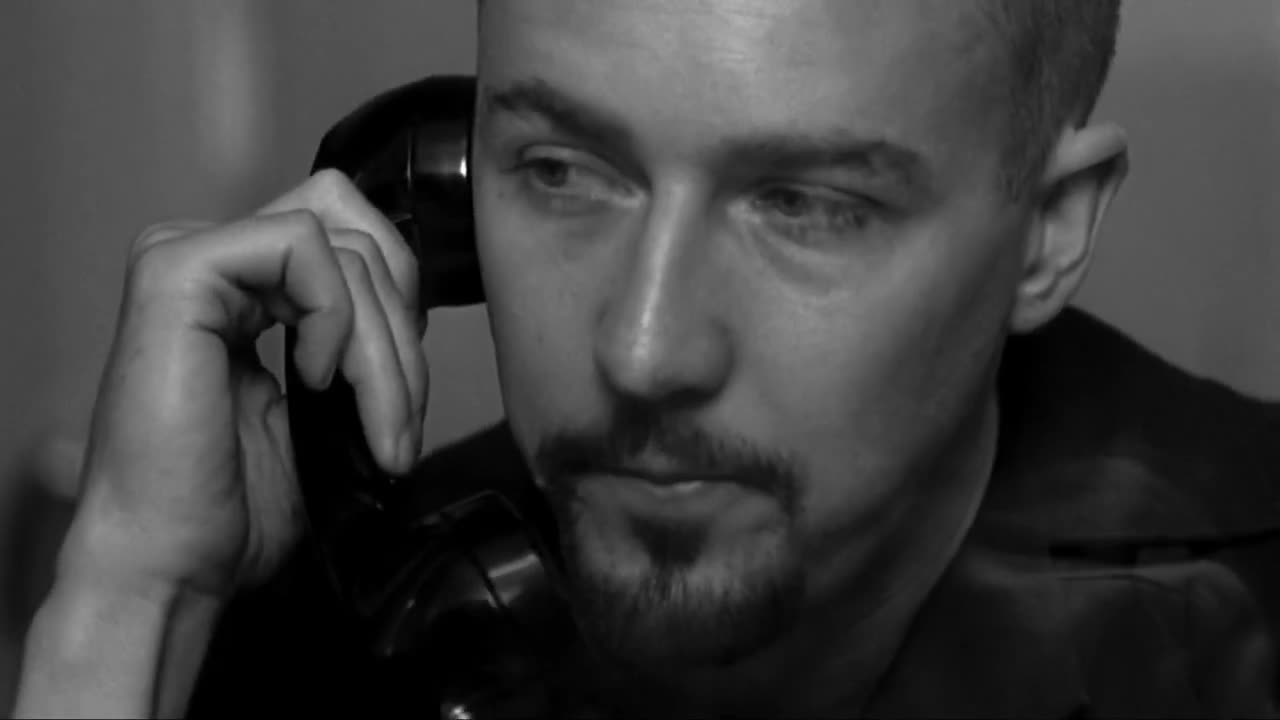 Up next · 13doing timeThe scene: Doris Visits Derek in Prison
Danny has just seen Derek at his most violent and cannot hide how he feels. He screams that he hates him, but the confrontation turns into an apology and a quiet admission rather than a fight.
Prison stripped the ideology down to its cost. After living with the violence and the loss, Derek decides he is finished with the gang and the people around it, and he tells Danny so directly.
Because Danny was not meant to witness what Derek did. Saying "You weren't supposed to see that" takes the blame instead of excusing the violence, which is what makes the apology meaningful.
It means there is nothing more to add and the matter is closed. Derek uses it to shut down excuses and simply state that what happened was wrong.
He realized the wrong people already knew who he was, so hiding was pointless. Building a reputation became a way to survive, and the flag he mentions is that deliberate visibility.