
歴史を語る間合いを学ぶ英語|『西部開拓史』
But the names and the marks and the land all had to be won.
· 西部開拓史 (1962)
AUDITION CUE SHEET & SCRIPT
西部開拓史 (1962)
歴史を語る間合いを学ぶ
Lines: 39 | Words: 379
Time: 2m 39s
Target Pace: 143 WPM
| # | Time | Dialogue & Cue Beats | Acting Notes / Subtext / Blocking |
|---|---|---|---|
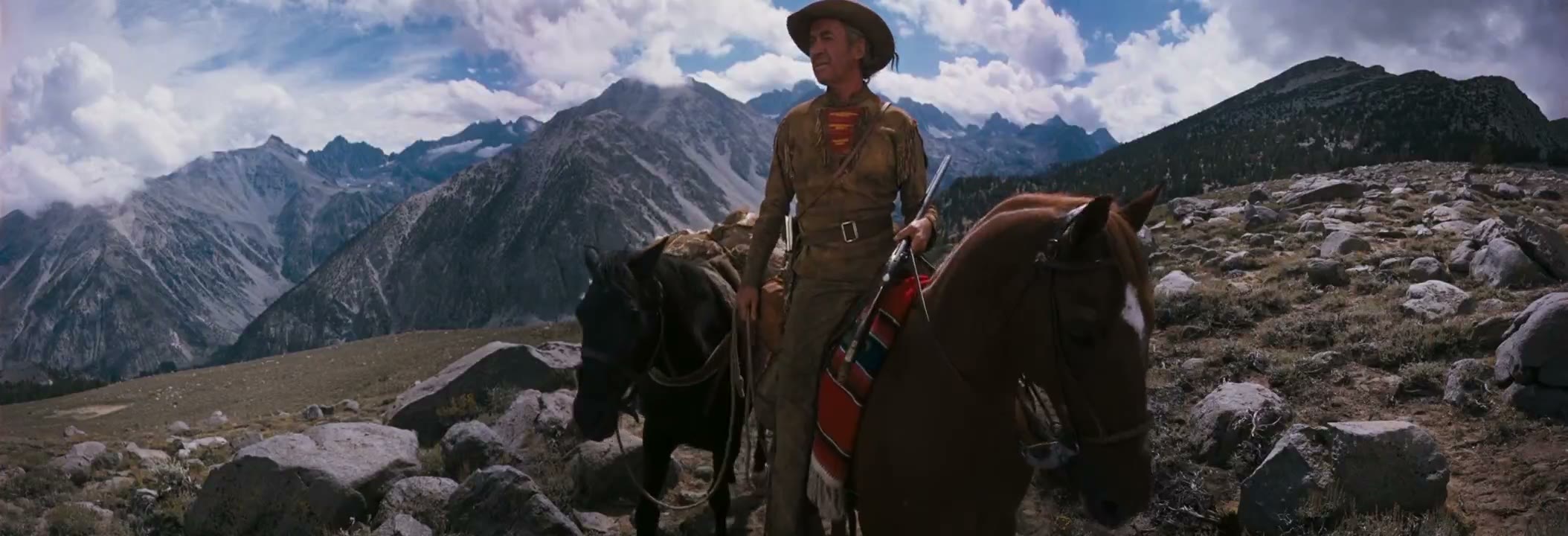
| 1 | 0:00 | This land has a name today and is marked on maps. | |
| 2 | 0:05 | But the names and the marks and the land all had to be won. | |
| 3 | 0:11 | Won from nature and from primitive man. | |
| 4 | 0:15 | Five generations ago, a mere 125 years back... | |
| 5 | 0:20 | ... this land was known only as the West. | |
| 6 | 0:24 | Known only to a handful of white men... | |
| 7 | 0:27 | ... lonely trappers wandering its vastness in search of beaver. | |
| 8 | 0:32 | They were known as mountain men, a new breed. | |
| 9 | 0:35 | Men like Jim Bridger, Franchère and Sublette, Linus Rawlings. | |
| 10 | 0:40 | More Indian than the Indians in all but blood. | |
| 11 | 0:44 | They held to no law but their own... | |
| 12 | 0:47 | ... drifted free as the clouds, settled nowhere, kept forever on the move. | |
| 13 | 0:53 | Their mocassined feet and unshod horses leaving no trace on the land. | |
| 14 | 1:00 | Like the Indians, with whom they were at peace... | |
| 15 | 1:03 | ... they wanted nothing beyond what they found, and little of that. | |
| 16 | 1:08 | The mountains, the forests, the harsh country... | |
| 17 | 1:12 | ... were as unchanging to them as the stars... | |
| 18 | 1:16 | ... and just as unyielding. | |
| 19 | 1:20 | Far behind the mountains, beyond the rolling plains... | |
| 20 | 1:25 | ... they had left the people of the East, people who were restless in another way. | |
| 21 | 1:31 | The kind who'd look at a mountain and see a watershed... | |
| 22 | 1:34 | ... look at a forest and see lumber for houses... | |
| 23 | 1:37 | ... look at a stony field and see a farm. | |
| 24 | 1:40 | Their faces and their instincts had been turned to the West... | |
| 25 | 1:44 | ... ever since Plymouth Rock and Jamestown. | |
| 26 | 1:47 | The trapper's road was the trail of a wolf or the bend of a canyon. | |
| 27 | 1:52 | But for whole families chaffing to follow the sun... | |
| 28 | 1:56 | ... there had to be broader ways. | |
| 29 | 1:58 | There were no roads into the wilderness, only rivers. | |
| 30 | 2:03 | And they flowed in the wrong direction: North or south. | |
| 31 | 2:06 | Or else they stopped at the Alleghenies. | |
| 32 | 2:09 | Until one day, a new river took source in the mind of a man named DeWitt Clinton. | |
| 33 | 2:16 | He conceived of a river that would go west. | |
| 34 | 2:20 | And in the way Americans have of acting out their dreams, it came to be. | |
| 35 | 2:25 | The Erie Canal left the Hudson above Albany... | |
| 36 | 2:28 | ... and carried clear across to the Great Lakes. | |
| 37 | 2:32 | People who yearned for virgin land and a new life... | |
| 38 | 2:35 | ... now had a highway to take them. | |
| 39 | 2:38 | And they moved along. |
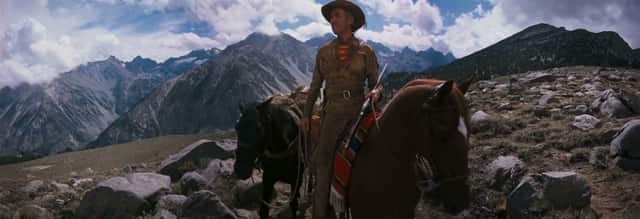
This land has a name today and is marked on maps.
この地には今や名前があり、地図に記されている。
But the names and the marks and the land all had to be won.
止まらずに、俳優について行く
Space 再生/停止 · ← → 前/次の行 · R もう一度
練習する価値
孤独な山人から家族の移住まで、広がる視点で西部開拓を語る重厚なナレーション。長い英語文を息継ぎよく読む練習と、落ち着いた語りの表現力が身につく。
ナレーターがアメリカ西部の開拓を俯瞰し、山を渡る毛皮猟師、土地を求める東部の人々、運河による移住の道のりを順に描く場面。
シャドーイングのコツ
最初は低く落ち着いた声で運び、'kept forever on the move' は一定のリズムで、'they moved along' で少し解放感を出すと自然です。
ログインするとセリフを保存して、練習したフレーズを記録できます。
西部開拓史 の英語セリフをもっと
 B211 行 · 40s
I don't like the way that fella's looking at us.
怖い話を面白く語る西部開拓史 · 1962皮肉まじり対立・反論少し意地になった語りが、翼のある男の話で一気に可笑しくなる。誇張した間や「ain't」の発音を真似すると、アメリカ英語の話し方が自然に身につく。 C17 行 · 21s
I'm a sinful man. Deep, dark, sinful.
自分を卑下して別れる西部開拓史 · 1962反骨自己成長軽い冗談のつもりが、だんだん本音の痛みに変わる場面です。語尾を落とす練習で、自虐と未練が混ざる英語の間がつかめます。 C117 行 · 1m 8s
The westward course was no smoother than that of true love.
黄金の知らせを語る西部開拓史 · 1962内省的権力と金戦争や土地の争いから黄金熱へと広がる流れが迫力があります。静かな導入から高揚へ変わる息継ぎと重音を練習できます。 B27 行 · 23s
Many opportunities for an energetic young man.
希望を込めて知らせる西部開拓史 · 1962希望鼓舞・奮起手紙の内容を淡々と伝えるだけでなく、新しい可能性へ気持ちが広がっていく動きが魅力です。静かな始まりから明るい未来を想起させる言い方を練習できます。
ほかの英語セリフ
 B26 行 · 25s
you are the only ones who can do it
理想より成果を求めるスプライス · 2009決意仕事・説得この短い一節は、理想を語る相手を現実に戻す緊張感が魅力です。譲歩の言い方から断定の間まで、英語の抑揚を練習できます。 B27 行 · 34s
A watched pot never boils
軽い冗談で説明するエスケープ・ルーム · 2019機知に富むコメディドラマ身近なことわざから難解な量子の話へ広がる流れが魅力。軽い冗談から正確な説明へ移る息継ぎを練習できる。 B213 行 · 1m 15s
Something is wrong in this country
悲しみを込めて訴えるボウリング・フォー・コロンバイン · 2002決意失恋・喪失悲しみを抑えながら社会に問いかける姿が印象的。短い繰り返しとアクセントの置き方で、感情を込めた英語の言い方を練習できる。 B29 行 · 22s
I couldn't believe that I actually... Could represent an innocent man.
無実を疑った悔いリンカーン弁護士 · 2011繊細自己成長証拠に圧倒され、無実の可能性を信じられなかった自分に気づく瞬間が印象的。短い繰り返しと止め方を追うと、後悔を抑える話し方が身につきます。