
穏やかに事実を説明する英語|『David Attenborough's Natural History Museum Alive』
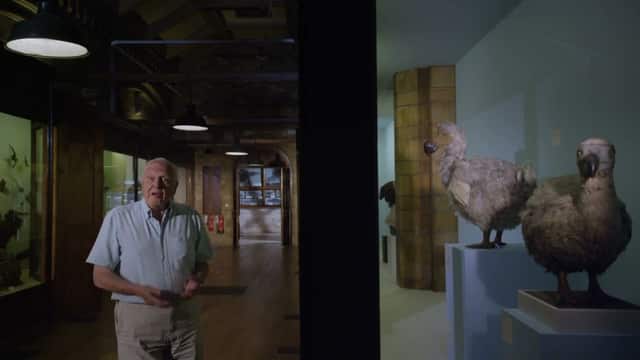
But in spite of its fame, this one is a fake.
· David Attenborough's Natural History Museum Alive (2014)
AUDITION CUE SHEET & SCRIPT
David Attenborough's Natural History Museum Alive (2014)
穏やかに事実を説明する
Lines: 32 | Words: 344
Time: 3m 20s
Target Pace: 103 WPM
| # | Time | Dialogue & Cue Beats | Acting Notes / Subtext / Blocking |
|---|---|---|---|
| 1 | 0:00 | Our understanding of the mastodon is a lot more accurate today, thanks to Professor Owen. | |
| 2 | 0:09 | But it was not the only creature in this museum to be the victim of misrepresentation. | |
| 3 | 0:17 | This poor old bird is a dodo. | |
| 4 | 0:22 | It once lived on the island of Mauritius in the Indian Ocean. | |
| 5 | 0:26 | And it's almost certainly the first animal species that human beings actually exterminated | |
| 6 | 0:33 | in historic times. | |
| 7 | 0:36 | And so now we talk about being "as dead as a dodo." | |
| 8 | 0:42 | But in spite of its fame, this one is a fake. | |
| 9 | 0:49 | Its feathers come from a goose; its feet were modelled on a turkey, | |
| 10 | 0:54 | and its beak, I suspect, is plaster. | |
| 11 | 1:00 | The museum can be forgiven because no skin or feathers of the dodo survive. | |
| 12 | 1:07 | Its image was influenced by pictures like this one, | |
| 13 | 1:15 | but he had never seen a living dodo and based his image on accounts by seafarers. | |
| 14 | 1:22 | I've often wondered whether dodos actually looked like that, | |
| 15 | 1:27 | but unfortunately, they'd all disappeared before anyone could get a good look at them... | |
| 16 | 1:33 | ...until now. | |
| 17 | 1:45 | This funny, dumpy creature is how the bird is usually represented these days. | |
| 18 | 1:54 | But I've seen quite a lot of flightless birds over the years and this one doesn't quite ring true. | |
| 19 | 2:05 | An examination of the way its thighs join its pelvis | |
| 20 | 2:10 | has shown that, in life, it actually stood much more upright. | |
| 21 | 2:21 | We now know that its feathers were probably a lot fluffier than in that painting. | |
| 22 | 2:27 | We also now know that it was related to the pigeon, | |
| 23 | 2:31 | and some experts suggest that it made a pigeon-like call: | |
| 24 | 2:36 | "Doo-doo, doo-doo", | |
| 25 | 2:38 | which gave the bird its name. | |
| 26 | 2:44 | The dodo probably fed on fruit; there's a lot of it on the island. | |
| 27 | 2:50 | I'll try him with a bit. Come on. | |
| 28 | 2:57 | What do you make of that? | |
| 29 | 3:00 | Ow! That's a very powerful beak. | |
| 30 | 3:05 | In fact, it may well have been adapted for crushing shells and crustaceans for the sake of the calcium. | |
| 31 | 3:12 | "And there's a female." | |
| 32 | 3:16 | Maybe she is another reason why they had such large beaks: to show off with during courtship. |
Our understanding of the mastodon is a lot more accurate today, thanks to Professor Owen.
オーウェン教授のおかげで、今日、私たちはマストドンについてより正確な理解を得られています。
But it was not the only creature in this museum to be the victim of misrepresentation.
止まらずに、俳優について行く
Space 再生/停止 · ← → 前/次の行 · R もう一度
練習する価値
英式ユーモアを交えながら、絶滅した鳥の標本が実は偽物だと明かしていく語り。静かな声のまま驚きを伝える運びが心地よく、シャドーイングの手本になります。
アッテンボローが博物館のドードー標本の前に立ち、人間によって絶滅した経緯と、その標本が作り物であることを説明する場面。
シャドーイングのコツ
「this one is a fake」の直前で少し間を取り、fake をやや強く置きます。全体は低く落ち着いた声で運ぶと自然です。
ログインするとセリフを保存して、練習したフレーズを記録できます。
David Attenborough's Natural History Museum Alive の英語セリフをもっと
 B252 行 · 5m 27s
It's hard to imagine a time when the world didn't know about dinosaurs
恐竜の発見を語るDavid Attenborough's Natural History Museum Alive · 2014内省的心を動かす小さな歯から恐竜の世界が広がる流れが魅力です。英語では、発見の順番を丁寧に追う表現と、驚きを込めた言い方を練習できます。 B26 行 · 39s
certain ancient animals that we'll never see with our own eyes
絶滅動物への好奇心を語るDavid Attenborough's Natural History Museum Alive · 2014内省的心を動かす見られる動物から永遠に会えない絶滅動物へと視点を移し、静かな声で好奇心を膨らませる。英語の語りに必要な落ち着いた抑揚と間の取り方を練習できる。 B210 行 · 1m
This creature was half reptile, half bird.
事実を積み重ねて語るDavid Attenborough's Natural History Museum Alive · 2014穏やか自己成長羽毛から骨、脳のスキャンへと証拠を重ね、静かな驚きで生き物の正体を明かしていきます。抑えた語りを真似すると、落ち着いて説得する英語のリズムが身につきます。 B213 行 · 1m 26s
This was no myth.
化石から伝説を確かめるDavid Attenborough's Natural History Museum Alive · 2014内省的ドラマ化石の説明が進むうちに、古い伝説が証拠へ変わる瞬間が迫力を増します。静かな語りから疑問文への緩急を追うと、英語の抑揚と言い切り方が身につきます。
ほかの英語セリフ
 B26 行 · 25s
you are the only ones who can do it
理想より成果を求めるスプライス · 2009決意仕事・説得この短い一節は、理想を語る相手を現実に戻す緊張感が魅力です。譲歩の言い方から断定の間まで、英語の抑揚を練習できます。 B27 行 · 34s
A watched pot never boils
軽い冗談で説明するエスケープ・ルーム · 2019機知に富むコメディドラマ身近なことわざから難解な量子の話へ広がる流れが魅力。軽い冗談から正確な説明へ移る息継ぎを練習できる。 B213 行 · 1m 15s
Something is wrong in this country
悲しみを込めて訴えるボウリング・フォー・コロンバイン · 2002決意失恋・喪失悲しみを抑えながら社会に問いかける姿が印象的。短い繰り返しとアクセントの置き方で、感情を込めた英語の言い方を練習できる。 B29 行 · 22s
I couldn't believe that I actually... Could represent an innocent man.
無実を疑った悔いリンカーン弁護士 · 2011繊細自己成長証拠に圧倒され、無実の可能性を信じられなかった自分に気づく瞬間が印象的。短い繰り返しと止め方を追うと、後悔を抑える話し方が身につきます。