
“Those were the best years of my life.”
Por qué es buena
The plainest possible sentence carries the whole weight of a lost life.
Registro
literary
Úsala tú
Those were the best summers of my life.
Capítulo 18 de 25 · 5'02"
Valerie's letter tells the whole story of the regime through one life. "Those were the best years of my life," she writes of her years with Ruth, before the war and the new laws took everything. What makes it dangerous is the last line, "I love you," addressed to a stranger who may read it after she is gone.
❝ Monólogo · 9 frases Valerie's love story
Small domestic details build the happiness that the war then destroys.
❝ Monólogo · 16 frases Valerie's Last Letter
The Prisoner Refuses to Inform
In her cell, a prisoner reads a letter left by someone who died there before her. Valerie writes about becoming an actress, meeting Ruth, and the years they spent together in a small London flat where she grew roses. Then the war and the new laws arrive, the roses stop, Ruth is taken, and Valerie is taken too. The letter closes by addressing a reader she will never meet.
The letter works because it never argues. Valerie does not explain the politics that killed her; she describes a life, a career she loved, "the most important role of my life," which turns out to be meeting Ruth. The regime is shown through absence. The roses stop, the words change, and "different" becomes dangerous. "But for three years, I had roses and apologized to no one." That line is the letter's whole case against the state: not that it killed her, but that it made a small, ordinary happiness impossible. Its last move is to turn the reader into a witness and an heir. Valerie admits she will never meet the person holding the letter, then says she loves them anyway, and asks them to keep the one inch of herself the state cannot reach. In a film about a masked man and a bomb, this is the quiet argument underneath.
A1–C2 es la escala MCER. Las tarjetas por encima del nivel elegido se atenúan y la reproducción no se pausa en ellas.
“Those were the best years of my life.”
The plainest possible sentence carries the whole weight of a lost life.
literary
“But for three years, I had roses and apologized to no one.”
It measures a life by roses and by never having to apologize.
literary
“We must never lose it or give it away. We must never let them take it from us.”
The repeated must never turns a private resolve into a creed.
Formal
“I hope that, whoever you are, you escape this place.”
It turns a private letter into a blessing aimed at whoever reads it next.
literary
“...and it is the only thing in the world worth having.”
It places one small, fragile thing above everything else in the world.
literary
“Then you have no fear anymore. You're completely free.”
It reframes giving up survival as the moment fear ends.
Neutral
“...but I'd rather die behind the chemical sheds.”
She answers the deal with one calm, concrete refusal.
literary
I'd always known what I wanted to do with my life... It was the most important role of my life. Not because of my career... ...but because that was how I met Ruth. The first time we kissed... ...I knew I never wanted to kiss any other lips but hers again. We moved to a small flat in London together. She grew Scarlet Carsons for me in our window box... ...and our place always smelt of roses. Those were the best years of my life.
I shall die here. Every inch of me shall perish. Every inch... ...but one. An inch. It is small, and it is fragile... ...and it is the only thing in the world worth having. We must never lose it or give it away. We must never let them take it from us. I hope that, whoever you are, you escape this place. I hope that the world turns and that things get better. But what I hope most of all is that you understand what I mean... ...when I tell you that even though I do not know you... ...and even though I may never meet you... ...laugh with you, cry with you... ...or kiss you... ...I love you.
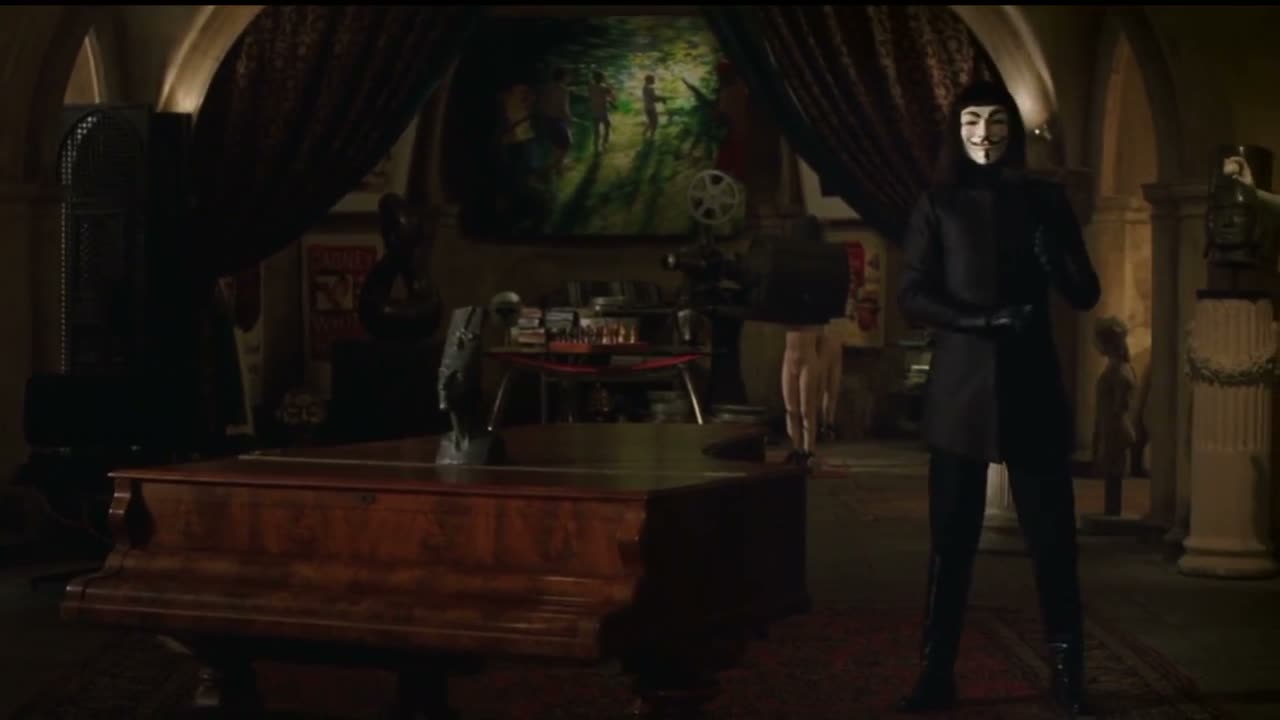 Siguiente · 19use lies to tell the truthLa escena: Evey Learns V Tortured Her
A prisoner who was held and executed before the events of the film. She leaves a letter hidden in a cell, describing her life with Ruth and her refusal to cooperate with the authorities.
Her letter says she still does not understand why they hated her so much. She and Ruth were targeted for being different, in a regime that made difference dangerous, and Ruth was taken first.
It is the last part of herself that the state cannot reach, described as small and fragile but the only thing worth having. She tells the reader never to lose it or let anyone take it.
She would rather die behind the chemical sheds than give the authorities what they want. For her, keeping herself intact matters more than staying alive.