
“Under no circumstances will we put this man on the air.”
Por qué es buena
The inverted order leaves no room for doubt about the network's refusal.
Registro
Formal
Úsala tú
Under no circumstances will we lend him the car.
Capítulo 16 de 21 · 3'59"
The network and Jerry's lawyer argue over whether to air the kidnapper's demands, while the FBI warns that a coded message could get people killed. "Only an idiot kidnaps," someone snaps. Then the kidnapper calls in person, coolly setting the terms — no trace, no leaks — as if he were just another guest booking.
The Network Refuses to Air Him
The Lawyer Threatens to Sue Everyone
The Kidnapper Sets His Terms
In a network office, executives, the FBI and Jerry's lawyer try to decide whether the kidnapped host's replacement should be allowed on TV. The lawyer is ready to sue everyone; the FBI fears a coded message going out live; the network just wants to buy time until Jerry is safe. Then the caller known as Mr. King phones in and negotiates the terms of his own appearance.
The room is full of people paid to protect Jerry, and none of them can agree on how. The lawyer wants to sue someone — anyone — because a lawsuit is the only language he trusts in a crisis. The FBI warns that putting a kidnapper on live television could turn one hostage crisis into fifty deaths. The network wants to stall. What cuts through the noise is contempt: "Only an idiot kidnaps. And only an idiot decides to do what you guys are doing." Against all that, the kidnapper's own phone call is the calmest thing in the scene: he names his terms, refuses to be traced, and treats the whole thing like a booking. Everyone is performing strength; only the man on the other end of the line sounds in control.
A1–C2 es la escala MCER. Las tarjetas por encima del nivel elegido se atenúan y la reproducción no se pausa en ellas.
“Under no circumstances will we put this man on the air.”
The inverted order leaves no room for doubt about the network's refusal.
Formal
“Only an idiot kidnaps. And only an idiot decides to do what you guys are doing.”
The repeated frame turns a plain insult into a verdict on everyone in the room.
Informal
“I noticed you just did. I heard the sounds. I do know those sounds.”
Three short sentences plus a stressed do show the caller has already won the exchange.
Informal
“All we're dealing with here is 10 minutes of talk-show time against a man's life...”
The whole dilemma in one scale: ten minutes of airtime against a man's life. Cold arithmetic that says everything.
Formal
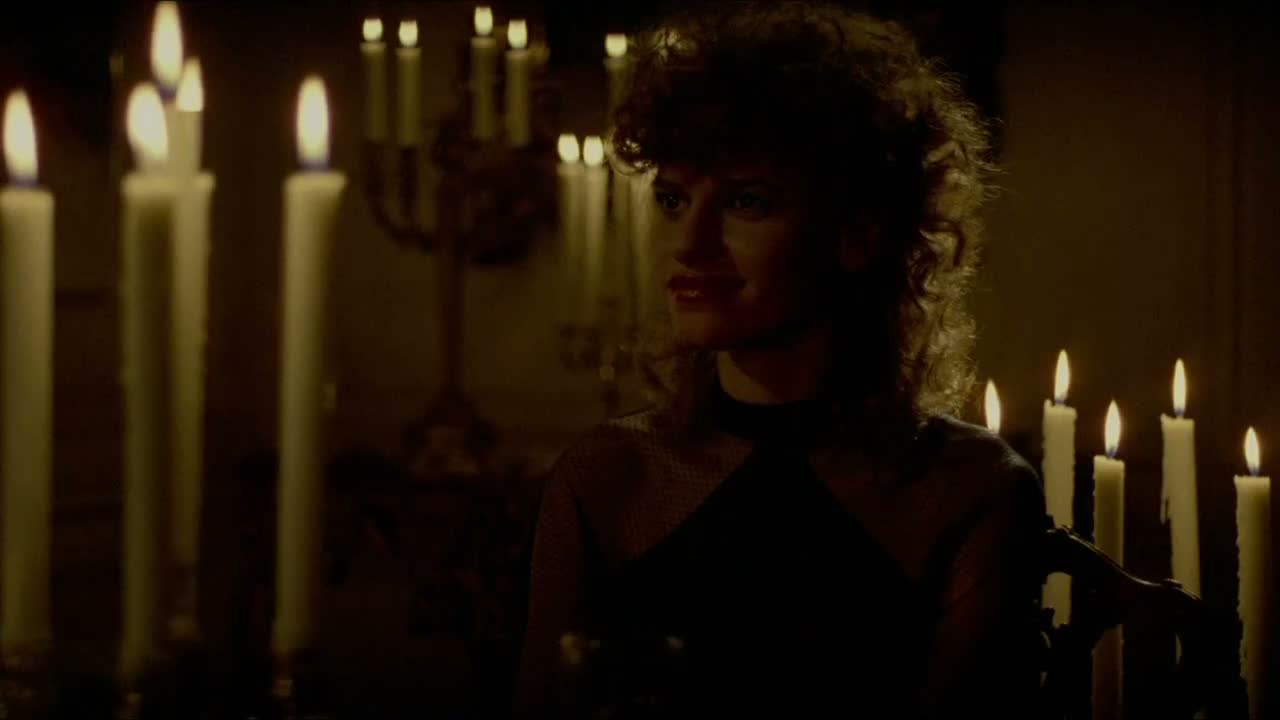 Siguiente · 17blow your mindLa escena: Masha's Lonely Night Confession
Its stated position is that giving a criminal live television would reward the kidnapping. In practice the executives are stalling, hoping Jerry is recovered before anyone has to make the call, so they push the decision to 11:30.
He is furious that the network seems to be negotiating with a man who is threatening Jerry's life, so he lashes out at the executives and the FBI. Suing is his instinct whenever events slip out of his control.
That a kidnapper could read out a coded message on live TV. If those words are a signal, fifty or more people around the country could be hurt, so airing the tape blind is a serious risk.
It's the name the caller uses for himself and for the man he claims to represent. He refuses to put Jerry on the line and sets the terms of the appearance himself, which shows the studio who really holds the cards.
Acting suddenly, without planning. The line parodies a kidnapper's excuse — claiming he didn't know what he was doing and acted on impulse — which is exactly the defense the room is mocking.