
“You mean to tell me they paid you good money for that?”
Por qué es buena
A single teasing question turns disbelief and envy into one clean jab.
Registro
Informal
Úsala tú
You mean to tell me they gave you a raise and a bonus?
Capítulo 16 de 18 · 3'26"
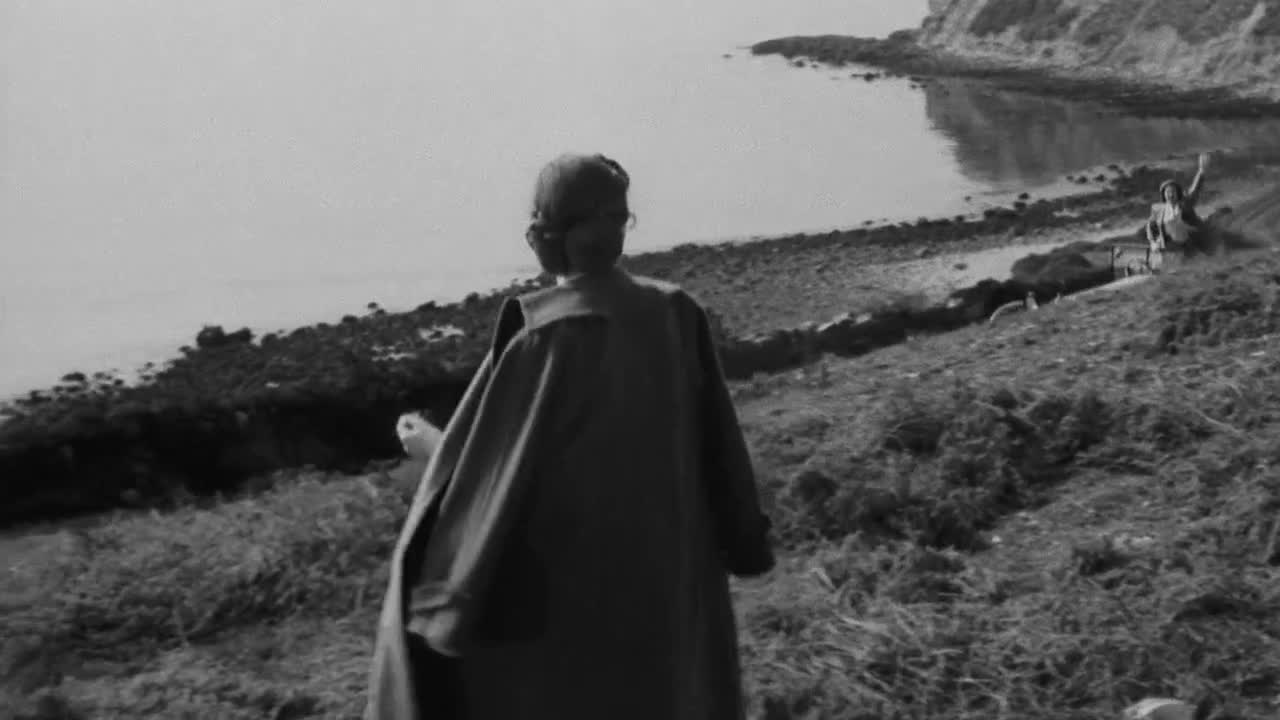
The book has paid off — Sproule sends a hundred pounds in "advance royalties" — but the money is only half the story. Lucy is already planning to marry Mr. Fairley and asking Martha to move Captain Gregg's portrait to the attic. "I don't know what possessed me," she says, as if catching herself.
Lucy Puts the Captain's Portrait Away
Sproule's letter brings good news: a £100 advance on Lucy's book, which she wrote by taking down Captain Gregg's dictation. Martha admits she has been reading it and disapproves of its rough language. Lucy, meanwhile, is waiting for Mr. Fairley, plans to marry him, and wants the captain's portrait moved from the sitting room to the attic.
The money is real, but what the scene is really about is Lucy letting go. The book that made her fortune was written with Captain Gregg, and now she is packing him off — asking Martha to "put that portrait of Captain Gregg up in the attic." Martha sees the truth and says it plainly: "He'd have a hard time living up to your idea of him." Lucy chooses the living man over the ghost, and her excuse — "I don't know what possessed me" — is really about how completely she once gave herself to him. The irony is that she still can't fully shut him out: she keeps the portrait, promises Sproule she'll tell him "the truth about the captain," and when Fairley cancels their picnic, she immediately asks for his London address.
A1–C2 es la escala MCER. Las tarjetas por encima del nivel elegido se atenúan y la reproducción no se pausa en ellas.
“You mean to tell me they paid you good money for that?”
A single teasing question turns disbelief and envy into one clean jab.
Informal
“I'm supposed to dust in here, and what falls under me eye falls under me eye.”
She turns snooping into housework with a stubborn little proverb that dares anyone to object.
Informal
“He'd have a hard time living up to your idea of him.”
It gently points out how impossible it is to match someone's idealized picture of you.
Neutral
“I don't know what possessed me.”
A superstitious flourish that captures regret better than any plain apology.
Informal
“You know, someday when I've known you a little longer, Mr. Sproule, I'll tell you the truth about the captain.”
It promises a story while quietly postponing the telling — charm used as a shield.
Formal
 Siguiente · 17take my breath awayLa escena: Anna Brings Home a Fiance
Because she is engaged to Mr. Fairley and trying to put her old life behind her. Moving the portrait is her way of demoting the captain without fully getting rid of him.
Yes, and she doesn't apologize for it. She claims she was dusting and the pages just "fell under her eye," which is a very tidy excuse for reading the whole thing.
It interrupts their picnic and, more importantly, removes the man she is counting on. She immediately writes off to get his London address, so her reaction is less grief than fear of losing him.
Because the book is published as her work, but the captain is the secret behind it. Promising the truth later lets her honor him while keeping him hidden for now.
It means "what got into me?" — used about doing something you now regret or can't explain. Lucy says it about having hung the captain's portrait where it was.