00:00 / 03:42
00:00 / 03:42

Haney Confesses to the Cover-Up, Explained

My Fellow Americans · 1996

Capítulo 11 de 13 · 3'42"

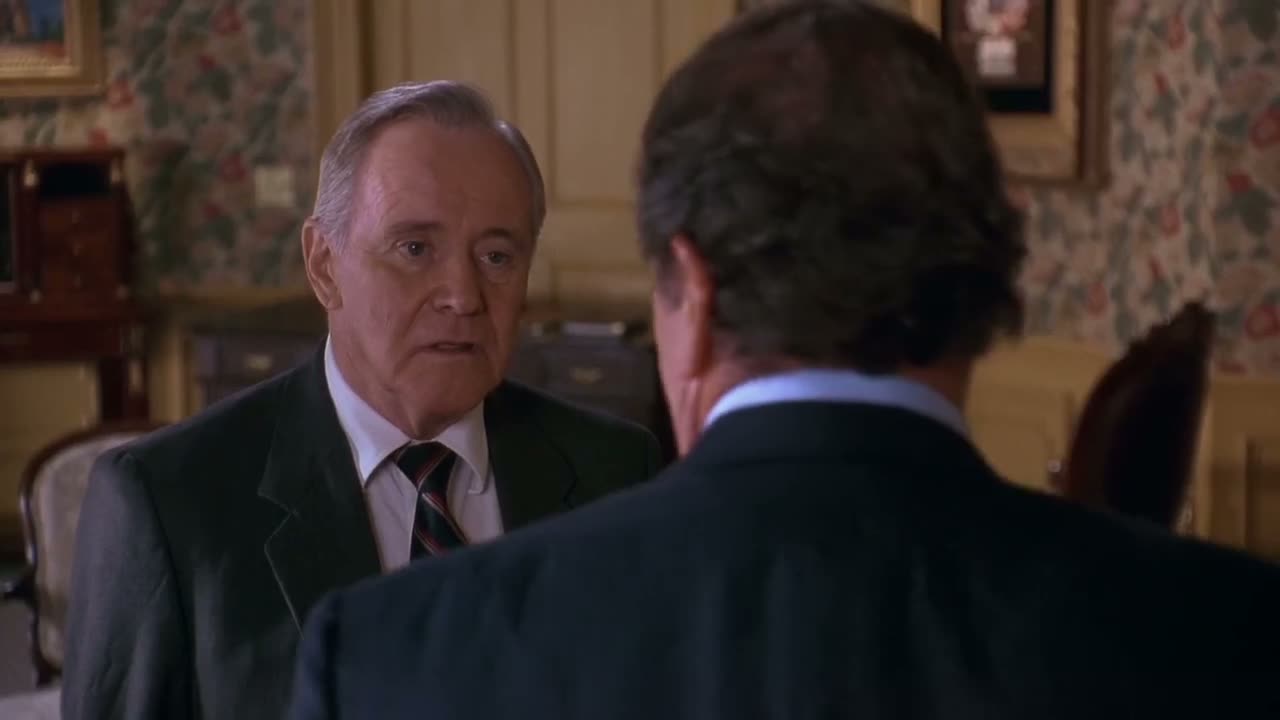
A taped confession lays out the scheme: the kickback money was laundered through a front company, Olympia, and a cover-up was ordered. Then the two men must choose — storm the White House or go to the press. "We've done enough already," one says, before the other refuses to settle for that.

InterrogationsPersuasionConfessingPersuadingRivalsB2mediumamericanClean

Key moments

Start here, then watch the full scene
  1. A Career Out of Doing Enough

    1:43–2:14
    31s
  2. ❝ Monólogo · 9 frases The Fool Who Still Believes

    2:29–3:03
    34s
  1. ❝ MonólogoThe speech for the sucker who still believes9 frasesPracticar ↗

Haney Confesses to the Cover-Up, explained

What happens

With a confession in hand, the men learn the money was run through a front company and a cover-up was ordered. Joe offers them two choices: walk into the White House and face Tanner, or hand the tape to the press. One decides to go to Haney anyway, and argues it is worth it for the people who still believe in them.

What's really going on

The scene turns a confession into a question of character. The facts are almost secondary — a front company, a cover-up, a rogue agent — because Joe already knows where they lead: the big fish will slip away, and nothing changes. What matters is the argument that follows. One man attacks the safe, career-long habit of never offending anyone, and answers it with "some idealistic sucker who still believes in us." The speech is not about winning; it is about whether public service means anything once the cameras are gone, and it ends on the promise itself, "Preserve, protect, and defend."

Key lines & what they mean

“some idealistic sucker who still believes in us.”
The ordinary voter the speech is built around — proof, for the speaker, that public service still means something.
“Well, tell that to Wayne and Genny and their kids living in their car.”
A sharp rebuttal: real people are suffering while the other man hides behind the rules of the game.
“No, I've made a career out of doing enough.”
A confession of a lifetime spent doing the minimum to stay safe and avoid offending anyone.
“I always did just enough not to piss anybody off, 'cause a pissed-off somebody won't vote for you.”
The political logic of caution laid bare: never risk a vote, even when it means doing too little.

Theme

  • Corruption — The confession exposes a front company, laundered kickbacks and an official order to cover it all up.
  • Duty — One man decides his promise to the public matters more than staying safe and playing the game.

Qué aprendes en este capítulo

Puntos de enseñanza

Repasa justo después de ver
Mi nivel0/4

A1–C2 es la escala MCER. Las tarjetas por encima del nivel elegido se atenúan y la reproducción no se pausa en ellas.

My Fellow Americans: tu progreso

Capítulo 11 de 13 · quedan unos 3 min

← Anterior
Siguiente · 12the end of the worldLa escena: Tanner Corners Them in the Tunnel

Preguntas frecuentes

La pregunta, luego la frase
What did Haney admit to?

He admits the kickback money was laundered through a front company, Olympia, and that he ordered the cover-up. He insists, however, that he never ordered anyone to kill.

What does 'cover-up' mean here?

It means hiding the truth about a crime or mistake to protect those involved. The confession includes the line "you did order the cover-up," even while the killings are denied.

What two options does Joe offer?

First, go to the White House and tell Haney they know about Olympia — which means getting past Tanner, who may kill them. Second, stop running and take the taped confession to the press.

Why does Kramer want to see Haney instead of going public?

He fears going public would only trigger another cover-up, letting the big fish escape. He wants to confront Haney directly, bringing Witnaur along, so the truth cannot be buried again.