
Mully: contar cómo cambió su vida
a new hope was planted in my heart
· Mully (2015)
AUDITION CUE SHEET & SCRIPT
Mully (2015)
contar cómo cambió su vida
Lines: 49 | Words: 557
Time: 6m 18s
Target Pace: 88 WPM
| # | Time | Dialogue & Cue Beats | Acting Notes / Subtext / Blocking |
|---|---|---|---|
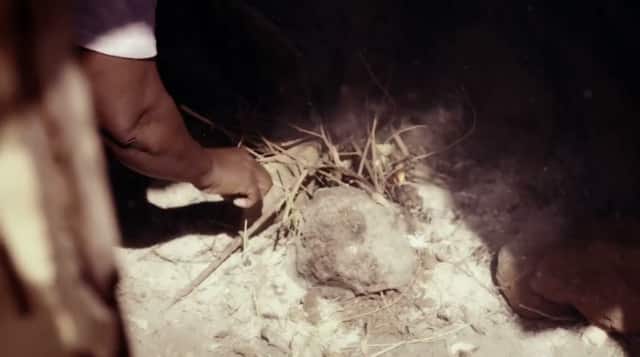
| 1 | 0:00 | And there was nobody. | |
| 2 | 0:02 | Everybody had gone. | |
| 3 | 0:08 | I looked everywhere, but I saw nothing. | |
| 4 | 0:14 | And I realized that I was completely alone, abandoned. | |
| 5 | 0:19 | A child without parent. | |
| 6 | 0:25 | You... you can't imagine it. | |
| 7 | 0:28 | Me, I was that child. | |
| 8 | 0:41 | I can remember, I went to my uncle, was a drunkard. | |
| 9 | 0:46 | And I was so hungry. | |
| 10 | 0:49 | And my uncle said no. | |
| 11 | 0:52 | And he said off you go. You go. | |
| 12 | 1:08 | Then I started walking around the village, begging for food. | |
| 13 | 1:14 | Pleading with people to help me. | |
| 14 | 1:23 | For about ten years, I kept on begging. | |
| 15 | 1:27 | I became a beggar. | |
| 16 | 1:30 | Even sometimes taking things that were not mine to survive. | |
| 17 | 1:36 | And I became hard, I became full of hatred. | |
| 18 | 1:43 | I became a street boy. | |
| 19 | 1:49 | And then I started asking myself, why I was really born, why I was really living. | |
| 20 | 1:57 | I hated my life. | |
| 21 | 2:05 | And I thought I don't really deserve to live in this kind of life, and I wanted to take away my life, because there was no meaning. | |
| 22 | 2:21 | But a young man came. | |
| 23 | 2:24 | He saw me in a desperate situation. | |
| 24 | 2:27 | He invite me to prayer and fellowship, and there was a preacher who was speaking about forgiveness of our sin. | |
| 25 | 2:40 | I thought, why should I trust this man? | |
| 26 | 2:47 | The preacher prayed, he said work hard, and by faith, there is nothing impossible before God. | |
| 27 | 3:01 | This struck in my mind, and a new hope was planted in my heart. | |
| 28 | 3:15 | The next morning, I walked going to the center of Nairobi to get a new life. | |
| 29 | 3:25 | I had no money, not even a single cent in my pocket. | |
| 30 | 3:34 | It took me about three-and-a-half days. | |
| 31 | 3:40 | I never finished school, so I didn't know what kind of a job I would be able to work. | |
| 32 | 3:53 | I landed to Nairobi where there are people with money, those who have power, those who have jobs, but nobody was ready to help me. | |
| 33 | 4:05 | And then I was just looking at everybody, and they'd look at me, and they said, "What are you doing here? | |
| 34 | 4:12 | You need to go and look for a job, you cannot beg, we cannot, I cannot give you money." | |
| 35 | 4:20 | I looked in one area where there are rich people, where they have big houses, and there, I was knocking everywhere. | |
| 36 | 4:30 | And I happened to find a gate somewhere in Nairobi. | |
| 37 | 4:34 | And again, here I am, going to a place where I was not invited, but I'm knocking that door. I knocked. | |
| 38 | 4:54 | The lady asked me, "Why are you disturbing us here? | |
| 39 | 4:59 | You are knocking the gate, what do you want me to do for you?" | |
| 40 | 5:08 | When she said come in, I was so happy to hear that. | |
| 41 | 5:13 | It was really my day. | |
| 42 | 5:17 | The lady gave me some work to do every day, cleaning the floor of her house, washing dishes, cutting grass outside, the field of two acres. | |
| 43 | 5:31 | There were no machine those days. | |
| 44 | 5:33 | And she also gave me some food, because there was food that remained in the dishes, and that is what I had after I finished work. | |
| 45 | 5:45 | So life become good and better than ever before. | |
| 46 | 5:53 | And so, after six months, this Indian woman, she spoke to her husband, who was the CEO of a very big farming company. | |
| 47 | 6:04 | And I was promoted to manager. | |
| 48 | 6:13 | And I bought a very nice shirt. | |
| 49 | 6:15 | And I was able to save some money. |
And there was nobody.
y no había nadie.
Everybody had gone.
Sin pausas, sigue el ritmo del actor
Espacio reproducir/pausa · ← → frase anterior/siguiente · R repetir
Por qué vale la pena
Su historia pasa del abandono y el hambre a una esperanza ganada con trabajo. Es ideal para practicar cómo encadenar recuerdos, emociones y giros con naturalidad.
El hablante se dirige al público y recuerda su infancia sin padres, la negativa de su tío y los años pidiendo comida. Después, una invitación a orar y una puerta abierta en Nairobi le dieron una oportunidad de trabajo.
Consejo de práctica
Al inicio, mantén un tono bajo y pausado; en el giro de esperanza, sube un poco la voz y haz una pausa breve antes de la palabra clave.
Frases de este monólogo
Inicia sesión para guardar monólogos y llevar la cuenta de las frases que has practicado.
Más monólogos de Mully
 B115 frases · 34s
Then we have me, the geek.
presentar a los hermanos con humorMully · 2015CálidoVínculo familiarCada persona de la familia aparece con una etiqueta rápida y el cierre convierte la lista en un chiste cercano. Sirve para practicar ritmo, pausas y adjetivos cotidianos con humor. B113 frases · 1m 26s
yes, God, use me
pasar del llanto a la entregaMully · 2015VulnerableIdentidad y crecimientoLa escena muestra a un hombre destrozado que deja de resistirse y acepta un nuevo propósito. Sirve para practicar el tono de la pregunta dolorosa y la calma de la respuesta final. B112 frases · 56s
Welcome, this is your family now.
sentirse acogido como familiaMully · 2015VulnerableVínculo familiarLa bienvenida suena sencilla, pero toca una vieja herida: nunca había vivido en una casa así ni había conocido a su padre biológico. Es ideal para practicar cómo la emoción aparece sin imponerse, con pausas y voz contenida. B15 frases · 31s
we change Africa, we change our country Kenya
explicar un logro y inspirar a otrosMully · 2015DecididoInspiradorLa calma con que el hablante muestra la tierra recuperada hace creíble el sueño que viene después. El paso de la memoria personal a una misión para la juventud ofrece un arco emocional claro para practicar ritmo y énfasis.
Más monólogos
 B26 frases · 25s
you are the only ones who can do it
anteponer resultados a los sueñosSplice: Experimento mortal · 2009DecididoPersuasión laboralEl giro es seco y convincente: primero acepta el ideal ajeno y después lo cambia por un objetivo comercial. Sirve para practicar entonación firme y pausas de oficina. B27 frases · 34s
A watched pot never boils
explicar una rareza cuánticaEscape Room · 2019IngeniosoTragicómicoParte de una frase cotidiana y entra en una explicación científica con un toque irónico. Es útil para practicar cómo introducir una idea, hacer una pregunta y mantener el control del tono. B213 frases · 1m 15s
Something is wrong in this country
exigir que se aborde el problemaBowling for Columbine · 2002DecididoDesamor y dueloEl peso de la pérdida se siente desde la primera frase, y el giro hacia la exigencia deja un momento muy potente. Para practicar, conviene observar cómo las pausas y la repetición sostienen la emoción sin perder claridad. B29 frases · 22s
I couldn't believe that I actually... Could represent an innocent man.
dudar de un inocenteEl inocente · 2011VulnerableIdentidad y crecimientoEl giro de la seguridad legal a la duda personal tiene mucha fuerza. Es útil para practicar cómo encadenar frases cortas y cómo dejar caer el final con peso contenido.