
El museo de Historia Natural cobra vida con David Attenborough: desmontar un mito de museo
But in spite of its fame, this one is a fake.
· El museo de Historia Natural cobra vida con David Attenborough (2014)
AUDITION CUE SHEET & SCRIPT
El museo de Historia Natural cobra vida con David Attenborough (2014)
desmontar un mito de museo
Lines: 32 | Words: 344
Time: 3m 20s
Target Pace: 103 WPM
| # | Time | Dialogue & Cue Beats | Acting Notes / Subtext / Blocking |
|---|---|---|---|
| 1 | 0:00 | Our understanding of the mastodon is a lot more accurate today, thanks to Professor Owen. | |
| 2 | 0:09 | But it was not the only creature in this museum to be the victim of misrepresentation. | |
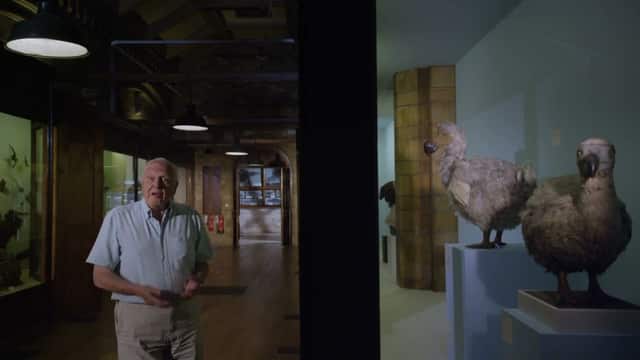
| 3 | 0:17 | This poor old bird is a dodo. | |
| 4 | 0:22 | It once lived on the island of Mauritius in the Indian Ocean. | |
| 5 | 0:26 | And it's almost certainly the first animal species that human beings actually exterminated | |
| 6 | 0:33 | in historic times. | |
| 7 | 0:36 | And so now we talk about being "as dead as a dodo." | |
| 8 | 0:42 | But in spite of its fame, this one is a fake. | |
| 9 | 0:49 | Its feathers come from a goose; its feet were modelled on a turkey, | |
| 10 | 0:54 | and its beak, I suspect, is plaster. | |
| 11 | 1:00 | The museum can be forgiven because no skin or feathers of the dodo survive. | |
| 12 | 1:07 | Its image was influenced by pictures like this one, | |
| 13 | 1:15 | but he had never seen a living dodo and based his image on accounts by seafarers. | |
| 14 | 1:22 | I've often wondered whether dodos actually looked like that, | |
| 15 | 1:27 | but unfortunately, they'd all disappeared before anyone could get a good look at them... | |
| 16 | 1:33 | ...until now. | |
| 17 | 1:45 | This funny, dumpy creature is how the bird is usually represented these days. | |
| 18 | 1:54 | But I've seen quite a lot of flightless birds over the years and this one doesn't quite ring true. | |
| 19 | 2:05 | An examination of the way its thighs join its pelvis | |
| 20 | 2:10 | has shown that, in life, it actually stood much more upright. | |
| 21 | 2:21 | We now know that its feathers were probably a lot fluffier than in that painting. | |
| 22 | 2:27 | We also now know that it was related to the pigeon, | |
| 23 | 2:31 | and some experts suggest that it made a pigeon-like call: | |
| 24 | 2:36 | "Doo-doo, doo-doo", | |
| 25 | 2:38 | which gave the bird its name. | |
| 26 | 2:44 | The dodo probably fed on fruit; there's a lot of it on the island. | |
| 27 | 2:50 | I'll try him with a bit. Come on. | |
| 28 | 2:57 | What do you make of that? | |
| 29 | 3:00 | Ow! That's a very powerful beak. | |
| 30 | 3:05 | In fact, it may well have been adapted for crushing shells and crustaceans for the sake of the calcium. | |
| 31 | 3:12 | "And there's a female." | |
| 32 | 3:16 | Maybe she is another reason why they had such large beaks: to show off with during courtship. |
Our understanding of the mastodon is a lot more accurate today, thanks to Professor Owen.
Nuestra comprensión del mastodonte es mucho más precisa hoy en día gracias al profesor Owen.
But it was not the only creature in this museum to be the victim of misrepresentation.
Sin pausas, sigue el ritmo del actor
Espacio reproducir/pausa · ← → frase anterior/siguiente · R repetir
Por qué vale la pena
Attenborough mezcla ironía y asombro para revelar que el ave más famosa del museo es una reconstrucción. Un modelo perfecto para practicar un ritmo pausado y una entonación narrativa clara.
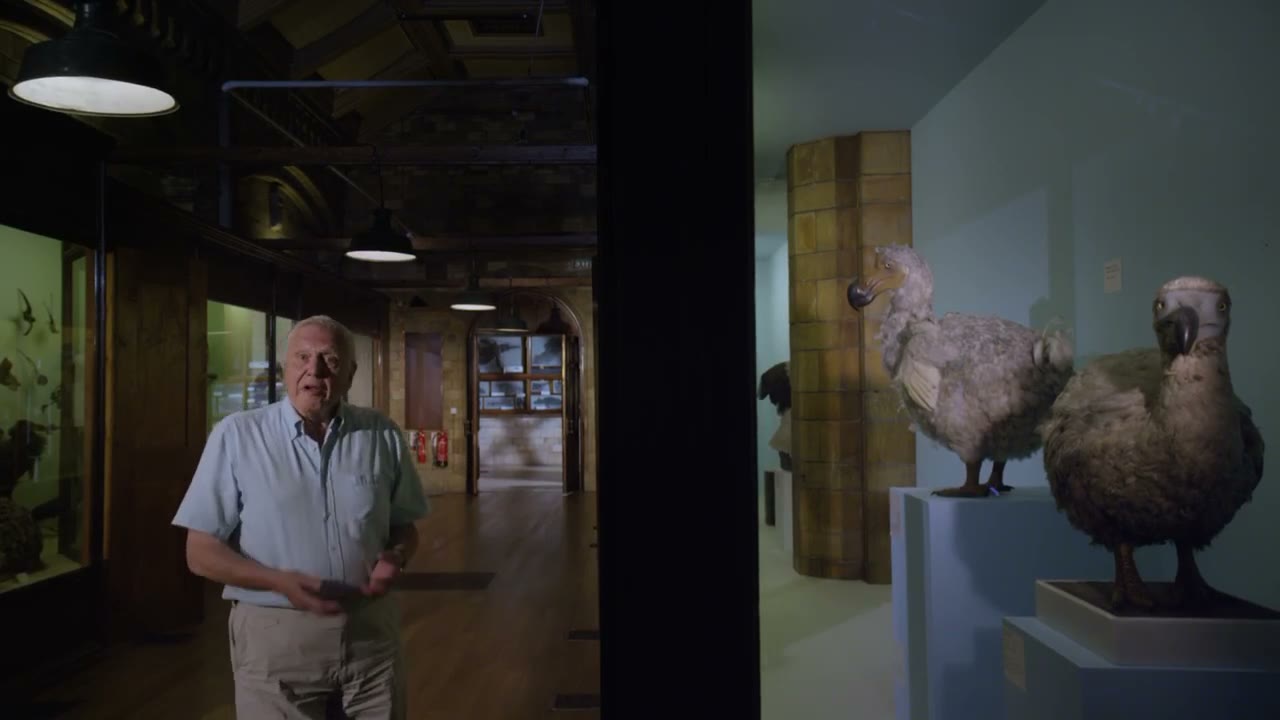
Attenborough se detiene ante el dodo del museo, recuerda que la especie se extinguió por culpa del ser humano y luego señala que el ejemplar está hecho con plumas de ganso, patas de pavo y yeso.
Consejo de práctica
Haz una pausa breve antes de «this one is a fake» y carga la voz en fake; mantén el resto en un tono bajo y conversacional.
De
 El museo de Historia Natural cobra vida con David AttenboroughTodos los capítulos de esta película →
Frases de este monólogo
Inicia sesión para guardar monólogos y llevar la cuenta de las frases que has practicado.
Más monólogos de El museo de Historia Natural cobra vida con David Attenborough
 B252 frases · 5m 27s
It's hard to imagine a time when the world didn't know about dinosaurs
explicar el hallazgo de los dinosauriosEl museo de Historia Natural cobra vida con David Attenborough · 2014ReflexivoInspiradorEl relato convierte una pieza fósil mínima en una gran revelación sobre la historia del planeta. Es útil para practicar explicaciones claras, pausas descriptivas y un tono de descubrimiento. B26 frases · 39s
certain ancient animals that we'll never see with our own eyes
despertar curiosidad por lo extintoEl museo de Historia Natural cobra vida con David Attenborough · 2014ReflexivoInspiradorEl narrador pasa de los animales que aún pueden verse a las criaturas extintas que solo cobran vida en la imaginación, con un tono sereno y curioso que invita a escuchar cada pausa. Ideal para practicar la entonación de un documental y el ritmo pausado del inglés hablado. B210 frases · 1m
This creature was half reptile, half bird.
explicar pruebas paso a pasoEl museo de Historia Natural cobra vida con David Attenborough · 2014SerenoIdentidad y crecimientoEl narrador encadena cada prueba sin prisa y convierte un fósil inmóvil en un animal que vuela; ideal para practicar una explicación ordenada, clara y con tensión creciente. B213 frases · 1m 26s
This was no myth.
probar que una leyenda era realEl museo de Historia Natural cobra vida con David Attenborough · 2014ReflexivoDramáticoLa explicación convierte huesos, dudas y leyendas en una revelación creciente. Es útil para practicar pausas, énfasis y preguntas con tono curioso.
Más monólogos
 B26 frases · 25s
you are the only ones who can do it
anteponer resultados a los sueñosSplice: Experimento mortal · 2009DecididoPersuasión laboralEl giro es seco y convincente: primero acepta el ideal ajeno y después lo cambia por un objetivo comercial. Sirve para practicar entonación firme y pausas de oficina. B27 frases · 34s
A watched pot never boils
explicar una rareza cuánticaEscape Room · 2019IngeniosoTragicómicoParte de una frase cotidiana y entra en una explicación científica con un toque irónico. Es útil para practicar cómo introducir una idea, hacer una pregunta y mantener el control del tono. B213 frases · 1m 15s
Something is wrong in this country
exigir que se aborde el problemaBowling for Columbine · 2002DecididoDesamor y dueloEl peso de la pérdida se siente desde la primera frase, y el giro hacia la exigencia deja un momento muy potente. Para practicar, conviene observar cómo las pausas y la repetición sostienen la emoción sin perder claridad. B29 frases · 22s
I couldn't believe that I actually... Could represent an innocent man.
dudar de un inocenteEl inocente · 2011VulnerableIdentidad y crecimientoEl giro de la seguridad legal a la duda personal tiene mucha fuerza. Es útil para practicar cómo encadenar frases cortas y cómo dejar caer el final con peso contenido.