
“Are you kidding me? Out of the gate? This is not happening!”
Por qué es buena
Three short bursts make the panic feel like the day has already failed.
Registro
Informal
Úsala tú
Are you kidding me? Out of the gate with a pop quiz?
Capítulo 3 de 6 · 2'33"
Riley is asked to introduce herself on her first day. She talks about Minnesota, hockey, and a family that skates every weekend, until "Or we did, till I moved away." The introduction turns into a breakdown while the voices around her panic that she is crying at school.
❝ Monólogo · 8 frases Panic Before the Introduction Starts
The Introduction Breaks on the Move
Someone announces a new student, and a voice panics: "Out of the gate? This is not happening!" Riley introduces herself as a girl from Minnesota who plays hockey and skates with her family almost every weekend. She then says, "Or we did, till I moved away." The introduction turns into tears at school, a core memory turns blue, and the scene closes on "we're happy to have you here."
The panic is not about the speech failing. It starts the second a new student is announced: "Out of the gate? This is not happening!" The introduction has not even begun. Riley gets through the easy part, snow, a frozen lake, the Prairie Dogs, a dad who coaches, a family tradition. The break comes on a correction. "Or we did, till I moved away" turns a present-tense ritual into a past one. That is when someone blurts "what gives," and the memory will not eject. She keeps talking, but the words change tense again: "But everything's different now. Since we moved." Someone reports cool kids whispering at three o'clock and says they are judging. Then the crying is named out loud, at school, and a core memory comes out blue. The line "we're happy to have you here" is kind, and it arrives after she is already crying.
A1–C2 es la escala MCER. Las tarjetas por encima del nivel elegido se atenúan y la reproducción no se pausa en ellas.
“Are you kidding me? Out of the gate? This is not happening!”
Three short bursts make the panic feel like the day has already failed.
Informal
“No! Pretend we can't speak English.”
The escape plan is silly on purpose, and that is why it sticks.
Informal
“Or we did, till I moved away.”
A small correction ends the happy weekends in the same breath.
Neutral
“But everything's different now. Since we moved.”
The second sentence gives only the cause, and the pause does the crying.
Neutral
“I know it can be tough moving to a new place, but we're happy to have you here.”
It admits the move is hard before the welcome, so the comfort feels earned.
Neutral
Yeah, it gets pretty cold. The lake freezes over, and that's when we play hockey. I'm on a great team. We're called the Prairie Dogs. My friend Meg plays forward. And my dad's the coach. Pretty much everyone in my family skates. It's kind of a family tradition. We go out on the lake almost every weekend. Or we did, till I moved away.
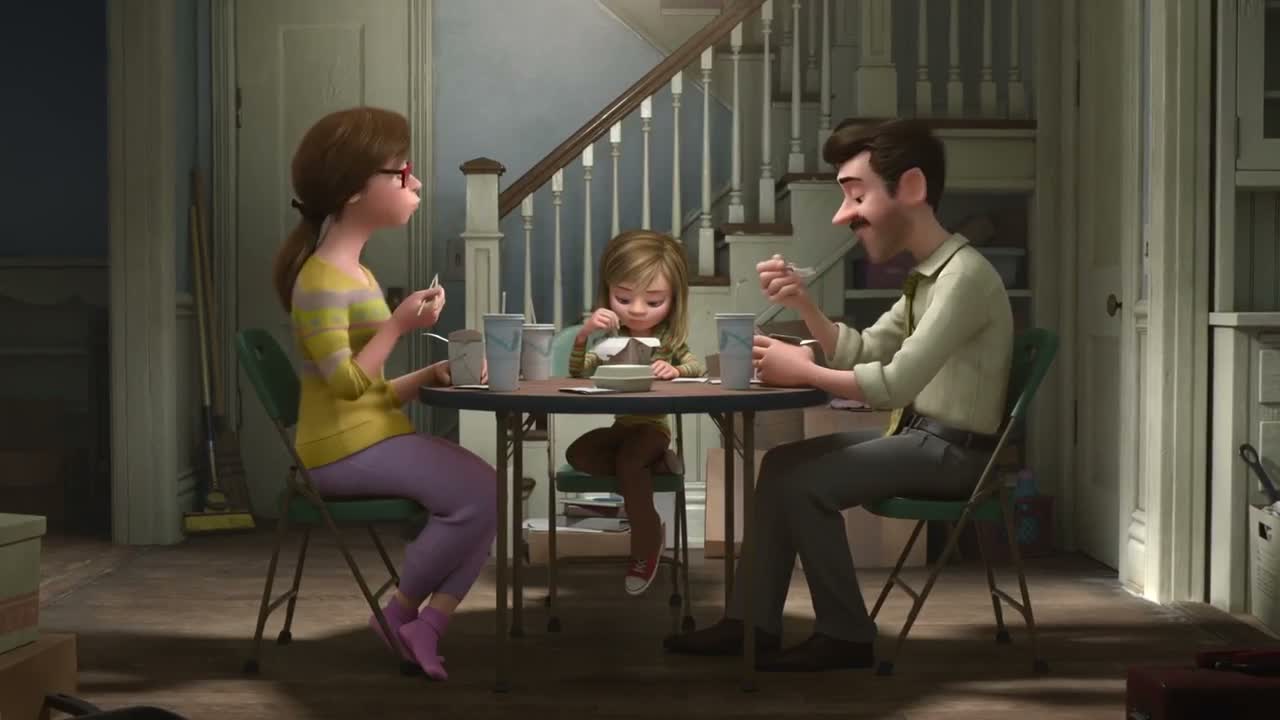 Siguiente · 04a piece of thisLa escena: Riley Snaps at the Dinner Table
It means from the very start. The second the class is told there is a new student, someone panics that it is already her turn: "Out of the gate? This is not happening!" The introduction has not failed. That comes later, when she says she moved away and then cries at school.
She gets through Minnesota, the frozen lake, and hockey in the present tense. The break is "Or we did, till I moved away," which puts the lake weekends in the past. She then says everything is different since the move, and someone shouts that they are crying at school.
It comes right after "Or we did, till I moved away," when the weekly lake trips stop being something the family still does. The next lines are about a memory being touched and not ejecting. It is shock at that turn, not at the opening announcement, and she is not crying at school yet.
One voice says cool kids are whispering at three o'clock and asks if the other saw that look. The reply is "No." The next line insists "They're judging us!" The lines show the alarm and a denial, not what those kids actually did.