
“I'm, uh, having a party tonight and I was wondering if you wanted to come over.”
Por qué es buena
An invitation half-hedged into a question, shyness and hope in one line.
Registro
Informal
Úsala tú
I was wondering if you wanted to grab lunch today.
Capítulo 2 de 16 · 2'21"
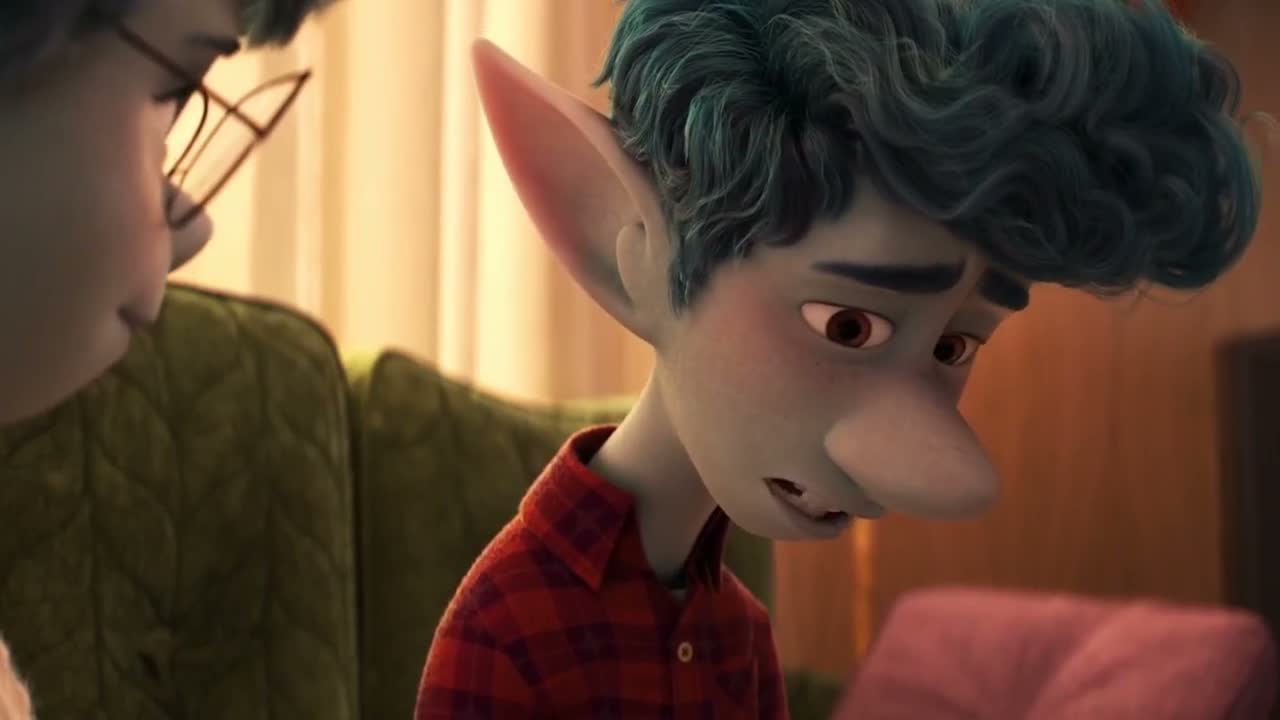
Ian is trying to invite some classmates to a party, and every sentence comes out wrong. "I'm, uh, having a party tonight and I was wondering if you wanted to come over," he manages, then ruins it with a slang line nobody uses. Under the nervous laughter is a kid who just wants to fit in.
Ian's Awkward Party Invite
Ian Fumbles the Invite
On his sixteenth birthday, Ian works up the nerve to invite a group of classmates to a party at his house. He opens with the wrong slang, gets corrected mid-sentence, and keeps fumbling until someone finally asks if he is inviting them. It is a small scene about how hard it is to say a simple hello when you are afraid of looking foolish.
The joke is that Ian can explain a magical quest but not a birthday invitation. He rehearses a cool-kid script and it collapses the moment it meets an actual audience, which is why the slang line gets answered with a flat note that nobody talks like that. The same fear shows up in smaller moments: he asks a classmate to move his feet with a painfully polite request, and admits that the chair situation means "It just makes it a little hard for me to fit in there." On the surface these are tiny social problems. Underneath, they are the same worry — that he is on the outside looking in, and one wrong word will prove it. Barley's coaching does not fix the nerves; it just shows how badly Ian wants to belong.
A1–C2 es la escala MCER. Las tarjetas por encima del nivel elegido se atenúan y la reproducción no se pausa en ellas.
“I'm, uh, having a party tonight and I was wondering if you wanted to come over.”
An invitation half-hedged into a question, shyness and hope in one line.
Informal
“It just makes it a little hard for me to fit in there.”
Literally about a chair, quietly about every place that leaves no room for you.
Neutral
“Hey, uh, Gorgamon. Um... Would you mind not putting your feet on my chair today?”
Polite on the surface, firm underneath; 'today' quietly says this happens every day.
Formal
“but I'm sure you probably are doing something tonight, and you like cake like I like cake.”
Every anxious guess and self-correction tumbles out in a single breath.
Informal
 Siguiente · 03get byLa escena: Dad Leaves Ian a Wizard Staff
Because he is nervous around the kids he wants to impress. He plans a casual script, then panics and fills the silence with slang that does not fit him, which makes the whole thing more awkward.
Barley is coaching him through the invite and can tell the slang sounds forced. He is trying to sound like a cool older brother, but his fix is just as scripted as Ian's original attempt.
It works on two levels: fitting into a chair, and fitting into a group of people. The double meaning is the point — Ian's literal complaint is really about not belonging.
It shows that Ian's real goal is connection, not cake. He wants a normal teenage social life, and the clumsy invitation is the first step he is brave enough to take.