
“Until she gets back, we just do what Joy would do!”
Por qué es buena
A missing person becomes a plan: copy her until she returns.
Registro
Informal
Úsala tú
Until the chef gets back, just do what she would do with the sauce.
Capítulo 4 de 6 · 3'13"
Riley's parents just want the old happy kid back, but the emotions steering her have no idea how to fake Joy. When Dad offers hockey tryouts, Riley answers with a flat "It was fine, I guess," then turns on him: "What is your problem? Just leave me alone!" The fight isn't about school or sports.
The Emotions Try to Fake Being Joy
Riley Blows Up and Gets Sent to Her Room
At the dinner table in San Francisco, Riley's dad announces he found a junior hockey league with tryouts the next day. Riley barely responds, then snaps at him, rolls her eyes, and tells him to leave her alone. Her dad sends her to her room. Inside her mind, the other emotions are trying to act like Joy.
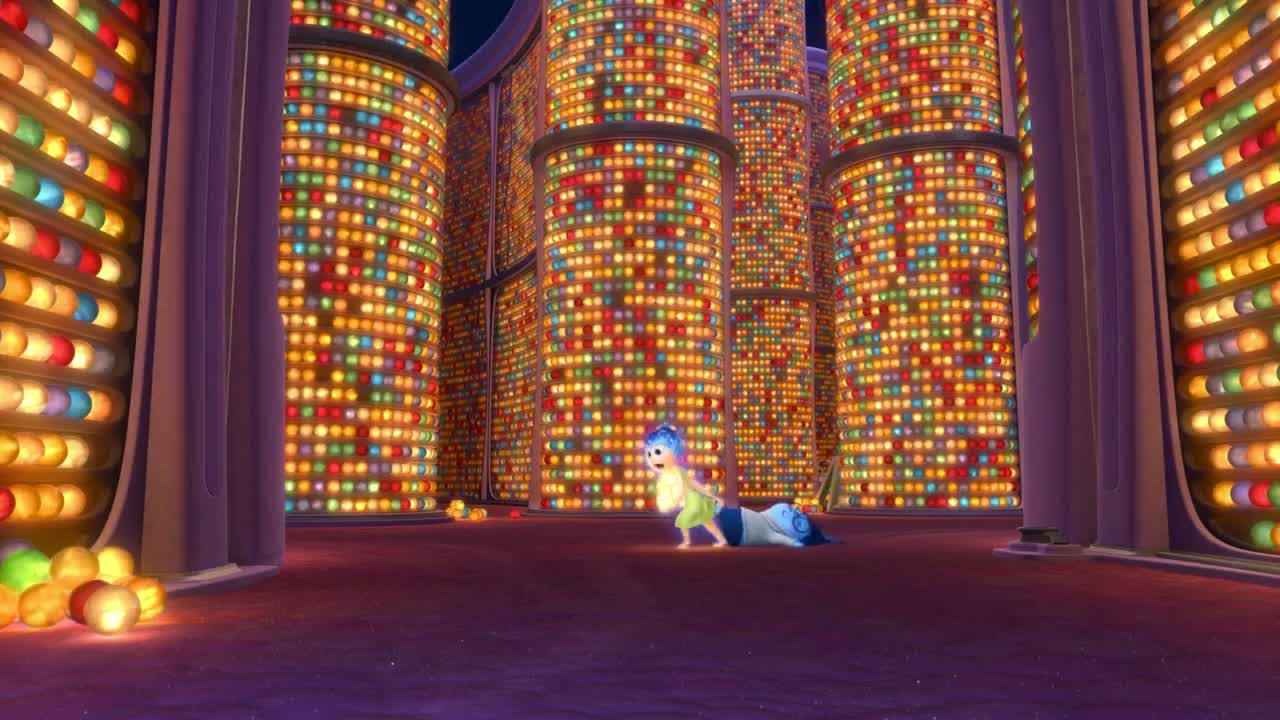
The dinner looks like a bratty kid blowing up at her parents, but the scene is really about what happens when Joy is missing. Back in Headquarters, Fear, Anger and Disgust try to run Riley by copying Joy, and the plan fails the moment it touches real feeling. Their rehearsed cheer, "Yeah, that sounds fantastic," lands so wrong that even they wince: "That wasn't anything like Joy!" The bitterness curdles into "For this we gave up that Brazilian helicopter pilot?" and then open war. Riley's "What is your problem? Just leave me alone!" isn't the line of a child who hates her dad; it's anger driving with nobody at the wheel. The parents see only the attitude, and the foot comes down.
A1–C2 es la escala MCER. Las tarjetas por encima del nivel elegido se atenúan y la reproducción no se pausa en ellas.
“Until she gets back, we just do what Joy would do!”
A missing person becomes a plan: copy her until she returns.
Informal
“For this we gave up that Brazilian helicopter pilot?”
The boring offer sounds worse beside a ridiculous daydream.
Informal
“I don't want to have to put "the foot" down.”
A household idiom grows quotation marks and turns into a threat.
Informal
“You want a piece of this, pops? Come and get it!”
Sharing a piece of something becomes a dare to fight.
Informal
“That's it! Go to your room! Now!”
Three short bursts end the talk by sending her out.
Informal
“Well, that was a disaster.”
It wipes out the relief the previous line tried to sell.
Informal
 Siguiente · 05happens to the best of themLa escena: The Gum Commercial That Never Fades
She isn't being herself. The emotions at the controls are only pretending to be Joy, and their flat answers, such as "It was fine, I guess," show they can't fake how she really feels. The pressure comes out as anger, and she tells him to leave her alone.
It's tough-guy slang for "do you want to fight?" When Riley says, "You want a piece of this, pops? Come and get it!" she is daring her dad to take her on.
The scene never says who is right. He brings good news, gets eye-rolls and "What is your problem? Just leave me alone!" back, and answers with "That's it! Go to your room! Now!" Both of them are reacting, not listening.
They can tell something is off, since one line calls Riley's behavior weird, so they keep probing: "So, how was the first day of school?" and later "Riley. Is everything okay?" They want the real answer, while the emotions try to fake one.