
“The only way they could make real extra money was to go out and cut corners.”
Por qué es buena
One calm sentence explains a whole class of men without excuse or complaint.
Registro
Neutral
Úsala tú
The only way to get in was to lie a little.
Capítulo 12 de 28 · 3'28"
Karen narrates the wives' way of seeing things: their husbands are blue-collar men who 'cut corners' to bring home a little extra. Police searches, handouts and robberies all blur into the routine. "No outsiders ever. It got to be normal," she says, and that is the real subject.
❝ Monólogo · 4 frases Our Husbands Were Blue Collar Guys
Proud of a Husband Who Risks His Neck
Karen explains how the wives rationalized the life: their men weren't brain surgeons but blue-collar guys, and the only way to make real money was to cut corners. She describes police searches she met with coffee and lawyers, the close circle with no outsiders, and how it all came to feel normal. The scene ends with Henry too busy to go out, handing her money instead.
The chapter is about how a person stops noticing. Karen doesn't defend the crimes so much as fold them into ordinary life: the husbands are just 'blue collar guys' who 'cut corners' to afford small extras. Searches become social calls; she offers the detectives coffee, while wives like Mickey Conway curse and spit on their own floors. The circle is closed on purpose — "No outsiders ever. It got to be normal" — and closing it is what makes the violence feel like weather. The most uncomfortable line is the honest one: she was proud of a husband "who was willing to risk his neck just to get us the little extras." By the end, crime isn't shocking or even exciting; it's a household arrangement, and Henry slipping Karen money for shopping is just another transaction in it.
A1–C2 es la escala MCER. Las tarjetas por encima del nivel elegido se atenúan y la reproducción no se pausa en ellas.
“The only way they could make real extra money was to go out and cut corners.”
One calm sentence explains a whole class of men without excuse or complaint.
Neutral
“Our husbands weren't brain surgeons, they were blue collar guys.”
It raises the bar with brain surgeons, then drops to blue collar guys, wry and loyal at once.
Informal
“Being together all the time made everything seem all the more normal.”
It states how closeness turns the unthinkable into routine, and the flatness is the point.
literary
“No outsiders ever. It got to be normal.”
A closed circle plus habit equals normal, and the line names the process.
Neutral
and that he and the guys made bucks hustling while other guys... were sitting on their asses waiting for handouts. Our husbands weren't brain surgeons, they were blue collar guys. The only way they could make real extra money was to go out and cut corners.
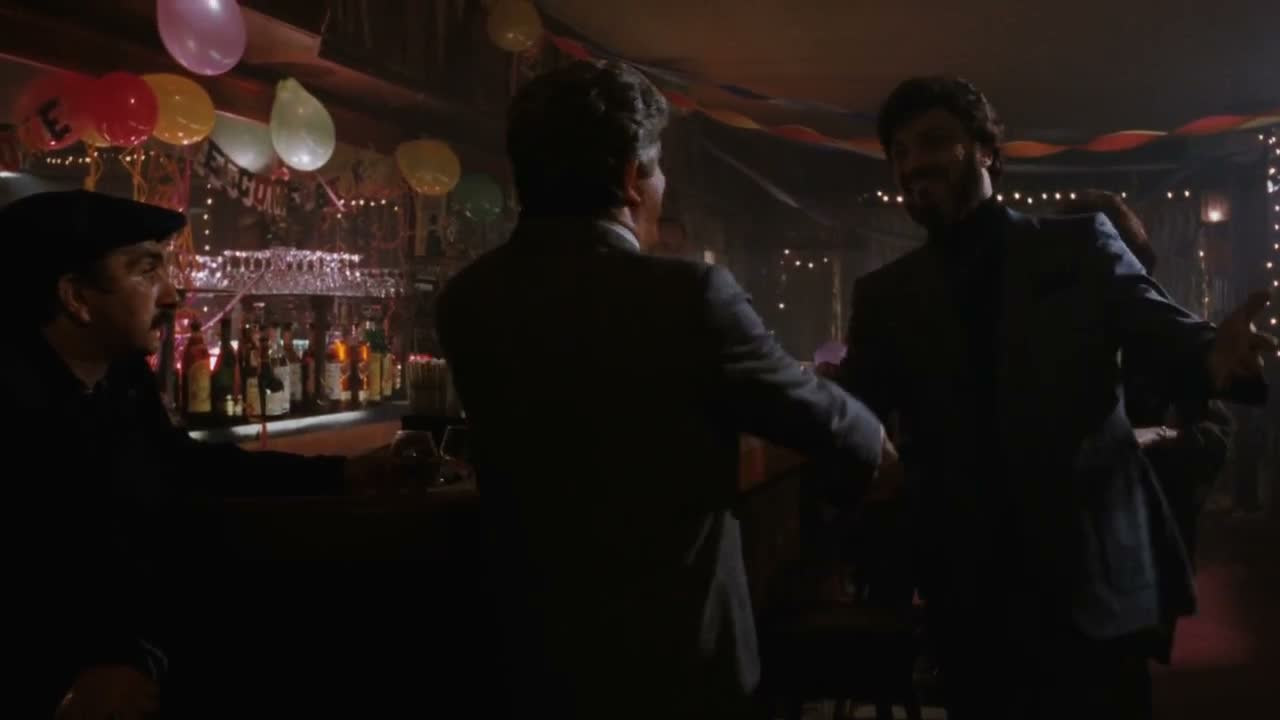 Siguiente · 13out of orderLa escena: Billy Taunts Tommy at the Welcome Party
She uses it as an excuse. By insisting the men weren't professionals, she makes 'cutting corners' sound like the only realistic way for working-class husbands to bring home extra money.
Politely. She signs the warrants, offers them coffee, and calls the lawyer, because in her experience the detectives mostly want a handout to stay quiet.
Because they only socialized with each other. No outsiders were around, and shared birthdays, christenings and vacations let the criminal parts blend into daily life.
The comforts money buys, like shopping trips. She says she was proud of a husband willing to risk his neck just to give the family those extras.
She wants to go shopping, so he gives her cash, kisses her and leaves for whatever he has lined up, marking how ordinary the arrangement has become.