00:00 / 02:45
00:00 / 02:45

Young Henry Gets Beaten and Recruited, Explained

GoodFellas · 1990

Capítulo 2 de 28 · 2'45"

It looks like a school problem and a family fight, but the film is showing something else: a boy already choosing the street over the classroom. "I belonged. I was treated like a grown up," the narration says, and when the school letters keep coming, the men around the cabstand simply make sure they never reach his house.

Parents & kidsThreatsConfrontingThreateningParent & childB1fastamerican

Key moments

Start here, then watch the full scene
  1. Young Henry Learns to Belong at the Cabstand

    0:02–0:48
    46s
  2. ❝ Monólogo · 4 frases the father's rant

    Each short sentence lands harder, turning disappointment into open shame.

    1:09–1:20
    11s
  1. ❝ Monólogothe father's rant4 frasesPracticar ↗

Young Henry Gets Beaten and Recruited, explained

What happens

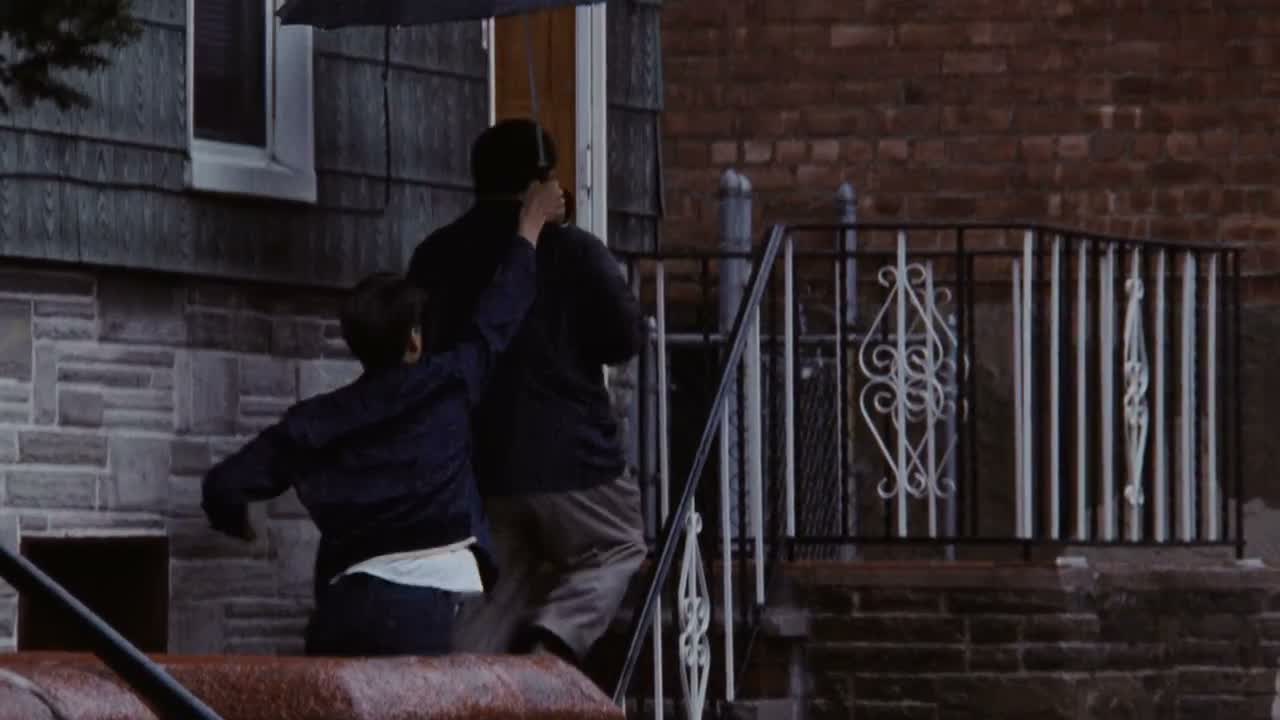
Young Henry spends his days at the cabstand instead of school, parking Cadillacs for the wiseguys and feeling, for the first time, that he belongs. When a letter reveals he has not been to class in months, his father calls him a bum and beats him. The men at the cabstand then lean on the mailman so no more school letters reach the house.

What's really going on

The scene is built around a trade the boy cannot name yet. The cabstand gives him money, status, and the feeling of being somebody, while school offers only boredom and rules, so the beating from his father does not push him back to class — it pushes him further toward the men who protect him. "I belonged. I was treated like a grown up" is the line that explains everything: what he wants is not the money but the rank. The mailman scene makes the lesson explicit, because the gang does not persuade the school or the family, it simply removes the evidence. Henry ends up proud that no letters arrive at all, and the final image of refusing to pledge allegiance shows the choice is already made.

Key lines & what they mean

“People like my father could never understand, but I was a part of something.”
His family sees a boy wasting his life, but Henry feels he has joined a world that gives him status and identity.
“I belonged. I was treated like a grown up.”
The cabstand gave him the acceptance and adult respect that school and home never did.
“Here I am, this little kid, I can't even see over the steering wheel...”
He marvels at the mismatch: a small child trusted to park a gangster's Cadillac.
“I was living in a fantasy.”
Looking back, Henry admits the whole feeling of belonging was a dream he was telling himself.

Theme

  • Coming of age — A boy picks the street over school, and the beatings that should correct him only push him deeper into that world.
  • Power — The men at the cabstand fix a problem by pressure and threat, showing the kind of power Henry is drawn to.

Qué aprendes en este capítulo

Puntos de enseñanza

Repasa justo después de ver
Mi nivel4/7

A1–C2 es la escala MCER. Las tarjetas por encima del nivel elegido se atenúan y la reproducción no se pausa en ellas.

GoodFellas: tu progreso

Capítulo 2 de 28 · quedan unos 88 min

← Anterior
Siguiente · 03rip someone offLa escena: Paulie's Protection Racket

Ideas clave

Lo que te llevas
  1. The job becomes an identity long before it becomes income.
  2. A single school letter turns the family against Henry.
  3. Mock politeness can be more threatening than open anger.
  4. Taking a beating is treated as normal, which is the film's real point.

Preguntas frecuentes

La pregunta, luego la frase
Why does Henry keep going to the cabstand instead of school?

Because it is the only place that treats him as important. He gets money, errands, and adult respect, and that matters more to him than class, which is why the beatings never change his mind.

What does "take a beating" mean in this scene?

It means to get hit hard, usually repeatedly. Here Henry uses it almost casually, saying everyone takes a beating sometimes — a line that shows how normal violence has already become to him.

Why doesn't Henry's father just take him out of the cabstand?

He cannot really stop it. The men around the cabstand have more power in the neighborhood than he does, so once they decide to handle the school letters, the father is left out of the loop entirely.

Who ordered the mailman to hand over the school letters?

The men Henry works for, the local crew running the cabstand. Nobody debates the father or the school; they simply make the letters disappear, which is their way of protecting their investment in the boy.