“The only thing that hurts is the fact that he has never accepted who I am.”
It names one precise wound instead of a list, which makes the pain land harder.
Neutral
Capítulo 8 de 17 · 2'54"
Brad is ready to hear that he will never be normal. His stepmother refuses the framing: "Well, maybe that's not his idea, Brad. Maybe that's yours." Then she gives him the line the film is built on — "You have the gift... to teach" — and insists the Tourette's is part of it, not despite it.
Diane Tells Brad He Has the Gift
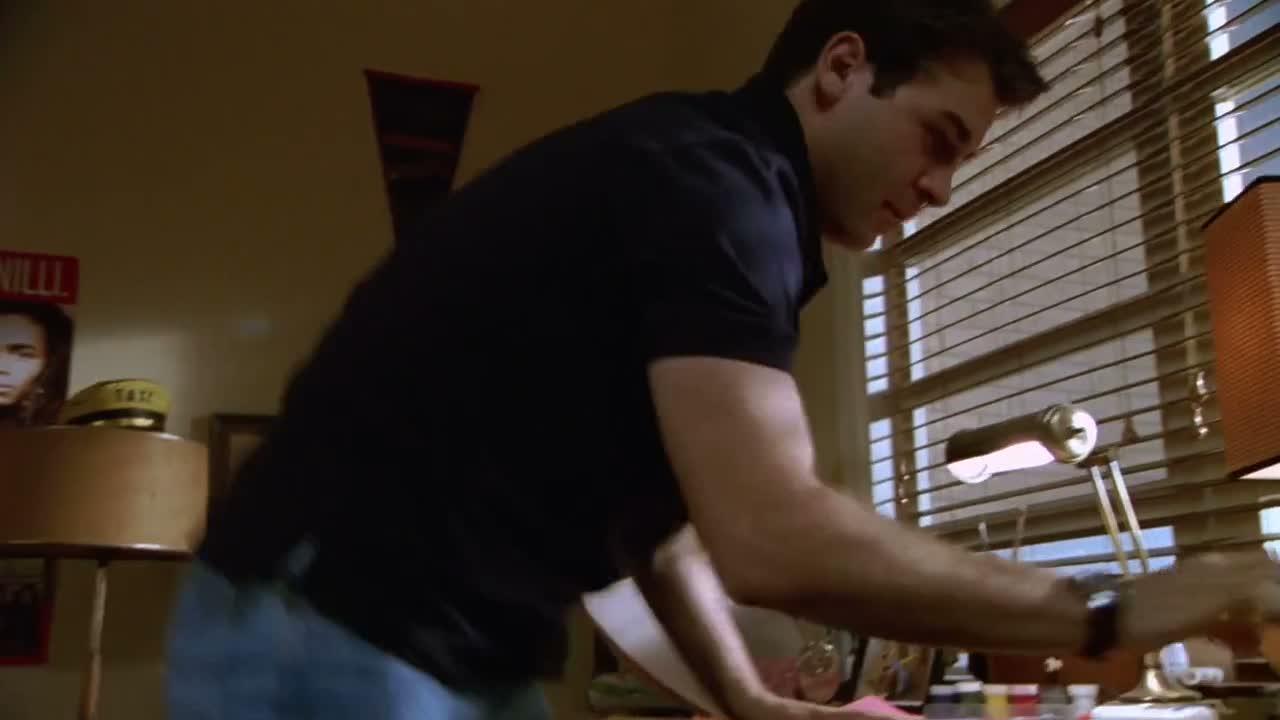
Brad is working a bottom-rung job while waiting for a teaching offer, but the hiring season ends and the interviews dry up. His stepmother Diane shows up at his apartment with bagels, argues his father's case, and tells him he is not normal — he has the gift to teach.
Brad has been treating his life as a race against a closing door: resumes left with janitors, a part-time job, and a countdown of "time and money... and hope." The visit from Diane shifts the scene from job hunting to self-definition. She does not argue that he is ordinary; she argues that the version of normal he is measuring himself against may not even be his father's. "And you're right. You are not normal," she says, and then reframes the very thing he is ashamed of: "You have the gift... to teach," a gift that is "not in spite of your Tourette's" but because of it. The scene's real argument is that Brad's condition is not an obstacle to his calling — it is the source of his empathy, and therefore of his talent.
A1–C2 es la escala MCER. Las tarjetas por encima del nivel elegido se atenúan y la reproducción no se pausa en ellas.
“The only thing that hurts is the fact that he has never accepted who I am.”
It names one precise wound instead of a list, which makes the pain land harder.
Neutral
“You have the gift... to teach.”
The pause before to teach turns a compliment into an unmistakable calling.
Neutral
“I gave up on you ever coming to me, so I just came to you.”
It admits disappointment and then offers effort, all in one neat reversal.
Informal
“Well, I'm never going to be normal.”
It stops apologizing for being different and simply claims it.
Informal
Siguiente · 09color outside the linesLa escena: Brad Cohen's Best InterviewShe says she gave up waiting for him to come to her, so she came to him. She brings bagels and tries to repair relations, arguing that his father loves him but cannot accept his Tourette's.
He believes his father wants a normal son who does normal things, and since his tics will not go away he assumes he can never be that. Diane challenges that assumption.
It means the tools or equipment used in a particular job. The manager hands Brad cleaning supplies and calls them his tools of the trade.
His father wants him to join the family business and worries he will get hurt; Brad hears these as signs that his father has never accepted who he is.
She means it as praise, not an insult: his difference is exactly what gives him the gift to teach, and she wants him to stop seeing it as a flaw.