
“All I want is a chance.”
Por qué es buena
One plain sentence asks for nothing but a shot, and that is exactly why it lands.
Registro
Neutral
Úsala tú
All I want is a chance to show what I can do.
Capítulo 1 de 17 · 5'03"
Brad is not asking anyone to feel sorry for him. In a job interview, he names the thing everyone is avoiding — "Maybe we should talk about the elephant" — and explains that his noises are like sneezes. What he wants is simple: interviews, and a chance to prove he can teach.
❝ Monólogo · 4 frases Brad Talks About the Elephant
❝ Monólogo · 5 frases Brad on His Father's Patience
Pulled over for speeding, Brad tells the officer he has Tourette's syndrome and that he is going to be a teacher. Later, in a job interview, he asks his interviewer to talk about the obvious subject, explains that his tics are like sneezes, and says all he wants is a chance.
Brad has learned to turn the awkward moment into an opening. When an interviewer cannot bring herself to mention his Tourette's, he takes the lead: "Maybe we should talk about the elephant." He is not looking for sympathy; he is controlling the story before someone else does. His explanation is deliberately ordinary — "They're like sneezes, irrepressible" — and his confidence rests on the law and on his record: "The Americans with Disabilities Act says I'm entitled to a chance." Every rejection soundbite he repeats to his friend is proof that the world still sees the barking before the teacher. So "All I want is a chance" is not a plea so much as a demand, and he keeps making it because the alternative is to disappear.
A1–C2 es la escala MCER. Las tarjetas por encima del nivel elegido se atenúan y la reproducción no se pausa en ellas.
“All I want is a chance.”
One plain sentence asks for nothing but a shot, and that is exactly why it lands.
Neutral
“Maybe we should talk about the elephant.”
It names the awkward subject through an idiom, so courage arrives wrapped in politeness.
Neutral
“I mean, I wore out his patience like nails on a chalkboard.”
It turns a vague ache into a sound you can hear, making the self-blame sting and charm.
Informal
“Once they understand, they're fine with it.”
It reduces a hard problem to one calm step: once people understand, the fear fades.
Neutral
I know, but I would like to tell you just like I tell the kids in my classes. See, I explain to them that it's a brain thing that causes me to make these strange noises. They're like sneezes, irrepressible. When you have to, wah-waht, you have to.
Returning Dad's call... [chuckles] I had to prepare for that. See, Mom and Dad had divorced when I was a little kid and my relationship with Dad had always been... let's just say, complicated. Jah-jah-wah-waht! I mean, I wore out his patience like nails on a chalkboard.
Front of the Class: tu progreso
Capítulo 1 de 17 · quedan unos 73 min
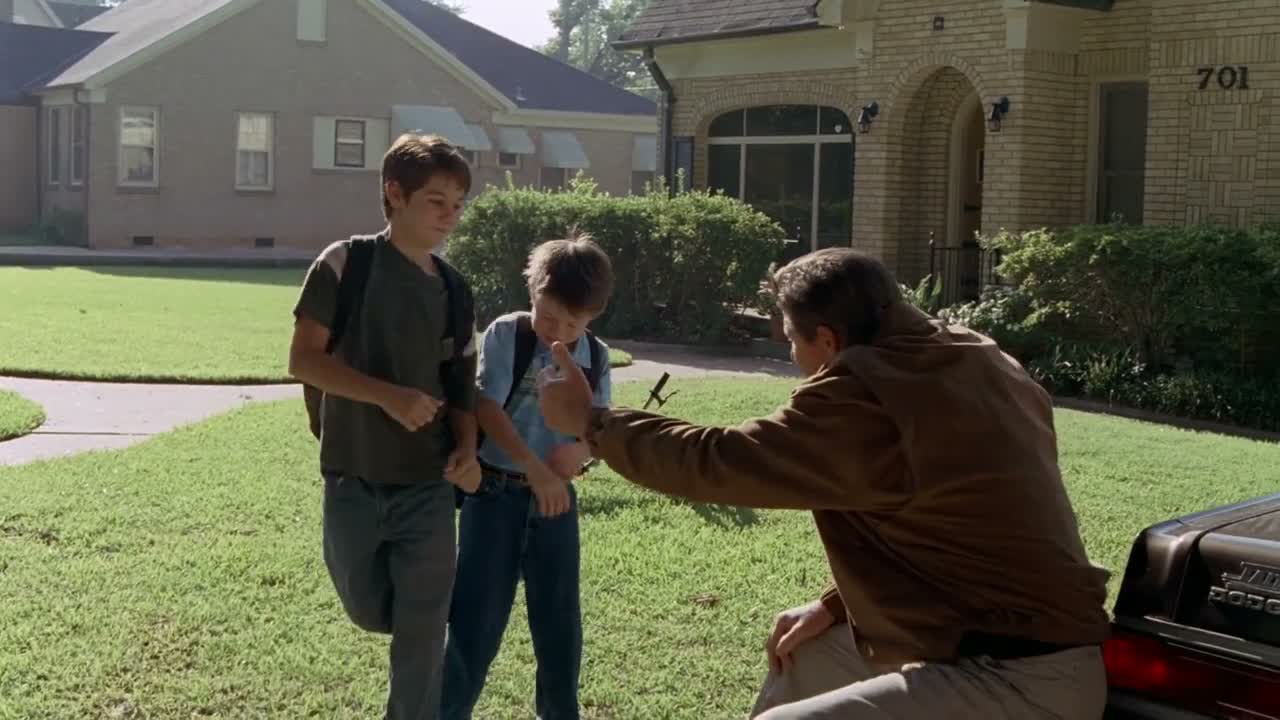 Siguiente · 02drive someone nutsLa escena: Brad's Tics Drive His Family Crazy
Because he would rather define it himself than let it hang in the room. He explains it the way he does to his students, so the interview is about whether he can teach, not about his tics.
It is the idiom "the elephant in the room" — the obvious thing nobody wants to mention. Brad means his Tourette's, which the interviewer is carefully avoiding.
He tells the interviewer that Georgia honors his Illinois certificate, that he fell in love with the city while working there as a camp counselor, and that his father and stepmother live nearby.
It is a childhood memory of Brad and his brother playing. It cuts in to show how long his tics have shaped family life and how much patience he wore out at home.