00:00 / 04:34
00:00 / 04:34

Norton Questions the Widow, Explained

Double Indemnity · 1944

Capítulo 15 de 21 · 4'34"

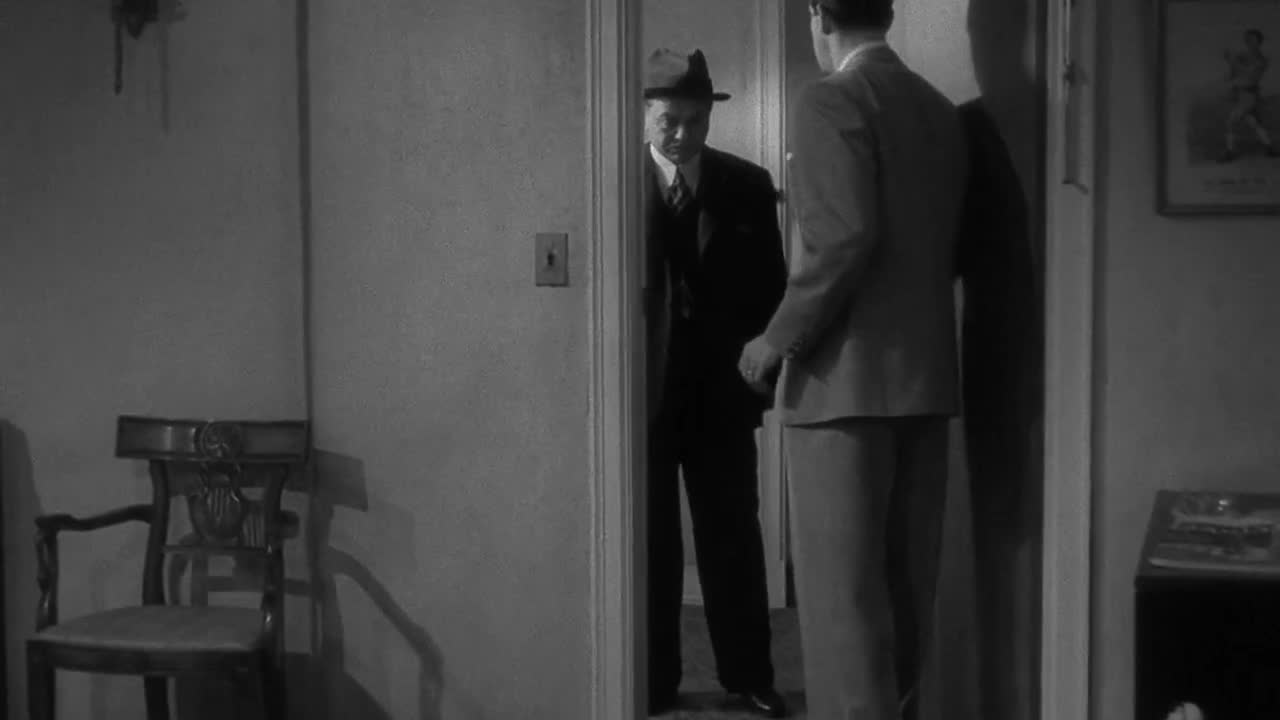
Norton offers the widow condolences, then says the company suspects her husband's death was suicide and offers a partial settlement. She hears the accusation—"You want to bargain with me, at a time like this"—and walks out. Keyes then proves the suicide theory collapses, so the company must pay.

NegotiationAccusationsBargainingExplainingStrangersB2fastamericanClean

Key moments

Start here, then watch the full scene
  1. The Widow Refuses the Settlement

    2:20–2:54
    34s
  2. ❝ Monólogo · 23 frases Keyes Proves It Wasn't Suicide

    3:07–4:20
    74s
  1. ❝ MonólogoThe suicide statistics23 frasesPracticar ↗

Norton Questions the Widow, explained

What happens

Norton and Keyes meet Mrs. Dietrichson at the office to discuss her husband's accident policy. They suspect suicide, which would void the claim, and Norton offers her a smaller settlement instead. She refuses and leaves in anger. Once she's gone, Keyes explains why their suicide theory won't hold—and why the company will have to pay.

What's really going on

The company's approach is pure strategy dressed as courtesy. Norton opens with sympathy and then floats a compromise, but the offer is really an accusation: pay the widow a fraction, or take the risk of a court fight. Mrs. Dietrichson sees the trap and refuses to play, attacking the method rather than the money—"You want to bargain with me, at a time like this." When she stalks out, Keyes turns on Norton: the suicide theory was never viable. He delivers the verdict flatly—"We're sunk, and we'll have to pay through the nose, and you know it"—meaning the company must pay in full. The scene is a lesson in how insurers test a claim, and in how quickly a confident theory collapses against the numbers.

Key lines & what they mean

“In fact, I don't like you, Mr. Norton. Goodbye, gentlemen.”
The widow drops all politeness: she names her dislike to his face and walks out, refusing both the deal and the manner of it.
“Now you can't pick yourself up because you haven't got a leg to stand on.”
Keyes mocks Norton with a double meaning: the failed play leaves Norton flat, and his case has no evidence to stand on.
“We're sunk, and we'll have to pay through the nose, and you know it.”
Keyes' verdict: the company is beaten and will pay far more than it wanted, whether Norton admits it or not.
“You want to bargain with me, at a time like this.”
The widow's accusation: haggling over her dead husband's insurance while she is still grieving is indecent, not business.

Theme

  • Money — The whole meeting is a fight over how much the company will pay, with a cheap settlement offered as leverage.
  • Justice — Keyes' actuarial proof shows the claim is legitimate, forcing the company to honor a payout it hoped to dodge.

Qué aprendes en este capítulo

Puntos de enseñanza

Repasa justo después de ver
Mi nivel2/8

A1–C2 es la escala MCER. Las tarjetas por encima del nivel elegido se atenúan y la reproducción no se pausa en ellas.

Double Indemnity: tu progreso

Capítulo 15 de 21 · quedan unos 20 min

← Anterior
Siguiente · 16through the wringerLa escena: Keyes Suspects the Beneficiary

Ideas clave

Lo que te llevas
  1. Mrs. Dietrichson refuses sympathy that arrives with a price tag.
  2. So-called lets Norton doubt the coroner without saying he lies.
  3. No soap is how Keyes ends a theory he cannot disprove.
  4. Pay through the nose is the company's admission that the case is lost.

Preguntas frecuentes

La pregunta, luego la frase
Why do they suspect suicide?

The policy was taken out quietly, just days after the idea came up; the husband traveled alone; and he made his way to the observation platform on crutches. The company reads all of that as a man arranging his own death to look like an accident.

Why does the widow refuse the settlement?

Norton offers her part of the policy as a compromise, but the offer is built on the claim that her husband killed himself. She takes it as an insult and a bargain struck at the worst moment, so she rejects both the money and the men.

Why is Keyes sure it wasn't suicide?

He knows the suicide statistics by heart. People use poison, firearms, drowning, or leaps from high places—but no recorded case exists of someone leaping from the rear of a moving train to kill himself, and a slow train wouldn't do it anyway.

What does Keyes's insult about the front office mean?

Norton says he grew up in the insurance business; Keyes snaps that he grew up in the front office, not on the street or in the claims files. It's a jab at a boss who talks about the trade without knowing its data.