
“Nothing had slipped, nothing had been overlooked.”
Por qué es buena
Twin negatives make the plan sound flawless, and that calm is exactly the point.
Registro
literary
Úsala tú
Nothing had slipped and nothing had been overlooked in the launch.
Capítulo 14 de 21 · 4'47"
Walter Neff, sick with guilt after the murder, narrates a walk he can't shake: the sound of a dead man's footsteps. At the office, Keyes lays out the autopsy and the double-indemnity policy, then goes strangely quiet. The boss, Norton, has the one opinion nobody expected: "I know it was not an accident."
❝ Monólogo · 16 frases Neff's confession
He boasts of a flawless plan and then admits, line by line, that he is coming apart.
Neff Explains How He Sold the Policy
Norton Hands Keyes the Case
After the murder, Walter Neff is haunted and off balance. The death is in the papers, and at the office Keyes briefs the boss, Mr. Norton, on the autopsy, the witnesses, and the double-indemnity clause in Dietrichson's policy. Neff explains his role in the sale. Then Norton surprises them: he has a theory of his own.
The scene turns on a question of who is allowed to have a theory. Keyes, the investigator, has been probing the claim for days, and here he refuses to commit: 'No opinion at all,' he says, 'Not even a hunch.' Norton, the man with the large office, is the one who states it flatly — 'I know it was not an accident' — and the irony is deliberate, since Keyes had just mocked the assumption that a big office makes a man an idiot. Handing Keyes the lead, Norton says, "Well, you've got the ball. Let's see you run with it." Walter, meanwhile, is quietly falling apart in the same room, narrating his own nerves while the men around him argue about his crime as a matter of company money.
A1–C2 es la escala MCER. Las tarjetas por encima del nivel elegido se atenúan y la reproducción no se pausa en ellas.
“Nothing had slipped, nothing had been overlooked.”
Twin negatives make the plan sound flawless, and that calm is exactly the point.
literary
“It was the walk of a dead man.”
He names himself dead in one flat sentence, and the metaphor does all the work.
literary
“I could feel my nerves pulling me to pieces.”
Nerves become a force that tears him apart, so the fear turns physical.
Neutral
“Well, you've got the ball. Let's see you run with it.”
A football image hands over the responsibility while quietly mocking the man who holds it.
Informal
Nothing had slipped, nothing had been overlooked. There was nothing to give us away. And yet, Keyes, as I was walking down the street to the drugstore... suddenly it came over me that everything would go wrong. It sounds crazy, Keyes, but it's true, so help me. I couldn't hear my own footsteps. It was the walk of a dead man. That was the longest night I ever lived through, Keyes... and the next day was worse, when the story had broke in the papers... and they started talking about it at the office... and the day after that, when you started digging into it. I kept my hands in my pockets because I thought they were shaking. I put on dark glasses so people couldn't see my eyes. And then I took them off again so they wouldn't get to wondering why I wore them. I tried to hold myself together, but... I could feel my nerves pulling me to pieces.
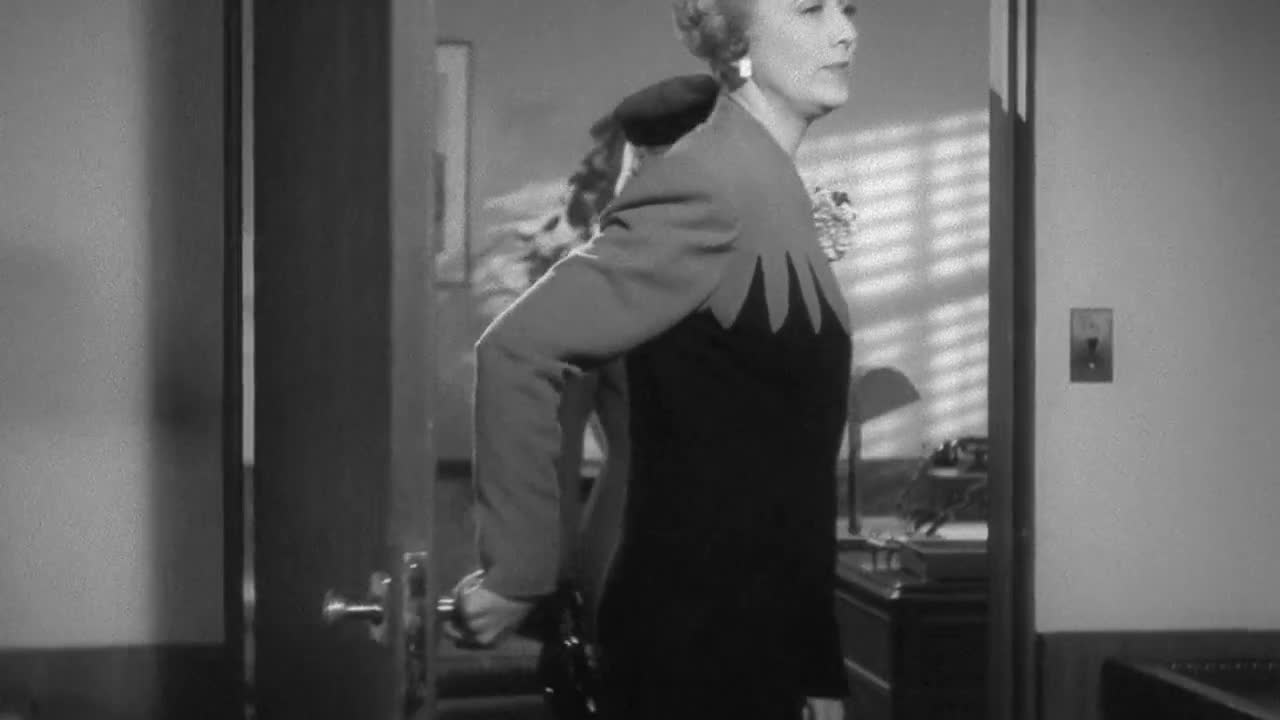 Siguiente · 15a leg to stand onLa escena: Norton Questions the Widow
He is confessing the story into a dictaphone, and the guilt is the point. The murder went perfectly, yet he says he feels like 'the walk of a dead man,' which shows the toll the secret takes.
He is holding back in front of the boss. He admits he has no hunch at all, even though earlier he was the one digging into the claim, and Norton notices the evasion.
Norton has read the same facts — the double-indemnity policy, the timing, Neff's sale — and reaches the conclusion Keyes will not state aloud. He says it is not an accident without giving proof.
It's a sports metaphor. Norton tells Keyes the case is now his to run, and that everyone will watch how he handles it.
He is teasing Keyes about his informal clothes. It shows Norton's dry, needling manner before the meeting turns serious.